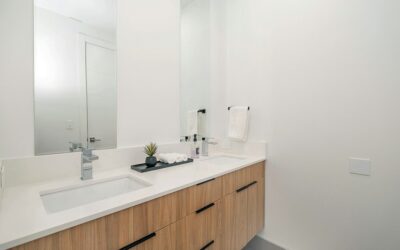
Buying a cabinet base and choosing the counter separately is one of the smartest moves in a bathroom remodel, and the 36 inch bathroom vanity without top is the size that fits the most bathrooms while giving you real design freedom. A 36-inch base hits the sweet spot: wide enough for a comfortable single sink with usable counter space on both sides, yet compact enough to fit a hall bath, guest bath, or primary bath without crowding the room. Buying it topless lets you pair it with the exact stone, quartz, or custom surface you want instead of settling for whatever slab the manufacturer bundled.
Part of our Bathroom Remodeling & Flooring guide — explore the full guide →
This guide covers who should buy a vanity without a top, how the measurements really work, the countertop options that fit a 36-inch base, and the installation details that make the difference between a clean professional result and a wobbly, gap-filled one.
Why Buy a Vanity Without a Top
The bundled tops that come with many prebuilt vanities are often the weakest part of the package: thin cultured marble, a builder-grade laminate, or a plain white ceramic integrated bowl. Buying the base alone frees you to upgrade.
- Material freedom: pair the base with quartz, granite, marble, butcher block, or concrete to match your exact style.
- Sink choice: pick an undermount, vessel, or integrated sink instead of being locked into one bowl.
- Better value on high-end looks: a plain base plus a locally fabricated stone top often costs less than a premium all-in-one unit.
- Matching an existing counter: if you already have a slab or a fabricator cutting your kitchen, a matching bathroom top is easy to add.
The tradeoff is that you take on sourcing and installing the top yourself or hiring a fabricator, which adds a step. For anyone who cares about the finished look, that extra step is well worth it.
Understanding the 36-Inch Measurement
The “36 inch” refers to the cabinet width. But three dimensions matter, and assuming instead of measuring is the most common mistake buyers make.
- Width: nominally 36 inches, though some run a fraction under or over; confirm the exact spec.
- Depth: standard is around 21 to 22 inches for the cabinet, with tops overhanging to roughly 22 to 23 inches.
- Height: base cabinets run about 32 to 35 inches; add the counter thickness for finished height, typically landing near 36 inches, called comfort or counter height.
Measure your available wall space and leave clearance for the door swing, adjacent walls, and any trim. A 36-inch cabinet needs a bit more than 36 inches of wall to sit comfortably, and you want the countertop overhang not to collide with a side wall or toilet.
Countertop Options for a 36-Inch Base
Because 36 inches is such a common size, precut vanity tops are widely available, or a fabricator can cut a custom piece quickly. Here are the main choices.
Quartz
Engineered quartz is the most popular pick for good reason: it is nonporous, needs no sealing, resists stains and water, and comes in consistent patterns including convincing marble looks. A precut 37-inch quartz vanity top with backsplash is easy to find, or a fabricator can template a custom piece.
Granite and Marble
Natural stone brings unmatched depth and uniqueness. Granite is durable and only needs occasional sealing. Marble is stunning but softer and stains more easily, so it suits guest baths better than a heavy-use kids’ bathroom.
Butcher Block and Concrete
For farmhouse or industrial styles, sealed butcher block adds warmth and concrete adds a modern edge. Both need proper sealing to survive bathroom moisture, but they deliver a distinctive look no big-box top can match.
Choosing Your Sink
Buying without a top means you also decide the sink, and this choice shapes the whole vanity’s look and function.
- Undermount: mounts below a stone or quartz top for a seamless, easy-to-wipe surface; the most popular modern choice.
- Vessel: sits on top of the counter like a bowl for a dramatic, spa-like statement; requires a taller faucet and a lower base height.
- Drop-in: the most budget-friendly, with a rim resting on the counter; works with almost any surface.
Whatever you choose, confirm the sink and faucet holes are drilled to match before final installation, and coordinate the faucet’s reach with the sink’s size.
Installation Step by Step
Installing a 36-inch vanity without a top is a manageable weekend project for a confident DIYer, though the plumbing connections demand care.
- Shut off the water and remove the old vanity, capping the supply lines temporarily.
- Check the floor and wall for level; shim the cabinet base as needed so it sits perfectly flat.
- Position the base, mark stud locations, and anchor the cabinet back to at least two studs with screws.
- Dry-fit the countertop and sink to confirm alignment before applying any adhesive.
- Set the top on a bead of silicone, install the sink and faucet, then connect the drain and supply lines.
- Run water and check every joint for leaks before caulking the backsplash to the wall.
Budgeting the Project
A quality 36-inch vanity base runs roughly $200 to $700 depending on material and finish, with solid-wood shaker styles at the higher end and MDF or particleboard units lower. Tops vary widely: a precut quartz or cultured marble top might be $150 to $350, while a custom-fabricated granite or quartz slab with an undermount sink can reach $400 to $800 installed. Add $50 to $150 for a sink and faucet on top of that. Even fully loaded, buying base and top separately often beats the price of a comparable premium all-in-one unit while giving you a far better finished product.
Common Mistakes to Avoid
- Assuming the top will overhang correctly without checking the cabinet depth and backsplash allowance.
- Forgetting to confirm the faucet hole spacing matches your chosen faucet before drilling stone.
- Skipping shims and mounting an out-of-level cabinet, which leaves a visible gap under the top.
- Not anchoring the cabinet to studs, leaving the vanity to rock over time.
- Choosing a vessel sink without lowering the base, ending with an uncomfortably high basin.
Styles and Finishes to Consider
A 36-inch base comes in nearly every style, so match it to your bathroom’s design language. Shaker fronts in white, gray, or navy are the most versatile and suit transitional and farmhouse baths. Flat slab doors in a wood tone or matte finish read modern. Furniture-style vanities with turned legs and ornate detail bring a traditional or vintage feel. Because you are buying the base alone, you have freedom to pair a bold cabinet color with a neutral stone top, or a neutral cabinet with a dramatic marble-look quartz.
Construction quality matters as much as looks. Solid wood and plywood boxes resist bathroom humidity far better than particleboard, which can swell if it gets wet. Look for dovetailed drawers, soft-close hinges and glides, and a durable finish that stands up to splashes. Spending a little more on a well-built base pays off in a vanity that stays square and functional for years in a wet, humid room.
Storage and Configuration
Think about how you will actually use the cabinet. A 36-inch vanity can be configured with a combination of doors and drawers, and drawers are generally more useful for everyday bathroom storage since they bring contents to you rather than hiding them in the back of a cabinet. Some models offer a bank of drawers on one side and a door cabinet on the other, which balances deep storage for towels with drawer organization for toiletries. If plumbing runs behind the cabinet, remember that the sink’s drain and supply lines eat into the storage space directly below the basin, so drawers there may be notched or shallow.
A 36 inch bathroom vanity without top gives you the best of both worlds: a right-sized, ready-to-install cabinet and total freedom over the surface that everyone actually sees and touches. Measure carefully, match your sink and faucet, and invest in a countertop you love, and the finished vanity will look custom for a fraction of a true custom price.