A flat wall of subway tile is safe, but it rarely makes anyone stop and stare. A 3d backsplash does the opposite, catching light across raised ridges, carved waves, and faceted geometry so the surface shifts in appearance as you move through the room. That dimensional quality is why designers keep reaching for textured tile when a kitchen or bath needs a focal point without a single splash of bright color.
Part of our Kitchen Remodeling guide — explore the full guide →
Depth reads as luxury. When a surface throws its own shadows, the eye registers craftsmanship even before you notice the material. This guide walks you through the styles, materials, real prices, and installation realities so you can decide whether raised texture belongs behind your range or vanity.
What Makes a 3D Backsplash Different
Standard tile sits flat against the wall, roughly 1/4 to 3/8 inch thick, with the visual interest coming from glaze, pattern, or grout color. A dimensional backsplash pushes material forward and back, sometimes by as little as 1/8 inch on a subtle chevron and as much as 1 to 1.5 inches on a deep sculptural panel. That relief creates real shadow lines that change with your kitchen lighting through the day.
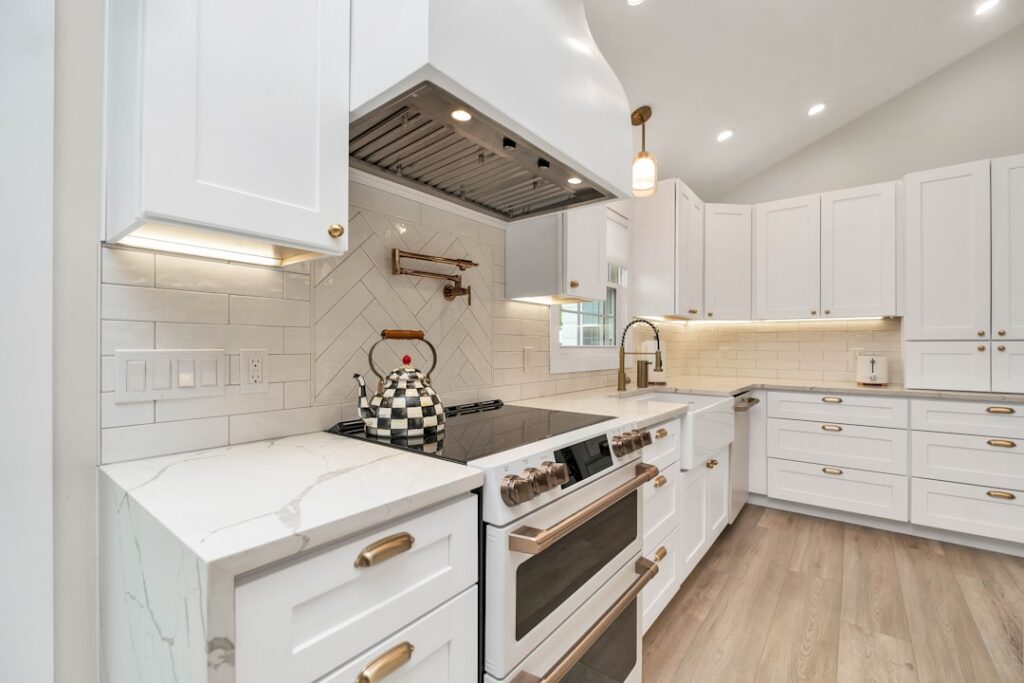
The effect works best where light rakes across the surface. Under-cabinet LED strips, a window to the side, or a directional pendant will exaggerate the texture and make a modest tile look expensive. Flat, even ceiling light does the opposite, flattening the relief, so plan your lighting alongside the tile choice rather than as an afterthought.
Popular 3D Backsplash Styles
Texture comes in a wide range of moods, from quiet and organic to sharp and architectural. Matching the style to your cabinets and countertop keeps the wall from fighting everything around it.
- Wave and ripple tile: Gentle undulating surfaces, usually in ceramic or porcelain, that soften a modern kitchen. Great over a flat-front cabinet in white, sand, or pale gray.
- Faceted and geometric: Diamond, pyramid, and hexagon reliefs that read crisp and contemporary. These pair well with quartz counters and matte black hardware.
- Fluted and channeled: Vertical grooves borrowed from reeded glass and millwork, adding a tall, elegant rhythm behind a range.
- Stacked stone and split-face: Natural ledger panels in slate, quartzite, or travertine that bring rugged texture to a rustic or transitional space.
- Carved and sculptural: Statement tiles with deep botanical or abstract relief, best used on a single accent wall rather than the whole run.
Materials That Deliver Real Depth
The material you choose sets the tone, the durability, and the price. Each option handles heat, moisture, and cleaning differently, so weigh those against where the tile will live.
Ceramic and Porcelain
These are the workhorses of dimensional tile. Porcelain is denser and less porous than ceramic, absorbing under 0.5 percent water, which makes it ideal behind a sink or cooktop. Expect $8 to $25 per square foot for textured porcelain, with designer collections climbing past $35.
Natural Stone
Stacked slate, marble, and travertine panels bring genuine geological texture. They run $12 to $40 per square foot and demand sealing every 12 to 18 months, since raised stone traps grease and dust in its crevices.
Glass and Acrylic Panels
Molded glass mosaics and thermoformed acrylic panels create depth with a glossy, reflective finish. Acrylic 3D wall panels start around $6 to $15 per square foot and install fast, though they tolerate less direct heat than tile.
Metal and Composite
Embossed stainless, copper, and PVC composite panels give an industrial or Art Deco edge. Peel-and-stick metal tiles land near $10 to $20 per square foot and resist stains well.
Color and Finish Choices
Because a 3d backsplash already carries visual weight through shadow, most designers keep the color restrained. A monochrome white or greige tile lets the texture do the talking, which is why so many showroom kitchens pair a rippled cream tile with warm wood cabinets. Reserve bold color, deep navy, emerald, or terracotta, for a single wall where you want the backsplash to be the undisputed star.
Finish matters as much as color. A matte glaze reads soft and modern and hides fingerprints, while a glossy or pearlized surface amplifies the play of light across every ridge. Satin sits in between and is the easiest to keep clean over a busy cooktop.
Where a 3D Backsplash Works Best
Kitchens are the obvious home, but dimensional tile earns its keep in several spots. Behind a range it creates a natural focal point framed by the hood and cabinets. In a bathroom, a fluted or wave tile turns a plain vanity wall into a spa-like feature. Powder rooms are ideal test beds because the square footage is small, so you can splurge on a $30 per square foot sculptural tile without wrecking the budget.
Be cautious in high-splatter zones directly behind a gas burner if you choose deeply carved stone, since food and grease collect in the recesses. In those spots, a shallow-relief porcelain with a wipeable glaze is the smarter pick.
Installation and Cost Expectations
Dimensional tile is heavier and less forgiving than flat tile, so the installation deserves attention. Raised surfaces mean you cannot use a standard grout float across the face without smearing texture, so many textured tiles are set with a rear-buttered thinset and minimal or no face grouting.
- Prep the wall: Ensure the drywall or backer board is flat and clean. Uneven walls telegraph through, and heavy tile needs a sound substrate.
- Choose the right mortar: Use a polymer-modified thinset rated for the tile weight; stone and glass often need white thinset to avoid color bleed.
- Plan your grout: Many 3D tiles butt tightly with a 1/16 inch joint or a color-matched grout so seams disappear and the pattern flows unbroken.
- Seal if needed: Natural stone and unglazed surfaces should be sealed before and after grouting.
Professional installation typically adds $10 to $20 per square foot in labor because the work is slower and more exacting than flat tile. A 30 square foot kitchen run in mid-range textured porcelain, materials plus labor, commonly totals $900 to $1,500. Peel-and-stick acrylic panels are the budget DIY route, sometimes finishing a small wall for under $250.
Keeping a 3D Backsplash Clean
Texture is beautiful, but every ridge is a place for grease and dust to settle. A soft nylon brush and a pH-neutral cleaner reach into grooves that a flat sponge skips. For glossy glass or acrylic, a microfiber cloth and glass cleaner keep the reflective surface streak-free. Avoid abrasive pads on metal and glazed tile, which dull the very shine that makes the relief pop.
Wipe splatters within a day or two behind a cooktop so oils never bake into the recesses. Sealed stone gets a quick reseal on the schedule the manufacturer recommends, usually annually, to keep the crevices from staining.
Bringing It All Together
A well-chosen 3d backsplash gives a room something a flat wall never can, a surface that changes with the light and rewards a second look. Start with the mood you want, quiet ripple or bold facet, match the material to the moisture and heat of the spot, and light it from the side so the texture earns its place. Do that, and a modest square footage of dimensional tile will read as the most considered detail in the whole room.