A metallic tile backsplash is the fastest way to add shimmer, movement, and a custom feel to a kitchen or bar. From brushed stainless mosaics to hammered copper and iridescent glass, metal-finish tile catches light in a way flat ceramic never can. This guide breaks down the real material options, honest pricing, design pairings, and the installation details that keep a metallic wall looking crisp instead of gimmicky.
What Counts as a Metallic Tile
Metallic tile is a broad category, and the material underneath the shine matters for durability and cost. Some tiles are solid metal; others are glass, ceramic, or resin finished to look like metal. Knowing the difference protects you from buying something that scratches or tarnishes in the wrong spot.
- Solid stainless steel: Thin steel faces bonded to a ceramic or resin backing. Durable, heat-tolerant, and ideal directly behind a cooktop.
- Copper and brass: Warm, living finishes that patina over time. Real copper mosaics develop character; sealed versions hold their bright tone.
- Metallic glass: Glass tiles with a metallic backing or foil layer that reads like metal but cleans like glass.
- Aluminum and peel-and-stick: Lightweight, budget-friendly metal or metal-look tiles for low-splash zones and renter-friendly updates.
Best Metallic Finishes and Their Look
The finish drives the entire vibe of the wall, so choose it against your cabinets and countertops rather than in isolation.
Brushed Stainless
Brushed or satin stainless has a soft directional grain that hides fingerprints better than polished metal. It’s the natural partner to a stainless range and hood, and it reads clean and professional. Expect $15 to $30 per square foot for stainless mosaics.
Polished and Mirror
Mirror-finish metal or metallic glass maximizes reflection and makes a small kitchen feel larger and brighter. It also shows every water spot, so reserve it for backsplash zones away from the busiest splash areas or commit to daily wiping.
Hammered Copper and Bronze
Hammered or antiqued copper brings warmth and an artisan, old-world texture. The dimpled surface scatters light and disguises smudges. Real copper runs $25 to $45 per square foot, while copper-look tile costs far less.
Oil-Rubbed and Blackened Metal
Dark, oil-rubbed bronze and gunmetal tiles give an industrial, moody edge that pairs with matte black fixtures and concrete counters.
Popular Shapes and Patterns
Metallic tile comes in more shapes than most people expect, and the pattern changes how loud the wall feels.
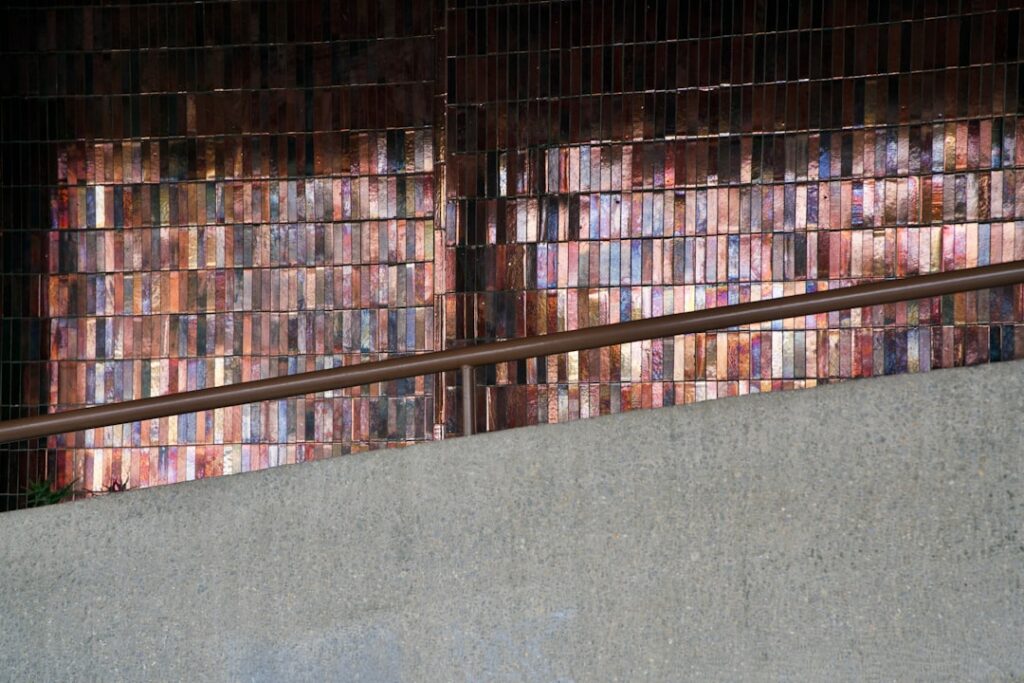
- Linear mosaics: Thin 1-by-2-inch or stacked stick tiles create a fine, textured field that shimmers without shouting.
- Subway: Metal 3-by-6-inch tiles bring a familiar shape into a fresh finish, great for a transitional kitchen.
- Penny round and hexagon: Small geometric metal mosaics add retro or contemporary personality behind a range or bar.
- Herringbone and chevron: Directional layouts add movement and a tailored, custom feel.
For a bolder statement, use metallic tile as a focal band or full accent wall behind the range and keep the rest of the backsplash in a quiet neutral. As an all-over field, choose a brushed or textured finish so the reflection stays elegant rather than overwhelming.
Designing With a Metallic Tile Backsplash
A metallic tile backsplash is a statement, so the surrounding elements should support it rather than compete. Cool metals like stainless, chrome, and pewter pair naturally with gray, white, and navy cabinetry and quartz counters. Warm metals such as copper, brass, and bronze glow against cream, sage green, walnut, and warm-white cabinets.
Match your metals with intention. If your faucet and cabinet pulls are brushed nickel, a brushed stainless backsplash ties the room together. Mixing metals can work, but limit it to two finishes and repeat each one at least twice so it reads deliberate. Because metal reflects, pay attention to what it will mirror: warm 2700K to 3000K under-cabinet lighting makes a copper or brass backsplash luminous, while cooler light suits stainless and chrome.
Cost and Value
Metallic backsplashes span a wide price range. Peel-and-stick metal-look tiles start around $6 to $12 per square foot and go up fast for the real thing. Here’s a realistic breakdown of material cost per square foot:
- Peel-and-stick aluminum or metal-look: $6 to $12
- Metallic glass mosaic: $12 to $25
- Stainless steel mosaic: $15 to $30
- Solid copper or brass: $25 to $45
Installed, most kitchens land between $700 and $2,000 for an average 30-square-foot backsplash, with labor at $10 to $20 per square foot. Metal tile installs faster than natural stone because the pieces are lightweight and uniform, which helps keep labor reasonable.
Maintenance and Durability
Metallic tile is easy to live with if you match the material to the zone. Stainless and sealed glass wipe clean with a soft microfiber cloth and a streak-free glass or stainless cleaner; avoid abrasive pads and steel wool, which scratch the finish permanently. Real copper and brass will patina unless sealed with a lacquer or wax; decide up front whether you want that evolving, living look or a locked bright finish.
Behind a cooktop, stick with solid metal or metallic glass, which tolerate heat and grease. Keep peel-and-stick and resin-backed tiles a few inches away from direct flame, since adhesives can soften above roughly 140 to 150 degrees Fahrenheit. To reduce visible water spotting on polished metal, wipe the wall dry after cooking splashes.
Installation Tips
Metal mosaics generally mount on mesh-backed sheets, which speeds up the job, but they demand care. Use a white thinset or a manufacturer-recommended adhesive so gray mortar doesn’t shadow through the edges, and butter the back of sheets rather than troweling deep ridges that can telegraph through thin metal. Cut metal tile with a wet saw fitted with a diamond blade, or use metal snips and a file on softer aluminum, and always deburr sharp edges.
Grout with an unsanded grout to avoid scratching the metal surface, and seal copper or brass before grouting to prevent staining. Finish exposed edges with a coordinating metal trim strip for a clean, professional termination. For a fully DIY-friendly route, quality peel-and-stick metal tiles install over clean, smooth drywall in an afternoon with no wet saw at all, making them ideal for renters and quick refreshes.
Rooms and Zones Where Metallic Tile Works Best
Metallic tile earns its keep in more than the main kitchen. A short run of stainless mosaic behind a coffee station or wet bar adds a professional, hospitality feel and wipes clean of coffee and cocktail splashes. In a powder room, a band of iridescent metallic glass behind the vanity catches candlelight and makes a small space feel jewel-box luxurious.
Laundry rooms, bar carts, and range hoods are other natural fits, since a little shine lifts a utilitarian space. Keep the scale in check: in tight rooms, a single accent strip or the wall behind one fixture delivers plenty of sparkle, while an entire metallic wall can overwhelm and reflect too much clutter. Treat the finish as a jewelry-like accent and it reads intentional every time.
Bringing It All Together
A metallic tile backsplash delivers light, texture, and personality that few other surfaces can match, and there’s a version for every budget and skill level. Choose your material for the zone, brushed stainless or solid metal behind the range, glass or peel-and-stick elsewhere, then coordinate the finish with your fixtures and lighting. Get the metals, pattern, and maintenance plan aligned, and your backsplash will stay a glinting focal point that makes the whole kitchen feel custom.
Prefer to explore on your own?
See how new flooring looks in your actual room in seconds — free, no signup.
Try the free Floor Studio →