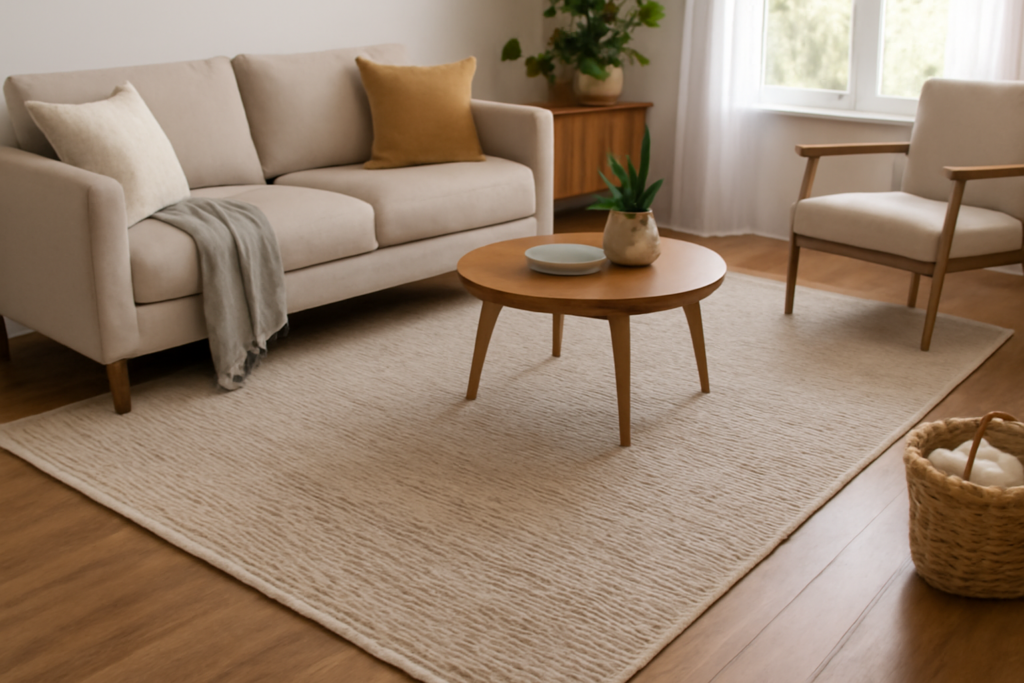
Choosing a rug is mostly a math problem disguised as a decorating decision. A 7×9 area rug hits a sweet spot that suits more rooms than people expect, bridging the gap between a small accent rug and a room-filling 8×10. Measuring roughly 7 feet by 9 feet, it grounds a seating group, defines a dining nook, or anchors a queen bed without overwhelming a modest space. Get the placement right and this size punches well above its footprint.
What a 7×9 Rug Covers
At 63 square feet, a 7×9 rug is large enough to unify furniture but compact enough to leave a border of exposed floor, which is exactly the look most designers aim for. It reads as a deliberate area rug rather than wall-to-wall carpet. In a standard 12×12 living room, a 7×9 leaves a comfortable margin on all sides and keeps the front legs of your sofa and chairs on the rug, tying the arrangement together.
This size also slots neatly into bedrooms and smaller dining areas where a 8×10 or 9×12 would crowd the walls. Think of it as the practical middle child of rug sizes.
Best Rooms for a 7×9 Area Rug
Living rooms are the most common home for this size. Center it under the coffee table and let the front legs of the sofa rest on it to create a cohesive zone. In a bedroom, a 7×9 works well placed under the lower two-thirds of a queen bed so it extends past the sides and foot, giving you something soft underfoot when you climb out in the morning.
Smaller dining rooms can use a 7×9 under a four-seat table, provided chairs stay on the rug even when pulled out. It is also a smart choice for a home office seating area, a finished basement, or a large entryway that needs definition.
Placement Rules That Matter
A few simple guidelines keep a 7×9 looking intentional rather than accidental:
- Leave 10 to 18 inches of bare floor between the rug edge and the walls for balance.
- In living rooms, keep at least the front legs of all major seating on the rug.
- Under a dining table, the rug should extend about 24 inches beyond the table on each side so chairs do not catch the edge.
- Center the rug on the room’s focal point, not just the geometric middle, when a fireplace or media wall dominates.
Always measure your space and tape out the 7×9 footprint on the floor before buying. It is the cheapest insurance against ordering the wrong size.
Material Options
The fiber you choose drives durability, feel, and cleaning. Common choices include:
- Wool: soft, resilient, and naturally stain-resistant, but pricier
- Polypropylene and other synthetics: budget-friendly, easy to clean, and great for high traffic
- Cotton: casual and washable, best for low-traffic or layered looks
- Jute and natural fibers: textured and earthy, ideal under furniture but rough for bare feet
- Viscose blends: silky and lustrous, though more delicate and harder to clean
For a busy family room or anywhere kids and pets roam, a synthetic or low-pile wool will hold up best. Save delicate viscose for formal, low-traffic rooms.
7×9 Area Rug Cost
Prices span a wide range based on fiber, construction, and brand. As general guidance, budget machine-made synthetic rugs in this size often run from about $80 to $250. Mid-range power-loomed and blended rugs typically land between $250 and $600. Hand-tufted and quality wool pieces commonly fall in the $500 to $1,200 range, while hand-knotted wool or silk rugs can climb well past $1,500. A separate rug pad adds roughly $30 to $80 and is worth every penny.
How a 7×9 Compares to Nearby Sizes
Rug sizing is relative, so it helps to see where 7×9 sits among its neighbors. A 5×8 is noticeably smaller, often best as an accent under a coffee table or beside a bed rather than as a furniture anchor. The familiar 8×10 covers about 80 square feet versus the 63 of a 7×9, which makes it the go-to for larger living rooms but a tight fit in compact spaces.
The practical difference between a 7×9 and an 8×10 is roughly a foot in each direction, and that foot decides whether your sofa legs land on the rug or hover just off the edge. If your seating group is on the smaller side, or the room measures under about 12 feet wide, the 7×9 frequently looks more proportional. Tape out both footprints and compare them against your actual furniture before deciding, because the numbers on paper rarely match the impression in the room.
Color, Pattern, and Pile Height
Beyond size, three choices shape how the rug lives in your space. Lighter colors and low-contrast patterns make a room feel larger and airier but show stains and pet hair more readily. Bold, busy patterns hide everyday soil and traffic lanes, which is why they earn their keep in family rooms and entryways.
Pile height is the comfort-versus-practicality trade-off. A plush high-pile rug feels luxurious underfoot in a bedroom but traps crumbs and is harder to vacuum. A flat or low-pile weave is easier to clean, lets dining chairs slide without catching, and suits high-traffic zones. Match the pile to the room’s job, not just its looks.
Do Not Skip the Rug Pad
A good pad does three jobs. It grips the floor so the rug stays put, it cushions each step, and it extends the life of the rug by absorbing impact and preventing fiber crushing. On hard floors a felt-and-rubber pad gives the best combination of grip and comfort. Cut or order the pad about an inch smaller than the rug on each side so it stays hidden.
Keeping a 7×9 Rug Looking Good
Vacuum regularly to keep grit from grinding down the fibers, and rotate the rug 180 degrees every few months so wear and sun fading stay even. Blot spills immediately rather than rubbing, and treat stains with a cleaner suited to the fiber. Most synthetic rugs tolerate gentle spot cleaning, while wool and natural fibers benefit from professional cleaning every couple of years.
A 7×9 area rug is one of the most versatile sizes you can buy. Match it to the right room, anchor your furniture correctly, and pair it with a quality pad, and it will make the space feel finished for years.