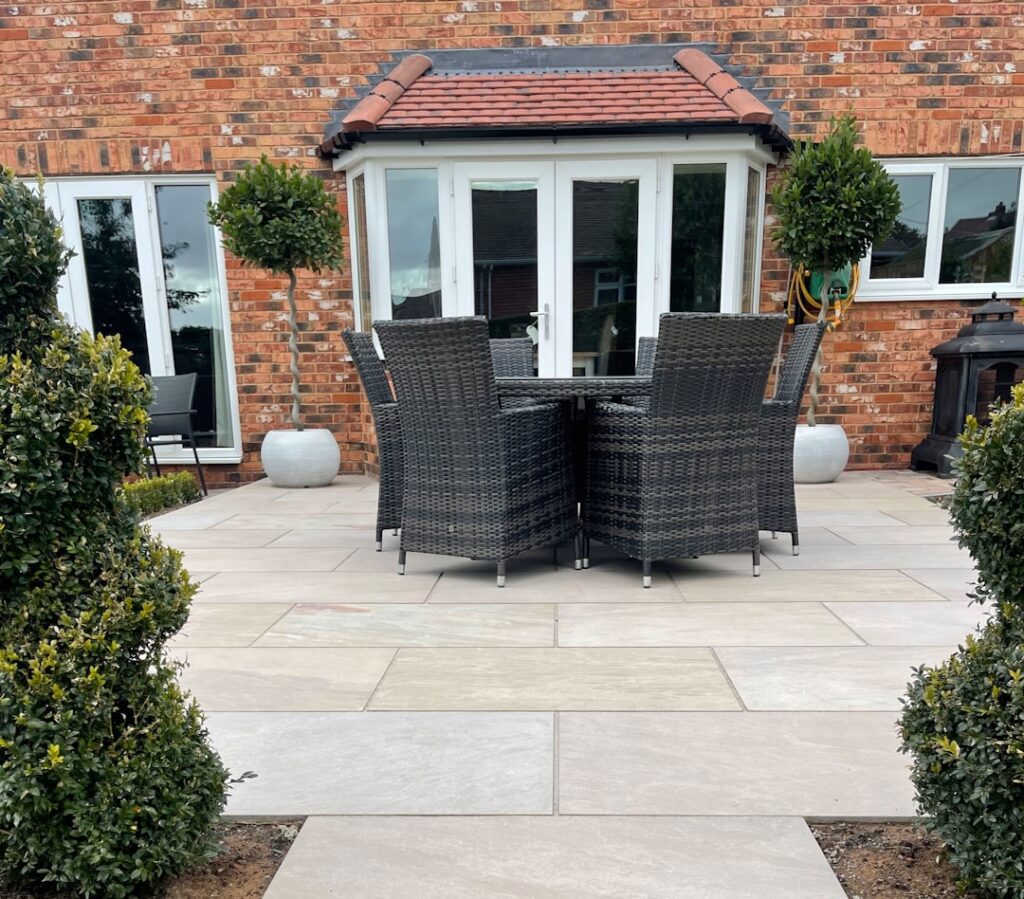
An outdoor space without a rug feels unfinished, and most patios are large enough that anything smaller than a 9 x 12 looks like a postage stamp lost in the middle. A 9 x 12 outdoor rug covers 108 square feet, which is exactly the amount of ground you need to anchor a full patio dining set or a deep sectional with a coffee table and side chairs. This is the size that transforms a bare concrete slab or a wood deck into an outdoor room. But outdoor rugs live a hard life, so picking the right material and knowing how to keep it in place matter just as much as the dimensions.
Part of our Windows & Doors guide — explore the full guide →
What 108 Square Feet Actually Covers
A 9 x 12 rug measures 9 feet by 12 feet, the outdoor equivalent of the most popular indoor area-rug size. On a patio it comfortably holds a six-to-eight-seat dining table with chairs that stay on the rug when pulled out, or a large sectional sofa with the front and often all legs resting on the surface.
Picture a standard one-car garage, which is roughly 12 by 20 feet. A 9 x 12 rug covers a little less than half of that footprint. For most decks and patios in the 200-to-400-square-foot range, it fills the central furniture zone perfectly while leaving a border of bare decking around the edges, which is exactly the look you want.
Outdoor Rug Materials That Survive the Elements
The fiber is everything outdoors. The wrong material fades, molds, or disintegrates in a season. A few proven choices handle sun, rain, and traffic.
- Polypropylene (olefin) — The most common outdoor fiber. It is mildew-resistant, fade-resistant, dries fast, and rinses clean with a hose. Affordable at $80 to $250 for a 9 x 12.
- Polyester — Soft underfoot with rich colors, though slightly less fade-resistant than polypropylene unless it is solution-dyed.
- Recycled PET plastic — Made from plastic bottles, eco-friendly, durable, and easy to clean. A popular mid-range pick.
- Natural fibers (jute, sisal, bamboo) — Beautiful but only suited to covered porches. They mold and rot when rained on.
For an exposed patio or deck, stick with solution-dyed polypropylene or PET. Save natural fibers for a fully covered porch where they never get wet.
Where a 9 x 12 Outdoor Rug Works Best
This size shines under larger furniture groupings. On a patio, center it under a big dining table so the chairs stay on the rug. Under a sectional, position it so the seating frames it on two or three sides. The goal is for the rug to unify the furniture into one defined zone rather than floating empty in the middle.
Beyond patios and decks, a 9 x 12 works on a large covered porch, under a pergola, around a fire-pit seating circle, or even in a finished basement or sunroom where you want indoor-outdoor durability. Many people buy outdoor rugs for high-traffic indoor spaces like mudrooms and playrooms precisely because they are so easy to clean.
Keeping It From Blowing Away
The number-one complaint about outdoor rugs is wind. A large 9 x 12 catches a breeze like a sail, and on a windy deck it will fold over or wander off. Fortunately, several fixes work well. The simplest is weight: heavy furniture legs resting on the corners hold the rug down naturally, which is another reason to size the rug to your furniture.
For exposed corners, use outdoor rug grippers, weighted corner anchors, or landscape staples driven through the rug into a lawn or soil surface. On a hard deck or concrete, a non-slip outdoor rug pad adds grip and lets air and water pass through so moisture does not get trapped underneath. Some homeowners even tuck a few flat pavers under the corners for invisible ballast. Skip any of this in a windy spot and you will be chasing your rug down the yard after every storm.
Cleaning and Maintenance Made Simple
The best thing about a synthetic outdoor rug is how easy it is to clean. For routine care, shake or sweep off debris, then hose it down. For deeper cleaning, mix a mild dish soap with water, scrub with a soft-bristle brush, rinse thoroughly, and hang or prop the rug to dry completely before laying it back down.
Avoid harsh chemicals and bleach unless the manufacturer specifically allows them, since they can fade colors. Treat spills promptly so they do not set. The critical habit is making sure the rug dries fully, because even mildew-resistant fibers can grow mold if water sits trapped between a damp rug and a solid surface for days. Roll the rug up and store it in a dry spot over winter in harsh climates to extend its life by years.
Cost and What to Expect
A 9 x 12 outdoor rug runs a wide range depending on construction. Flatwoven polypropylene starts around $80 to $150. Higher-pile or recycled PET rugs land in the $150 to $350 range. Premium designer outdoor rugs with intricate patterns or extra-durable construction can exceed $500.
Because outdoor rugs take abuse from sun and weather, even a quality one typically lasts three to five years in full exposure, longer under cover. That makes the mid-range polypropylene rug the smart value: durable enough to hold up, cheap enough that replacing it when it fades does not sting. Add a rug pad for another $30 to $60 and you protect both the rug and your deck boards underneath.
Choosing a Color and Pattern That Lasts
Sun fades outdoor rugs faster than anything else, so lean toward solution-dyed fibers where the color runs all the way through, rather than printed surface dyes that bleach out quickly. Mid-tone patterns hide dirt, pollen, and the inevitable spilled drink far better than solid light colors. Busy geometric or botanical prints disguise wear and stains, which is why they dominate the outdoor category. Pick a pattern with a few colors pulled from your cushions or planters and the whole space ties together, turning a plain slab into the kind of outdoor room you actually want to spend evenings in.