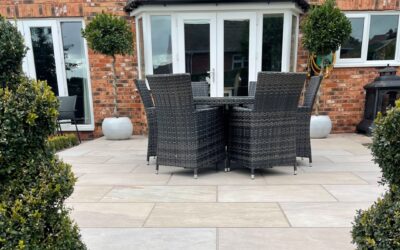
A bare concrete patio or a plain wood deck can feel like an afterthought, but roll out the right rug and suddenly you have an outdoor room. An outdoor woven rug is the fastest, most affordable way to define a seating or dining area outside, add color and pattern, and make hard surfaces more comfortable underfoot. The catch is that outdoor rugs live a hard life, baking in the sun, soaking in the rain, and collecting dirt and pollen, so the material and construction matter far more than they do indoors. Choose well and it will last several seasons; choose poorly and it will fade and mildew in one.
Part of our Windows & Doors guide — explore the full guide →
- What Sets an Outdoor Woven Rug Apart
- The Best Materials for Outdoors
- Weave Styles and Looks
- Sizing Your Patio Rug
- Keeping It From Slipping and Blowing Away
- Cleaning and Seasonal Care
- What an Outdoor Woven Rug Costs
- Covered Versus Fully Exposed Spaces
- Getting the Most Life From Your Rug
- The Bottom Line
What Sets an Outdoor Woven Rug Apart
Outdoor rugs are engineered to survive conditions that would destroy an indoor rug. The best are woven from synthetic fibers that resist water, fade, and mildew, with a flat, tight weave that sheds dirt and dries quickly rather than trapping moisture. Woven construction specifically, as opposed to tufted, means the pattern runs through the rug and there is no glued backing to delaminate in the weather. Many are reversible, doubling their life and giving you a second look. This durability is exactly what lets them handle a covered porch, an open deck, or a poolside patio.
The Best Materials for Outdoors
Fiber choice is the single most important decision:
- Polypropylene (olefin) — the most common and practical; water-resistant, fade-resistant, affordable, and easy to hose off.
- PET polyester (often recycled) — soft, colorfast, and eco-friendly, with a slightly plusher feel than polypropylene.
- Natural fiber looks — synthetic weaves designed to mimic jute, sisal, or seagrass, giving natural texture without the water damage real jute would suffer.
Avoid genuine jute, sisal, wool, or cotton outdoors unless the space is fully protected and dry, since natural fibers absorb water, grow mildew, and rot. For any spot exposed to weather, a polypropylene or PET woven rug rated as indoor/outdoor is the reliable choice.
Weave Styles and Looks
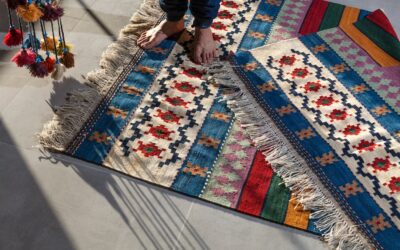
Outdoor woven rugs come in a wide range of designs. Flatweave geometrics and stripes are the most popular for modern patios, laying nearly flat so furniture sits stably. Traditional medallion and Persian-inspired patterns bring an elevated, indoor feel to a covered porch. Braided and basket-weave textures add casual, natural character that suits cottages and farmhouses. Solid and tonal weaves let outdoor furniture and plants take center stage. Because outdoor rugs are affordable, many homeowners swap patterns seasonally, brighter and bolder for summer, muted and warm for fall.
Sizing Your Patio Rug
Size the rug to the furniture, just as you would indoors. Under an outdoor dining set, choose a rug large enough that the chairs stay on it when pulled out, which usually means about 24 inches of rug beyond the table on all sides; a table for six generally needs an 8×10 or 9×12. For a lounge seating group, place the rug so at least the front legs of the sofa and chairs rest on it. On a small balcony, a 5×7 or a runner may be all that fits. Leave a border of the patio surface visible around the rug for a finished look, and make sure the rug does not extend into areas that stay wet or collect standing water.
Keeping It From Slipping and Blowing Away
Outdoor rugs face a challenge indoor rugs do not: wind. On an exposed deck or balcony, a light rug can lift and flip in a gust. Use an outdoor-rated rug pad, which adds grip and lets air and water pass through, and anchor the corners with heavy furniture where possible. In very windy spots, some homeowners add discreet outdoor-safe weights or velcro-style anchors. A good rug pad also protects the deck boards or concrete underneath and keeps the rug from bunching.
Cleaning and Seasonal Care
Easy cleaning is one of the biggest advantages of a synthetic woven rug. For routine care, shake it out or sweep off leaves and debris, and vacuum occasionally to lift embedded grit. When it needs a real wash, take it outside, hose it down, scrub with a soft brush and a little mild dish soap, rinse thoroughly, and hang or prop it up to air dry completely before laying it back down. Drying fully is important; even mildew-resistant fibers can develop odor if left damp and folded. At the end of the season, clean the rug, dry it completely, roll it loosely, and store it somewhere dry to add years to its life. Avoid harsh bleach on colored rugs, and rotate the rug periodically so sun fading stays even.
What an Outdoor Woven Rug Costs
Outdoor rugs are budget-friendly relative to indoor ones. A polypropylene 5×7 typically runs $40 to $120, an 8×10 around $80 to $250, and a large 9×12 roughly $150 to $350. Premium PET polyester and designer patterns sit at the higher end. Because they are inexpensive and easy to replace, many people treat outdoor rugs as a seasonal refresh rather than a decade-long investment. Even so, a quality woven rug with a good pad will comfortably last three to five seasons or more with proper care.
Covered Versus Fully Exposed Spaces
Where you place the rug should shape what you buy. A covered porch or a screened patio protects the rug from direct rain and harsh sun, so you have more latitude; you can even use a softer PET polyester or a natural-look synthetic and expect it to last longer. A fully exposed deck, balcony, or poolside patio is a harsher environment, with direct UV that fades colors, rain that soaks the rug, and wind that lifts it. For those spots, prioritize a tightly woven, UV-stabilized polypropylene rug that dries fast and resists fading, and accept that even a good one will show more wear over time.
Also think about the surface underneath. On a wood deck, a rug that traps moisture against the boards can promote rot and discoloration, so choose a fast-drying weave and an air-permeable rug pad, and lift the rug occasionally to let the deck breathe. On concrete or stone, drainage is less of a concern, but a pad still prevents slipping and protects against grit grinding between the rug and the hard surface.
Getting the Most Life From Your Rug
A few habits stretch an outdoor rug from one season to several. Shake or sweep it weekly to keep abrasive grit and gritty pollen from wearing the fibers, and give it a full hose-down wash a couple of times per season. Rotate it every month or so during heavy-sun months so any fading stays even across the whole rug rather than leaving a bleached stripe. When a big storm is coming or the season winds down, roll the rug up and stash it somewhere dry; letting it sit soaked for days is what breeds mildew and odor even in mildew-resistant fibers. Treating the rug as a piece you maintain, not just set and forget, is what keeps a $150 rug looking sharp for years.
The Bottom Line
An outdoor woven rug transforms a plain patio or deck into a true outdoor living space, and it does the job affordably. Prioritize a weather-tough synthetic like polypropylene or PET polyester, size the rug to your furniture, and secure it with an outdoor rug pad so it stays put in the wind. Keep it clean with a hose and a soft brush, dry it fully before storing, and rotate it against sun fade. Do that, and your outdoor rug will look sharp and hold up through season after season of use.