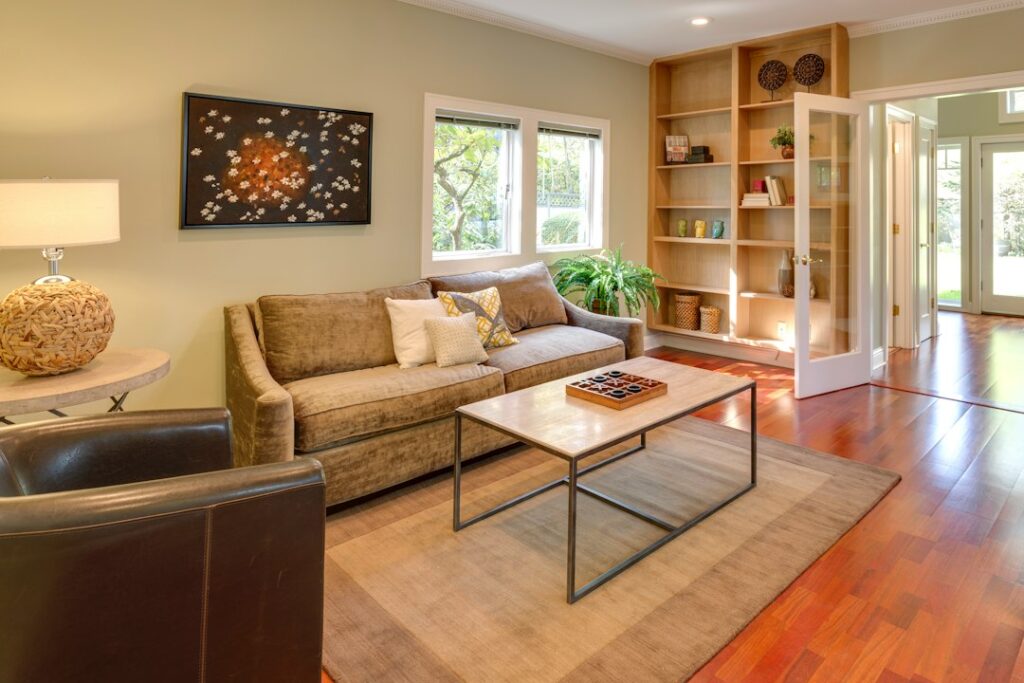
Most living rooms that feel awkward are not short on furniture. They are short on spacing. An accent chairs set of 2 can anchor a conversation area, balance a long sofa or frame a fireplace, but only if the pair sits at the right distance and angle. Push them too far apart and people end up shouting across the room; jam them too close and nobody can walk through.
The quick answer: place a pair of chairs so seated people are roughly 4 to 10 feet apart, leave 30 to 36 inches for main walkways, keep 14 to 18 inches between a chair and the coffee table, and make sure at least the front legs of both chairs rest on the area rug. Those four numbers solve most layout problems before you move a single piece.
- Why an Accent Chairs Set of 2 Works So Well
- Tools and Materials for Planning the Layout
- Four Proven Layouts for a Pair of Chairs
- Spacing Rules That Keep the Room Comfortable
- Rug Coverage and Flooring Considerations
- Choosing the Right Pair for Your Room
- Troubleshooting Common Chair Placement Problems
- Cost Ranges and When to Get Help
- Frequently Asked Questions
From there, the right arrangement depends on your focal point, the size of the sofa and the kind of flooring under everything. Hard floors change the equation, because matched chairs get shifted constantly and every drag leaves a mark if the legs are bare.
Why an Accent Chairs Set of 2 Works So Well
Pairs create symmetry, and symmetry reads as intentional. When you buy an accent chairs set of 2, you get matching seat heights, identical arm widths and the same visual weight on both sides of a layout. That makes planning easier than mixing two unrelated chairs, where one may sit 3 inches lower and throw off sightlines.
Matching chairs also solve a practical problem. A sofa seats three people in theory, but in real life most people avoid the middle cushion. Two chairs across from or beside the sofa add two comfortable, private seats without the bulk of a loveseat. For many households, arm chairs set of 2 are more flexible than a sectional because they can be regrouped for holidays, game nights or a reading corner.
Style matters less than scale. Mid century modern accent chairs set of 2 tend to have slim tapered legs and a lower back, which keeps a small room feeling open. A high back accent chair set of 2 has more presence and works in rooms with 9-foot or taller ceilings, or beside a tall fireplace. Modern accent chairs set of 2 with low, boxy profiles fit well in front of windows because they do not block the view.
Tools and Materials for Planning the Layout
You do not need design software to plan chair placement. A few basic supplies let you test a layout on the actual floor before anything heavy moves.
- 25-foot tape measure
- Painter’s tape or kraft paper to mark chair footprints on the floor
- Felt pads sized to the chair legs (or cups for heavier pieces)
- Furniture sliders for moving chairs across carpet and rugs
- A rug pad cut about 1 inch smaller than the rug on all sides
- A notepad or phone photo of the room with measurements written in
Painter’s tape is the most useful item on that list. Tape the outline of each chair on the floor and sit in the sofa for a few minutes. You will quickly notice if the pair feels too far away, blocks a door swing or crowds a heat register.
Four Proven Layouts for a Pair of Chairs
1. Facing the Sofa
This is the classic conversation layout. Place the sofa on one side of the coffee table and the two chairs directly across, side by side, with a small drink table between them. Keep the chairs 8 to 10 feet from the sofa back at most. Any farther and conversation feels formal. Leave 6 to 12 inches between the two chairs so they read as a set rather than a loveseat.
2. Angled Flanking
Set one chair at each end of the coffee table, angled about 30 to 45 degrees toward the sofa. This creates a U-shape that pulls people inward and works well in square rooms. The inside front corner of each chair should sit roughly in line with the coffee table edge. Angled pairs take more floor space than straight ones, so budget an extra 8 to 12 inches of depth on each side.
3. Fireplace Frame
Place the chairs on either side of the hearth, facing each other or angled slightly toward the room. The sofa then faces the fireplace from across the room. Keep chairs at least 36 inches from the firebox opening, and check the fireplace maker’s clearance guidance for combustibles. Upholstered chairs dry out and fade when they sit too close to radiant heat.
4. Reading Nook or Window Pair
Two chairs with a small round table between them turn an unused corner or bay window into a separate zone. This layout suits open-plan rooms where the main seating faces a TV. Add a floor lamp behind the table so both chairs share the light.
Spacing Rules That Keep the Room Comfortable
Numbers help because eyes lie about distance. Use these as starting points and adjust by feel.
- Conversation distance: 4 to 10 feet between seated people. Under 4 feet feels cramped; over 10 feet feels like a waiting room.
- Coffee table gap: 14 to 18 inches from the chair front to the table edge, close enough to set down a mug.
- Main walkways: 30 to 36 inches. Secondary paths behind chairs can drop to 24 inches.
- Chair to wall: leave 3 to 6 inches if the chair reclines or swivels, so the back does not scuff paint.
- Between the pair: 6 to 18 inches, or enough for a side table if you want one.
Measure the arm-to-arm width of your chairs before buying. Most accent chairs for living room set of 2 run 26 to 33 inches wide, so a pair plus a small table between them needs roughly 6 to 7 feet of wall or floor space.
Rug Coverage and Flooring Considerations
The rug ties the pair to the rest of the seating. The simplest rule: at least the front legs of every seat in the group should sit on the rug. In medium rooms, an 8 by 10 foot rug usually handles a sofa plus two chairs. Larger rooms or angled layouts may need a 9 by 12. If the chairs float completely off the rug, they look disconnected, and the rug looks undersized.
Hard floors deserve extra thought. Accent chairs get moved more than sofas, and a chair with four narrow legs concentrates its weight onto a tiny area. On hardwood, engineered wood and luxury vinyl plank, that pressure plus grit can dent or scratch the finish every time someone scoots in. Put felt pads on every leg, and replace them when they compress or collect debris. On chairs that sit half on and half off a rug, the back legs rest on the bare floor, so those pads do most of the work.
Use a rug pad under the rug. It keeps the rug from creeping when people sit down and push back, which matters with a pair of chairs because both tend to walk toward the wall over time. Choose a pad labeled safe for your floor type; some rubber backings can discolor certain finishes and vinyl.
On carpet, chairs sink slightly and leave dimples. Rotating the pair a couple of inches every few months, or using furniture cups, spreads the load and keeps the pile from crushing permanently.
Choosing the Right Pair for Your Room
When shopping for the best accent chairs for living room layouts, start with seat height. Most sofas have a seat height of 17 to 19 inches, and chairs should land within an inch or two of that so everyone sits at eye level. A pair that sits noticeably higher or lower than the sofa makes conversation feel off.
Next, consider arm style. Chairs with arms feel more substantial and suit a facing-sofa layout. Armless or slipper chairs are easier to angle in tight corners. Back height matters for sightlines: a high back accent chair set of 2 placed in front of a window blocks light, while low-back chairs keep it open.
Finally, think about leg style and your floors. Tapered wood legs are light visually but need good pads. Skirted chairs hide their base and distribute weight across a wider area. Metal legs can scratch faster if pads fall off, so check them regularly.
Troubleshooting Common Chair Placement Problems
- Chairs keep drifting: the rug is sliding or bare legs are skating on a hard floor. Add a gripping rug pad and felt pads with a slightly textured face.
- Room feels crowded: swap the facing layout for an angled one, or pull one chair to a reading corner and use the other near the sofa.
- Nobody uses the chairs: they are probably too far away. Move them within 8 feet of the sofa and add a table within arm’s reach.
- Scratches in an arc on the floor: a missing pad or trapped grit. Clean the floor, inspect every leg and replace worn pads as a set.
- Chairs block the TV or a door: rotate the layout 90 degrees or move the pair to flank the focal wall instead.
Cost Ranges and When to Get Help
Budget pairs of accent chairs often start in the low hundreds for the set, while mid-range upholstered pairs run several hundred to around a thousand dollars. Custom or designer pairs can cost well into the thousands. Plan a modest amount extra for felt pads, a rug pad and possibly a larger rug, which often matters more to the finished look than the chairs themselves.
Most homeowners can handle placement on their own. An interior designer or furniture store design service is worth considering if your room has multiple focal points, an open plan with no walls to anchor against, or radiant floor heating where you want to avoid heavy rugs. If you are refinishing or replacing floors soon, place the chairs after the work is done so new finishes are not marked during move-in.
Frequently Asked Questions
How far apart should two accent chairs be?
Leave about 6 to 18 inches between the chairs when they sit side by side, or enough room for a small table. The seated distance between the chairs and the sofa should stay within 4 to 10 feet for easy conversation.
Should accent chairs match the sofa?
They do not need to match. Many rooms look better when the pair contrasts with the sofa in color or texture while matching it in scale and seat height.
Can I put accent chairs on a rug and the floor at the same time?
Yes. Placing just the front legs on the rug is a common approach. Use felt pads on the back legs so they do not scratch the bare floor, and a rug pad so the rug stays flat.
What size rug works with a sofa and two chairs?
An 8 by 10 foot rug suits most medium living rooms. Larger rooms or angled layouts may need a 9 by 12 so the front legs of every seat can rest on it.
Where should a pair of chairs go in a small living room?
Try placing them side by side opposite the sofa with a narrow table between, or angle them at the ends of the coffee table. Armless chairs with slim legs take up less visual space.