
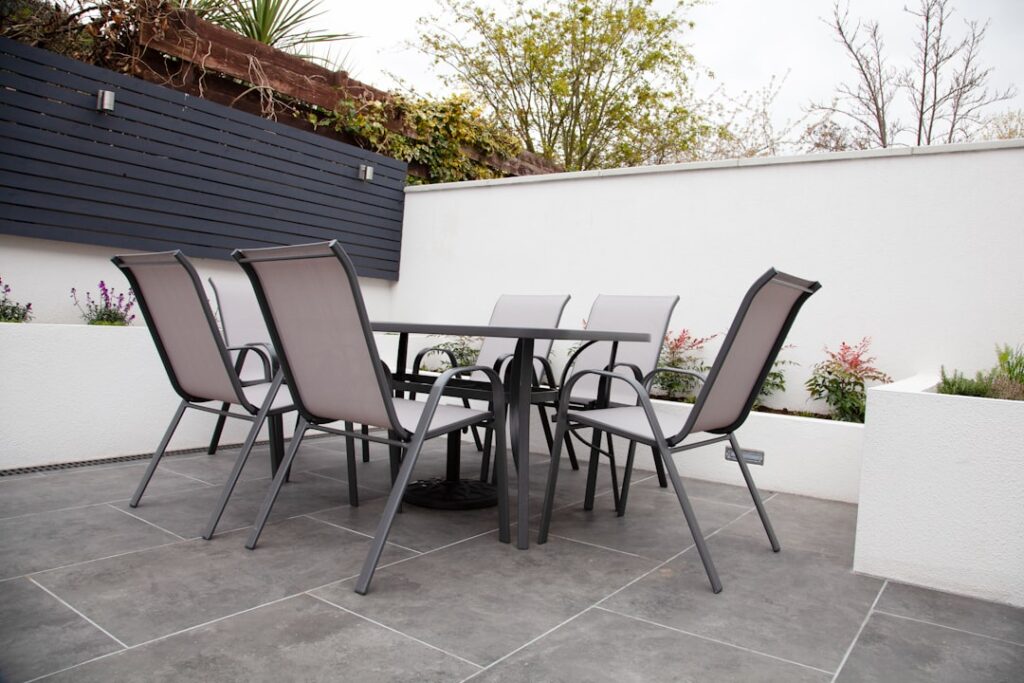
Dining sets are where outdoor furniture buyers overspend on looks and underspend on measurements. A patio table and chairs set for six needs roughly 12 by 14 feet of clear patio once you add chair pull-back — more floor than many patios have — and the wrong chair-to-table height ratio ruins every meal on even the prettiest set. This guide covers buying complete dining sets: how to size them to your space and your headcount, which material combinations hold up, and where sets beat piecing things together (and where they don’t).
Part of our Decks & Outdoor guide — explore the full guide →
Why Buy a Set (and When Not To)
Matched sets solve the two problems that sink piecemeal buying: height compatibility and finish matching. Manufacturers pair chairs with 17- to 18-inch seat heights to 28- to 30-inch tables, and the finishes weather at the same rate. Sets also price 15 to 25 percent below the same pieces bought separately. The trade-off is lock-in — if the chairs are mediocre, you own six of them, and replacement chairs matched to a discontinued set are effectively unobtainable.
Skip the set when you already own a table you love, when you want premium chairs on a budget table (a legitimate strategy — you sit in chairs, not tables), or when your space needs an unusual table size. For a deep dive on choosing the table alone — shapes, sizes, and materials in detail — see our patio dining table guide; this article stays focused on the complete package.
Sizing: Headcount to Footprint
Work backward from how many people you actually feed regularly, not your best-case Thanksgiving:
- 2 people: bistro set, 24- to 32-inch table — fits an 8×8 corner
- 4 people: 36- to 44-inch round or square — wants 10×10 clear
- 6 people: 60- to 72-inch rectangle or 54-inch round — wants 12×14
- 8 people: 84-plus-inch rectangle or extension table — 14×16 and up
The clearance math is non-negotiable: 36 inches from table edge to any wall, rail, or planter so chairs slide out, and 24 inches of table-edge width per diner. Tape the footprint on the slab before ordering. If the numbers don’t fit, size down the set rather than accepting a table you have to turn sideways to walk past — and if you’re still planning the slab itself, our patio design guide covers sizing zones around dining.
Material Pairings That Last
Sets live or die by their weakest material. Combinations that earn their price: powder-coated aluminum frames with a slat-top or glass table and sling or cushioned chairs (rustproof, light, the best all-arounder at $600 to $2,000 for six); teak or eucalyptus wood sets ($1,200 to $5,000, with eucalyptus wanting annual oil); cast aluminum in the ornate traditional style (heavy enough for wind, zero rust, $800 to $2,500); and HDPE resin wicker chairs around an aluminum-framed table. Approach with caution: tempered-glass tops in hail country (they’re safe but loud and smudge-prone), steel-framed budget sets left uncovered, and any set whose chairs stack the description “PVC wicker” with a sub-$400 price — that’s two-summer furniture.
Chair Details That Decide Comfort
You’ll notice the chairs long after you stop noticing the table. Check seat height (17 to 18 inches with cushion compressed), a back angle of a few degrees past vertical, and arms that slide under the table apron so chairs tuck away. Sling chairs (fabric stretched on frame) drain instantly and need no cushions — ideal for pool areas; cushioned chairs eat better but add fabric maintenance, so demand solution-dyed olefin or acrylic covers (our patio chair cushions guide explains the fabric tiers). Swivel-rocker chairs add $50 to $100 each and get chosen first at every meal — worth it on at least two of six. And stackability matters more than it seems: six stacking chairs winter in one corner of the garage.
Shapes and Social Geometry
Rectangles serve the most diners per square foot and suit long patios; rounds fit conversation better (everyone faces everyone) and shave clearance in tight squares; squares seat eight nicely at 60 inches but dominate a small space. Extension tables — usually a butterfly leaf hidden under the top — are the sleeper pick for families who host monthly: a 60-inch daily table that opens to 84 inches beats living with banquet furniture year-round. Counter-height sets (36-inch table, 24-inch stools) trade some comfort for sightlines over deck railings; they make sense on raised decks and almost nowhere else.
Price Tiers for a 6-Person Set
Under $600: steel frames, glass top, thin cushions — a covered-porch or starter buy; expect three to five seasons. $600 to $1,500: the value tier — aluminum or quality steel, sling or olefin-cushioned chairs, real warranties; most buyers should land here. $1,500 to $3,000: cast aluminum, eucalyptus, better aluminum-slat tables, Sunbrella upgrade options. Above $3,000: teak and premium aluminum sets that outlast the mortgage. At every tier, add $100 to $250 for covers or plan indoor cushion storage — a patio storage box handles six chairs’ worth of pads.
Shading the Dining Set
Nobody eats lunch at an unshaded table in July, so treat shade as part of the set purchase. The table-hole market umbrella is the default: 9 feet of canopy covers a 48-inch table with chairs, 11 feet covers a 72-inch rectangle, and the base under the table should weigh 50 pounds minimum even with the table steadying the pole. Cantilever umbrellas ($200 to $700) float shade over the table from the side — better sightlines, easier chair movement, but they need a 100-plus-pound base or deck mount and more storage height. Permanent structures change the calculus entirely: a dining set under a gazebo or pergola skips the umbrella hole question and roughly doubles the hours a day the table is usable. Whichever route, buy solution-dyed umbrella fabric for the same reason as cushions — printed canopies fade to pastel in one summer.
Care and Off-Season Strategy
Dining sets take the most food abuse of any outdoor furniture, so wipe spills same-day (oil and wine stain wood and etch cheap powder coat), and wash the whole set monthly in season with soapy water. Tighten chair bolts twice a summer — dining chairs get dragged, and dragging walks fasteners loose. Come winter, stack the chairs under cover, store cushions dry, and either cover the table with a fitted vented cover or tip glass-top tables on edge in the garage; more glass tops die to shifting ice on a horizontal cover than to hail. Ten minutes of fall effort is the difference between a set that lasts five years and the same set lasting twelve.
Set-Buying Pitfalls
Four mistakes come up constantly. Counting the umbrella hole as an umbrella — the base is rarely included, and a 9-foot market umbrella plus base adds $120 to $350. Buying seven-piece sets for the number rather than the fit — six chairs around a 60-inch table sit elbow-to-elbow; check the per-person edge math. Ignoring chair weight — sub-10-pound chairs blow over weekly on exposed patios. And skipping the wobble test on display models: a set that rocks on a flat showroom floor will drive you insane on real pavers. Online buyers get no wobble test, so read the one- and two-star reviews specifically for “wobble,” “rust,” and “faded” — those three words predict outdoor furniture regret better than the overall star rating does.
Bottom Line
Measure the space, tape the footprint, buy the best chairs the budget allows on an aluminum or hardwood table, and cover it all in the offseason. A well-chosen patio table and chairs set is the difference between a patio you photograph and one where dinner actually migrates outside from May to October — and if the table is the piece you’re pickiest about, start with our dedicated dining table guide and build the seating around it.


