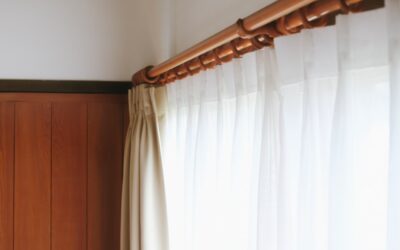
Hang a set of drapes wrong and the whole room reads unfinished, but the fix usually starts with the hardware, not the fabric. Adjustable curtain rods telescope to fit a range of window widths, which is exactly why they dominate the shelves at Target, Home Depot, and Wayfair. The catch is that adjustable curtain rods vary wildly in diameter, weight capacity, and finish, and picking the wrong size leaves your rod sagging or your panels bunched. Here is how a pro sizes, selects, and mounts them so they hang straight for years.
- How Adjustable Rods Actually Work
- Common Adjustable Rod Sizes
- Rod Diameter and Weight Capacity
- Single vs. Double Rods
- Brackets, Finials, and Mounting Hardware
- Step-by-Step Installation
- Wrap Rods, Bay Windows, and Special Cases
- Matching Rod to Curtain Header
- Top Picks and What to Spend
- Common Mistakes to Avoid
How Adjustable Rods Actually Work
An adjustable, or telescoping, rod is really two tubes: a smaller inner tube that slides inside a larger outer tube. You extend it to your window’s width and lock it, either with a tension screw or a simple friction fit. The convenience is obvious, but the trade-off is strength. The point where the two tubes overlap in the middle is the weakest spot, which is why heavy drapes on a long rod tend to droop in the center.
That overlap is also why you should never extend a rod to the very top of its range with heavy curtains. Buy a rod whose width range centers on your window rather than one you have to stretch to its limit.
Common Adjustable Rod Sizes
Manufacturers sell overlapping size ranges so you can match nearly any window. The most common telescoping ranges are:
- 28 to 48 inches — small windows, half-windows, and cafe curtains.
- 48 to 84 inches — the most popular range, covering standard bedroom and living room windows.
- 66 to 120 inches — wide windows, sliding patio doors, and small window walls.
- 120 to 170 inches and up — extra-wide spans, usually with a center support bracket included.
A field rule that always improves the look: mount the rod so it extends 3 to 6 inches beyond the window frame on each side. That lets the curtains stack off the glass when open, making the window appear larger and letting in more light. So for a 36-inch window, you actually want roughly 44 to 48 inches of rod.
Rod Diameter and Weight Capacity
Diameter drives both looks and strength. Thin 1/2-inch and 5/8-inch rods suit lightweight sheers and short cafe curtains. Standard 3/4-inch and 1-inch rods handle most cotton and polyester panels. For heavy blackout drapes, velvet, or lined curtains, step up to a 1-1/8-inch or 1-1/4-inch rod, ideally metal rather than resin.
Weight capacity is the spec buyers ignore most. A cheap 5/8-inch adjustable rod may only be rated for 8 to 10 pounds spread across its length, while a 1-inch steel rod can carry 20 pounds or more. Lined blackout panels for a large window can easily weigh 12 to 15 pounds per pair, so match the rod to the fabric. When a rod sags in the middle, undersized diameter or a missing center bracket is almost always the cause.
Single vs. Double Rods
A single rod holds one layer of curtains. A double rod uses a bracket with two mounting arms so you can hang sheer panels on the back rod and heavier drapes on the front. That layered look gives you daytime privacy with light plus full nighttime coverage, and it is worth the small upcharge in bedrooms and living rooms.
Double adjustable rod sets run about $18 to $45 depending on length and finish, versus $10 to $25 for a comparable single. If you plan to layer sheers and drapes, buy the double from the start rather than trying to retrofit later.
Brackets, Finials, and Mounting Hardware
Most adjustable rods ship with two end brackets and a set of finials, the decorative caps that thread onto each end. Longer rods over about 60 inches should include or be paired with a center support bracket to stop mid-span sag; if yours did not come with one, add it. Standard brackets hold the rod 2 to 3 inches off the wall, enough clearance for the curtains to clear a window sill or crank.
The screws in the box are almost always the weak link. Cheap 1/2-inch screws stripped into bare drywall will pull out under the weight of real curtains. Whenever a stud does not line up with your bracket, use plastic or self-drilling metal drywall anchors rated for at least 20 pounds each.
Step-by-Step Installation
You can hang a rod in about 20 minutes with a drill, a level, a tape measure, and a pencil. Work in this order:
- Decide the height. For a taller look, mount the brackets 4 to 6 inches above the window frame, or higher toward the ceiling for a dramatic floor-to-ceiling drape.
- Mark the bracket positions an equal distance beyond each side of the frame, then use a level to confirm both marks sit at the exact same height.
- Drill pilot holes. Drive screws into studs where possible; otherwise install anchors first, then screw the brackets to them.
- If the rod is over 60 inches or carries heavy drapes, mark and mount the center support bracket midway.
- Slide the curtain panels onto the rod, thread on the finials, then set the rod into the brackets and tighten any set screws.
Before you drill, dry-fit the extended rod against the wall and eyeball it. It is far easier to adjust a pencil mark than to patch an extra hole.
Wrap Rods, Bay Windows, and Special Cases
Standard straight rods cover most windows, but a few situations call for a different adjustable design. For a bay window with three angled sections, look for an adjustable bay rod kit with pivoting corner connectors, or hang three separate rods and let the panels meet in the corners. Corner windows in modern homes use L-shaped or wrap-around connectors so a continuous run of drapes can turn 90 degrees.
Wrap rods, sometimes called blackout rods, bend back toward the wall at each end to close the light gap along the sides of the window. They are the cheapest way to darken a bedroom without upgrading to full drapery track. If your goal is real darkness, a wrap-style adjustable rod combined with lined panels blocks far more light than a flat rod where daylight streams around the edges.
Matching Rod to Curtain Header
The way your curtains attach changes which rod looks right. Grommet-top panels slide directly onto the rod and pair well with 1-inch and 1-1/8-inch diameters; check that your grommet inner diameter is at least 1/4 inch larger than the rod so panels glide. Rod-pocket curtains have a sewn sleeve and hide the rod entirely, so a plain telescoping rod works fine and finials matter less.
Tab-top and back-tab curtains show a slice of rod between loops, so a decorative finish is worth the money there. Pinch-pleat and pleated panels use drapery hooks and rings, which means you want a rod with matching rings rather than the fabric riding directly on the metal. Sorting this out before you buy prevents the common mistake of a beautiful rod that fights the curtains you already own.
Top Picks and What to Spend
You do not need to overspend, but the cheapest tension rods disappoint on anything heavier than sheers. Solid value choices include the Kenney Fast Fit and Mainstays adjustable rods for basic rooms at $8 to $15, and Umbra Cappa or Rod Desyne sets for a heavier, more decorative look at $20 to $50. For very wide patio doors, look for a set that explicitly includes a center bracket and lists a weight rating of 15 pounds or more.
Spend where it counts: a 1-inch metal rod with a real center support costs only a few dollars more than a hollow resin one and will keep your drapes hanging dead level for the life of the room.
Common Mistakes to Avoid
Three errors account for most disappointing curtain installs. The first is buying a rod stretched to the top of its range, which leaves the two tubes barely overlapping and guarantees a sag. Size down a range so your window sits near the middle of the rod’s span. The second is skipping the center bracket on long rods; on anything past 60 inches, that single $5 part is what keeps the middle from bowing.
The third is trusting the tiny screws in the box on bare drywall. Curtains that seem light gain real weight once lined or doubled, and a bracket pulling loose takes a chunk of wall with it. Anchor properly, hit studs when you can, and your adjustable rod will do exactly what it promises: fit almost any window and hang straight for years.