
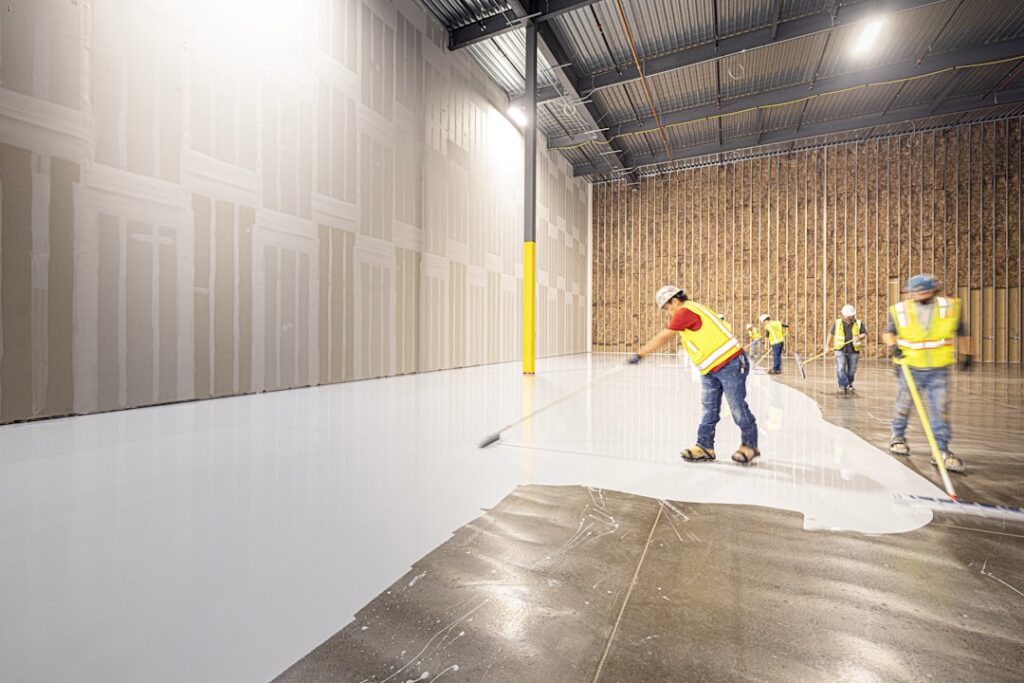
The DIY epoxy kits stocked at home improvement stores are a different product entirely from what professional installers spec for commercial kitchens, aircraft hangars, and high-end residential garages. Advanced epoxy flooring refers to multi-layer systems built around 100 percent solids resins, broadcast aggregates, and polyaspartic or polyurethane top coats engineered for chemical resistance and decades of wear. Understanding the system architecture is the only way to compare quotes accurately, because raw square-foot pricing tells you almost nothing about what is actually being installed.
Part of our Epoxy, Concrete & Garage Floors guide — explore the full guide →
What Makes an Epoxy System Advanced
Three factors push a coating from basic to advanced. First, resin chemistry: 100 percent solids epoxy contains no solvents and cures to 12 to 25 mils of actual thickness, versus 3 to 5 mils for water-based DIY kits. Second, system layers: a true industrial system stacks primer, base coat, broadcast media, secondary coat, and top coat. Third, surface prep: diamond grinding to a CSP 3 to 4 profile is mandatory, never acid etching.
Without all three, you have a glorified paint job. Advanced systems take 2 to 4 days to install and last 15 to 25 years in commercial use, 25 to 40 years in residential garages.

Common System Configurations
Five configurations cover the majority of premium installations:
- Quartz broadcast system — primer, base, quartz aggregate broadcast, two clear top coats. Best for commercial kitchens and labs
- Metallic epoxy — primer, pigmented metallic base, manipulated for swirl patterns, two polyaspartic top coats. Showroom and high-end residential
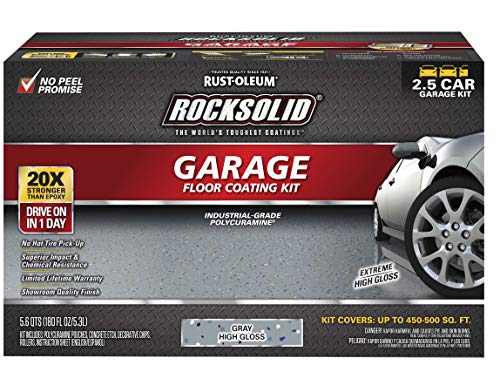
- Flake (chip) system — primer, base, vinyl flake broadcast, clear epoxy and polyaspartic top. Garages and workshops
- Solid color system — primer, two coats pigmented epoxy, single polyaspartic top. Industrial use
- Anti-static ESD system — conductive primer, grounded base, dissipative top. Electronics manufacturing
Flake systems dominate residential garage installations because the chips hide minor surface variation and provide visual texture that hides dirt.
Polyaspartic Top Coats Matter
The top coat carries the wear, UV resistance, and stain resistance for the entire system. Polyaspartic polyurea outperforms polyurethane and epoxy as a top coat in three measurable ways. UV stability prevents yellowing in sun-exposed areas. Cure time drops from 12 hours per coat to 1 hour, letting installers complete a system in one day. Abrasion resistance, measured by Taber CS-17 testing, runs 30 to 50 percent better than polyurethane.
Premium systems use a single polyaspartic top coat applied at 4 to 6 mils. Budget systems substitute polyurethane and need a thicker buildup to match performance, adding labor without adding value.
Realistic Pricing Tiers
Expect to pay these ranges per square foot installed:
- Basic flake system (1-day install) — $4 to $6 per square foot
- Premium flake with polyaspartic top — $7 to $10 per square foot
- Metallic epoxy with polyaspartic — $10 to $16 per square foot
- Quartz broadcast commercial system — $9 to $14 per square foot
- Industrial 4-coat system with secondary containment — $14 to $25 per square foot
A typical 600-square-foot garage with a premium flake system runs $4,200 to $6,000. Anything quoted under $3 per square foot is using DIY-grade product and will not perform like a real industrial coating.
Surface Prep Is the Whole Job
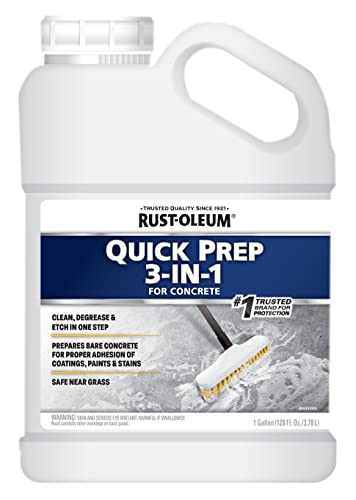
The single biggest predictor of epoxy success or failure is the prep. Concrete must be ground with diamond-segmented planetary grinders to an International Concrete Repair Institute Concrete Surface Profile of CSP 3 to CSP 4. That removes laitance, opens pores, and creates the mechanical bond the resin needs. Acid etching, which DIY kits recommend, only achieves CSP 1 to CSP 2 and leaves residual acid that can interfere with curing.
Moisture testing is non-negotiable. ASTM F1869 calcium chloride or ASTM F2170 relative humidity probes must show the slab is below the manufacturer’s specified limits, typically 3 pounds per 1,000 square feet per 24 hours or 75 percent RH. Coating over wet concrete causes osmotic blistering within months.
Where Advanced Epoxy Makes Sense
Not every application justifies the premium. The strongest fits include:
- Garages with heavy vehicles, hot tires, or hobby work
- Basements finished as gyms, workshops, or media rooms
- Commercial kitchens requiring USDA-compliant sanitary floors
- Auto showrooms using metallic finishes for visual impact
- Industrial facilities with chemical exposure or forklift traffic
For living spaces inside homes, polished concrete or stained sealed concrete often costs less and offers a more residential aesthetic.
Chemical Resistance Specifications
Industrial-grade systems carry ASTM D1308 chemical resistance ratings. The data sheet should list specific reagents and exposure times the system survives without staining or softening. For automotive use, look for resistance to brake fluid, transmission fluid, hydraulic oil, and battery acid at minimum. Food-service systems need resistance to lactic acid, citric acid, and chlorine bleach.
A coating that fails to specify chemical resistance ratings is almost certainly a residential-grade product being sold at an industrial price point.
Installation Timeline
A two-car garage takes roughly this schedule from a competent crew:
- Day 1 morning — diamond grinding, vacuum, crack repair with epoxy mortar
- Day 1 afternoon — primer coat, base coat with flake broadcast while wet
- Day 2 morning — scrape excess flake, sand smooth
- Day 2 afternoon — clear epoxy lockdown coat, polyaspartic top coat
- Day 3 — light foot traffic at 24 hours, vehicle traffic at 72 hours
Polyaspartic top coats compress that to a one-day install for crews running fast cure systems.
Pros and Cons
The honest tradeoffs:
- Pros: 15-40 year service life, chemical and abrasion resistant, easy to clean, customizable appearance, increases property value
- Cons: high upfront cost, must be professionally installed, slippery when wet without anti-slip aggregate, repairs require matching the original system, hot tire pickup if cured incorrectly
Done right, advanced epoxy flooring outlasts most other floor types in demanding environments. Verify the system spec, not just the price.


