The decorative barn door track sold at home centers was never meant for a 400-pound livestock gate that swings in wind and dust. Genuine agricultural sliding barn door hardware is a different animal entirely, engineered for heavy doors, harsh weather, and daily abuse on working farms and outbuildings. If you’re outfitting a pole barn, machine shed, stable, or oversized garage, understanding the difference between farm-grade and decorative hardware will save you from a door that jams, sags, or blows off its track. This guide breaks down the systems, ratings, and installation basics.
Part of our Windows & Doors guide — explore the full guide →
- Agricultural vs. Decorative Barn Door Hardware
- Box Track vs. Flat Track Systems
- Understanding Weight Ratings
- Key Components of a Complete System
- Sizing the Track and Opening
- Installation Basics
- Weather and Maintenance Considerations
- Insulation, Sealing, and Draft Control
- Single, Bi-Parting, and Bypass Configurations
- Choosing the Right System for Your Barn
Agricultural vs. Decorative Barn Door Hardware
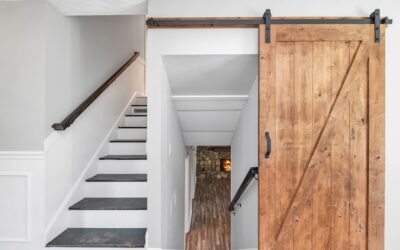
The rustic sliding doors popular in kitchens and bedrooms use flat-track hardware rated for roughly 100 to 200 pounds. It looks great indoors but isn’t built to carry a heavy exterior door or survive weather. Agricultural hardware, by contrast, is designed to move doors weighing 400 to 1,000 pounds or more, often across openings 10 to 20 feet wide.
The differences show up in every component: thicker steel, sealed or heavy-duty bearings, larger rollers, and galvanized or powder-coated finishes that resist rust. If a door protects equipment, animals, or hay from the elements, farm-grade hardware isn’t optional, it’s the whole point.
Box Track vs. Flat Track Systems
The single biggest decision is which track style to run. Each suits different conditions.
Box Track (Round Rail)
Box track, sometimes called round-rail, is the traditional workhorse of American agriculture. The rollers ride inside or around an enclosed steel track, which shields the wheels from snow, ice, hay chaff, and debris. This enclosed design is why box track dominates on exterior barn and shed doors in tough climates. It handles the heaviest doors and the widest openings, and the trolleys resist derailing even in gusty wind.
Flat Track
Flat track uses rollers that ride on the face of a flat steel bar. It’s simpler, often cheaper, and easier to install, but the exposed rollers collect debris and ice, so it’s better suited to protected or interior agricultural uses like a shop or indoor stall. Heavy-duty flat-track kits exist for farm use, but for a fully exposed exterior door in a snowy region, box track is the safer bet.
Understanding Weight Ratings
Every system carries a maximum door weight, and you must not treat it as a target to hit. Calculate your door’s actual weight, wood species, thickness, height, and width all matter, then choose hardware rated well above it. A solid 4-by-8-foot exterior door in framing lumber and sheathing can easily exceed 300 pounds; add insulation or steel cladding and it climbs fast.
- Light farm doors (up to ~400 lb): Standard heavy-duty box or flat track.
- Medium doors (400–700 lb): Reinforced box track with dual trolleys per hanger.
- Heavy doors (700–1,000+ lb): Commercial box track with four-wheel trolleys and steel headers.
Build in a safety margin of at least 25 percent above your calculated weight. Underrating hardware is the most common cause of premature roller failure and sagging doors.
Key Components of a Complete System
A farm-grade kit is more than track and rollers. Know what you need before you order so you’re not stalled mid-install.
- Track: Sized to your opening, typically twice the door width for full clearance.
- Trolleys/hangers: The wheeled carriers that bolt to the door top; heavier doors need more wheels.
- Track brackets: Mount the track to the header; spacing depends on load.
- Door guides/stay-rollers: Bottom guides that keep the door from swinging away from the wall in wind.
- Stops and bumpers: Prevent the door from rolling off either end.
The bottom guide matters more than people expect on exterior doors. Wind can push an unguided door away from the building, straining the top rollers and letting weather in.
Sizing the Track and Opening
To fully expose the opening, the track should run about twice the width of the door so the door can slide completely clear. For a bi-parting setup, where two doors meet in the middle and slide apart, plan wall space on both sides. Measure the header height too; you need solid structure above the opening to mount track brackets into, and a heavy door demands a robust, well-anchored header.
Account for ground clearance at the bottom. Exterior farm doors usually hang one to two inches off grade to clear mud, snow, and uneven ground while still sealing reasonably well against drafts.
Installation Basics
Mounting starts with a dead-level track, because gravity will find any slope and the door will creep to the low end on its own. Anchor track brackets into the header framing, never into sheathing alone, using lag bolts sized for the load. Space brackets according to the manufacturer’s chart; heavier doors need brackets every 16 to 24 inches.
Hang the door with a helper or a lift, since these doors are heavy and awkward. Set the bottom guide once the door rolls freely, then install end stops so the door can’t overrun the track. Test the full travel several times before trusting it, and confirm the door clears the opening completely and seats against its stops without binding.
Weather and Maintenance Considerations
Outdoor hardware lives a hard life. Choose galvanized or powder-coated steel to fight rust, and inspect the rollers, brackets, and fasteners at least twice a year. Keep box track clear of nesting debris and hay, and give exposed bearings a shot of appropriate lubricant per the maker’s guidance. Retighten lag bolts annually, because vibration and seasonal wood movement can loosen them over time.
A door that suddenly gets hard to slide is usually telling you a roller is failing or debris has packed the track, catch it early and you avoid a bent rail or a dropped door.
Insulation, Sealing, and Draft Control
On a working farm building, a sliding door isn’t just a moving wall, it’s a barrier against wind, snow, and temperature swings that affect livestock, stored feed, and equipment. Because sliding doors hang slightly off the opening to roll freely, they leave gaps that let drafts and weather in unless you address them. Brush seals, rubber sweeps, and jamb weatherstripping close those gaps without impeding travel.
If the building is heated or houses animals, consider an insulated door core, foam board sandwiched inside a framed door, to slow heat loss. Pair that with a good bottom guide and a floor sweep so the door seals reasonably tight when closed. Keep in mind that adding insulation and cladding increases the door’s weight substantially, which loops back to your hardware rating: always weigh the finished, insulated door, not the bare frame, when selecting trolleys and track.
Single, Bi-Parting, and Bypass Configurations
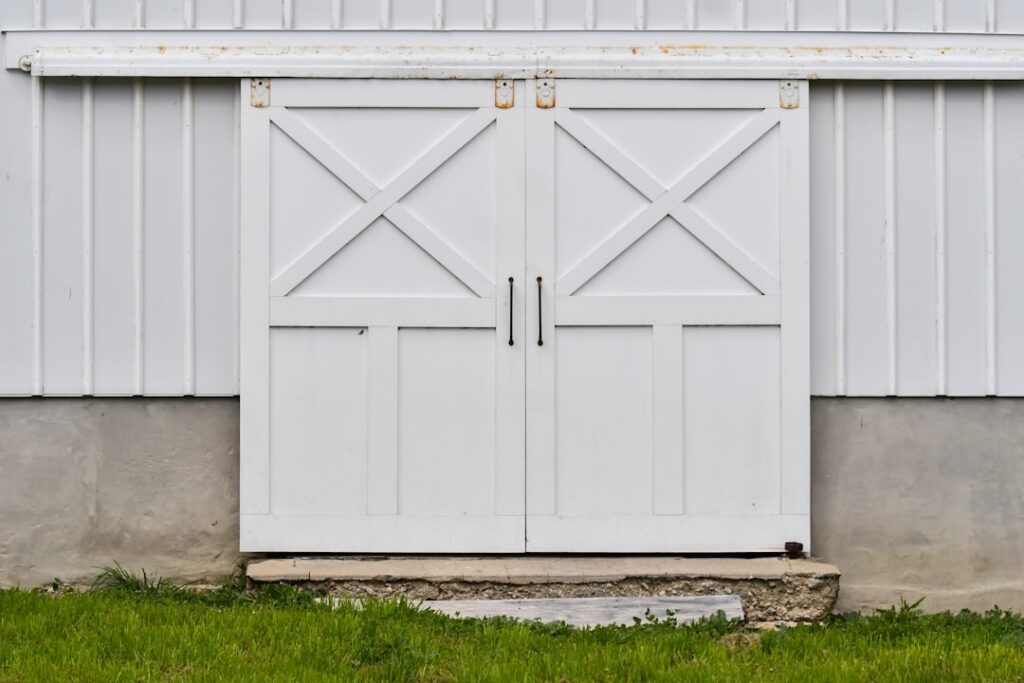
Farm openings come in many sizes, and the door configuration you choose affects both hardware and usable clearance. A single sliding door is simplest and works well up to moderate widths, but very wide openings force a long, heavy single door and a track twice that width. For large equipment doors, a bi-parting setup, two doors that meet in the center and slide apart, halves each door’s weight and needs less side wall clearance per door.
Bypass systems, where two or more doors slide past each other on parallel tracks, suit openings where you lack wall space on either side, though they only ever expose part of the opening at once. Match the configuration to how you actually move through the opening: a bi-parting design gives the widest clear drive-through for tractors and trucks, while a single door is fine for a walk-in or small equipment bay. Plan the header structure and track brackets around whichever layout you pick, since a wider or doubled setup puts more total load on the mounting header.
Choosing the Right System for Your Barn
Match the hardware to the job: box track for exposed, weather-beaten exterior doors and the heaviest loads, heavy-duty flat track for protected shops and interior stalls. Weigh your door honestly, add a safety margin, and buy a complete kit with a proper bottom guide rather than piecing together mismatched parts. Quality agricultural sliding barn door hardware costs more upfront than a decorative kit, but on a working farm it’s the difference between a door that serves for decades and one you’re repairing every season. Spend once, install it level and well-anchored, and it will glide reliably through every storm your property throws at it.