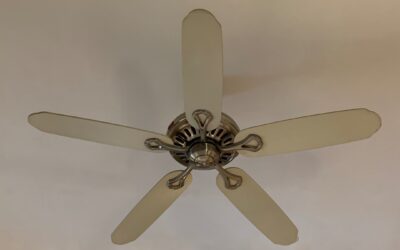
Few light fixtures make a room’s theme click into place like a set of spinning propeller blades overhead. An airplane ceiling fan puts a working propeller or a wing-and-fuselage motif on the ceiling, turning a child’s aviation bedroom, a man cave, or a hangar-style game room into a genuine showpiece. It cools the room and doubles as the centerpiece decor, which is a rare combination in a single fixture.
These fans range from playful nursery pieces to serious replica-quality models with detailed engine housings. Knowing what separates a novelty toy from a fan that will actually move air for a decade saves you from a disappointing purchase.
The Main Styles Available
Airplane-themed fans fall into a few distinct camps, and the right one depends on the room and the age of the person it is for. Some lean cartoonish and bright, others go for realistic vintage-warbird detailing.
- Propeller-blade fans: The blades themselves are shaped and painted like a spinning airplane propeller, often two or three blades in metallic or wood finishes.
- Full-model fans: A detailed fuselage, wings, and tail hang below the blades, mimicking a whole aircraft. These are the boldest statement pieces.
- Nursery and kids’ fans: Softer colors, friendly biplane shapes, and often an integrated light kit for a child’s room.
- Industrial and vintage-warbird styles: Riveted metal, olive-drab or silver finishes, and a WWII aesthetic for adult spaces and hangars.
Full-model fans command attention but need higher ceilings to clear the hanging fuselage. Propeller-blade styles fit standard rooms more easily while still selling the aviation theme.
Sizing the Fan to the Room
Blade span, called the sweep, determines how much air the fan moves and whether it looks right in the space. Match the sweep to the room’s square footage:
- Up to 75 sq ft (small nursery): 29 to 36-inch sweep.
- 76 to 144 sq ft (standard bedroom): 42 to 48-inch sweep.
- 144 to 225 sq ft (large room): 52-inch sweep.
- 225+ sq ft (great room or garage): 56 inches or larger, or two fans.
Ceiling height matters just as much. Building code and safety guidance call for at least 7 feet of clearance from the floor to the blades, and 8 to 9 feet is ideal for airflow. If a hanging-model fan drops 18 inches below the mount, you need an 8-foot ceiling minimum to keep it out of reach and looking proportional.
Motor Quality and Airflow
The most common disappointment with novelty fans is a weak motor that spins but barely stirs the air. Look past the theme and check the specs. Airflow is measured in cubic feet per minute (CFM); a decent fan moves 4,000 to 6,000 CFM, and a strong one exceeds 6,000. Anything under 3,000 CFM is decorative more than functional.
Motor type tells you a lot. DC motors run quieter, use up to 70 percent less energy, and usually offer more speed settings than older AC motors. For a bedroom where quiet matters, a DC-motor fan is worth the extra cost. Also check the warranty; a lifetime motor warranty signals the maker trusts the build, while a one-year warranty hints at a novelty-grade unit.
Lighting and Control Options
Many airplane fans integrate a light, which matters in a kid’s room that may have no other ceiling fixture. Modern models use LED light kits that last 20,000 hours or more and run cool. Some theme fans style the light as a landing lamp or engine glow, which reinforces the look.
Controls range from a simple pull chain to a handheld remote or full smart-home integration. For a child’s room, a wall-mounted control or remote kept by the parent avoids the endless pull-chain yanking. Smart models that work with Alexa or Google let you set the fan and light on a schedule, handy for bedtime routines. Confirm the fan supports a reversible motor, too, so you can run it clockwise in winter to push warm air down.
Installation Basics
An airplane ceiling fan installs like any other ceiling fan, with one caveat: theme fans, especially full-model styles, can be heavier than plain fans, so the electrical box has to be rated to hold them. Replace any standard lighting box with a fan-rated brace box mounted to the joists, capable of supporting the fan’s dynamic load.
The basic sequence is familiar: cut power at the breaker, mount the rated box, attach the downrod and bracket, wire the fan to the house leads matching black to black and white to white, then hang and balance the blades. Full-model fans may ship with the fuselage as a separate piece that clips on after the motor is mounted. If your wiring is old or you are uncomfortable working overhead with a heavy fixture, an electrician handles the job in an hour for $100 to $200.
Where These Fans Work Best
The obvious home is a child’s aviation-themed bedroom, where a bright biplane fan anchors the whole decor scheme. But these fans have grown up. A vintage-warbird propeller fan looks sharp in a home office, a basement bar, or a garage workshop with an aviation lean. Hangar-style game rooms and man caves are naturals for the full-model statement fans.
Think about how long the theme will last before committing. A toddler who loves planes today may want a different room in five years, so a subtler propeller-blade style ages better than a cartoon biplane. For an adult enthusiast, though, a detailed replica fan is a permanent conversation piece that earns its place. Whatever style fits, pick one with a real motor and a proper CFM rating so the fan does its actual job long after the novelty of the theme has settled into everyday comfort.
What These Fans Typically Cost
Price tracks closely with build quality and detail, and the spread is wide. A basic child’s biplane fan with a plastic housing and a small motor runs $80 to $150, and honestly many of these are more decoration than serious air movers. Mid-range propeller-blade fans with a proper AC or DC motor and metal construction land in the $150 to $300 range, which is where most families should shop for something that lasts. Premium full-model replica fans, especially detailed warbird designs with quality motors, can climb to $400 or more.
Factor in a few extras when budgeting. A downrod for a high or vaulted ceiling adds $15 to $40. A remote or smart-control kit runs $25 to $60 if not included. And if your ceiling lacks a fan-rated box, an electrician charges $100 to $200 to install one along with the fan. Spending a little more up front on a real motor pays off in a fan that actually cools the room instead of just spinning decoratively.
Balancing and Reducing Wobble
Nothing ruins a themed fan faster than a distracting wobble, and novelty fans are more prone to it because their blades and hanging models are not always weighted evenly from the factory. After installation, run the fan on high and watch for movement. A slight wobble usually means the blades are not balanced, which a simple balancing kit fixes. Clip the plastic gauge to each blade in turn, find the one causing the shake, and press a small stick-on weight onto the top of that blade until the wobble disappears.
Deeper wobble points to installation issues rather than blade balance. Confirm the downrod ball is fully seated in the bracket, the mounting box is tight to the joist, and every blade screw is snug. A full-model fan with a heavy hanging fuselage magnifies any imbalance, so take extra care to center and secure that component. Ten minutes of balancing turns a shaky fan into one that spins smooth and quiet, which is exactly what you want over a bed where the theme is supposed to soothe, not distract.