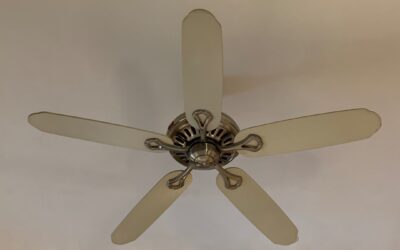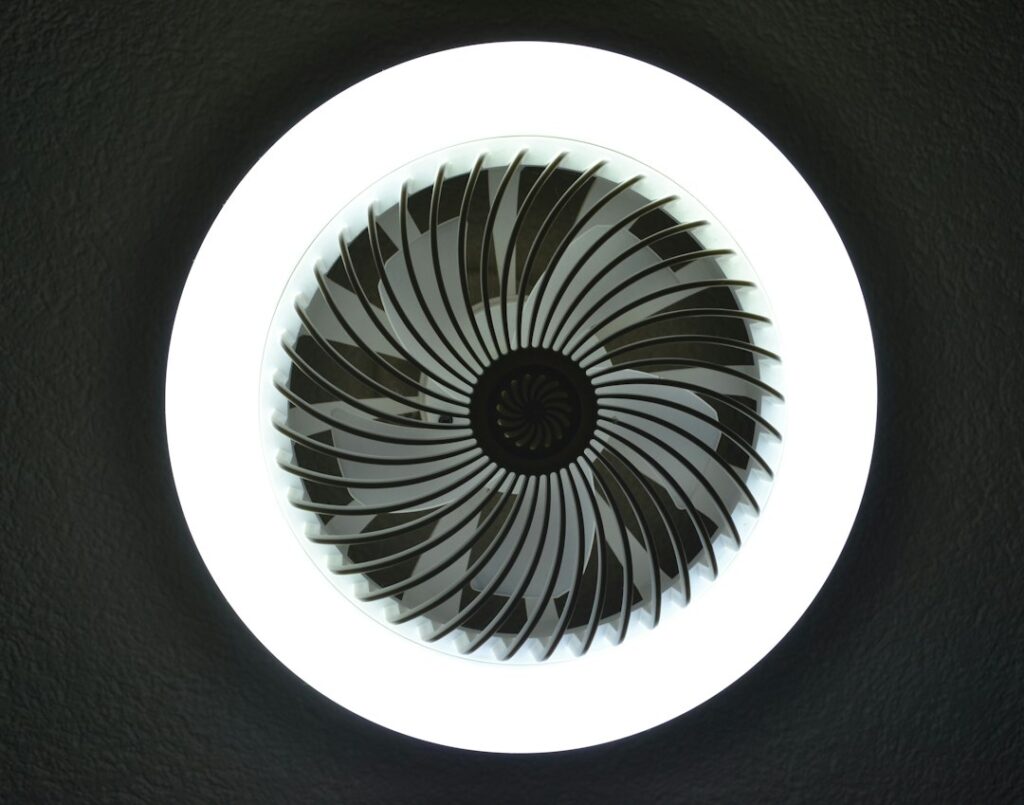
If you have ever cracked your knuckles reaching up near a fan in a low-ceilinged room, you already understand the problem this design solves. A flushmount ceiling fan, also called a hugger or low-profile fan, mounts directly against the ceiling without a down-rod, keeping the blades safely high in rooms under 8 feet tall. They are a strong choice for bedrooms, basements, and older homes with low ceilings, where a standard fan would hang dangerously low.
What Sets a Flushmount Apart
The defining feature is the missing down-rod. Instead of hanging on a rod, the motor housing bolts flush against the mounting bracket, so the whole fan sits just a few inches below the ceiling. This tight profile is the entire point: it maximizes headroom and keeps blades above the standard 7-foot safety clearance even in short rooms.
The tradeoff is airflow. With blades close to the ceiling, there is less space for air to circulate above them, so hugger fans typically move somewhat less air than a down-rod fan of the same size. For most rooms, the difference is modest.
When to Choose a Flushmount
Ceiling height is the deciding factor. Building codes and common sense call for at least 7 feet of clearance below the blades.
- Ceilings under 8 feet: A flushmount is the safe, comfortable choice.
- Exactly 8 feet: Either a hugger or a short down-rod works.
- Over 9 feet: A standard or extended down-rod fan performs better.
- Sloped ceilings: Look for a model with an angled or adaptable mount.
In a standard 8-foot bedroom, a flushmount keeps blades around 7.5 feet up, tall enough to walk under comfortably with hands raised.
Sizing the Fan to the Room
Blade span should match the room’s square footage for effective air movement. Undersize it and you barely feel a breeze; oversize it and the fan overpowers a small space.
- Up to 75 sq ft: 29 to 36 inch blades (bathrooms, small offices).
- 76 to 144 sq ft: 42 to 48 inch blades (bedrooms, kitchens).
- 145 to 225 sq ft: 52 inch blades (living rooms, master bedrooms).
- Over 225 sq ft: 56 inches or larger, or two fans.
Center the fan in the room and keep at least 18 to 24 inches of clearance between the blade tips and the nearest wall.
Airflow, Motors, and Features
Check the CFM (cubic feet per minute) rating to compare real airflow rather than just blade size. A good mid-size flushmount moves 4,000 to 6,000 CFM. Motor type matters too: modern DC motors run quieter, use up to 70 percent less energy, and offer more speed steps than older AC motors, though they cost more upfront. Many flushmounts now include an integrated LED light kit and a remote or wall control.
Installing a Flushmount Fan
Installation is similar to any ceiling fan, with the bonus that there is no down-rod to fuss with. Safety around the electrical box is non-negotiable.
- Turn off the breaker and confirm the ceiling box is rated to support a fan, not just a light.
- Attach the mounting bracket to the fan-rated box with the supplied screws.
- Lift the motor housing to the bracket and connect the wires: black to black, white to white, ground to ground.
- Secure the housing flush to the bracket, then attach the blades and light kit.
- Restore power and test all speeds, checking for wobble.
Because the motor hugs the ceiling, you have less room to tuck wires, so fold them neatly into the box before seating the housing.
Reducing Wobble and Noise
Flushmounts show wobble just like any fan, and the fixes are the same: tighten blade and holder screws, confirm the fan-rated box is solid, and use the included balancing kit if needed. A quality DC-motor model runs nearly silent; a cheap AC unit may hum, so pay attention to reviews if noise matters in a bedroom.
Flushmount vs. Standard Down-Rod Fans
The core tradeoff is headroom versus airflow. A down-rod fan drops the blades away from the ceiling, giving air more room to circulate and typically moving more of it, which is why they perform better in tall rooms. A flushmount sacrifices a little of that circulation to keep blades safely high in a low room.
For an 8-foot ceiling, the difference in comfort is small, and the safety gain from a hugger is worth it. In a room with 9-foot or higher ceilings, though, a down-rod fan positioned 8 to 9 feet off the floor will feel noticeably breezier. Choose based on your ceiling height first, then on airflow, rather than the other way around.
Lighting and Controls
Most modern flushmounts bundle an integrated LED light, which is a smart use of space in a low room where a separate ceiling fixture would compete for headroom. Look for a light that is dimmable and in the 2700K to 3000K range for bedrooms, or a brighter, cooler light for kitchens and laundry rooms.
Controls range from a basic pull chain to a handheld remote or a wall-mounted control. In a bedroom, a remote or smart wall control is worth the small extra cost so you can adjust speed and dim the light without getting up. Some DC-motor models also add a reverse function for winter, gently pushing warm air down from the ceiling.
The Bottom Line
For any room with a ceiling under 8 feet, a flushmount ceiling fan delivers safe clearance, comfortable airflow, and a clean, low-profile look. Match the blade span to your room size, favor a quiet DC motor if the budget allows, and confirm your ceiling box is fan-rated before you start. Get those basics right and you will enjoy a cooling breeze without ever worrying about a low-hanging blade.