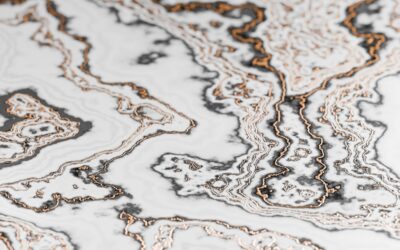
Here is the rule that matters more with this stone than any other white granite on the market: never buy it from a 4-inch sample. Alaska white granite countertops come from Brazilian quarries that produce some of the most variable material in the trade, with slabs ranging from serene and frosty to wildly bold within the same bundle. That variability scares off cautious buyers, which is a shame, because when you hand-pick the right slab, Alaska White delivers more visual drama per dollar than almost anything else in the stone yard, and at $35 to $60 per square foot installed it undercuts most of the stones it gets mistaken for.
Part of our Countertops guide — explore the full guide →
- Why No Two Alaska White Slabs Match
- The Look: Ice, Smoke, and the Occasional Flash of Gold
- Availability and Real-World Cost
- Cabinet Pairings: Two Directions That Work
- Managing All That Movement: Seams and Layout
- Finishes, Edges, and Everyday Toughness
- Sealing and Cleaning Routine
- Should You Choose Alaska White?
Why No Two Alaska White Slabs Match
This is a pegmatite-heavy Brazilian granite, meaning it formed with unusually large mineral crystals. Large crystals mean large-scale pattern, and large-scale pattern means the look shifts dramatically depending on where in the quarry block a slab was cut. One slab might show mostly icy white with delicate silver shimmer; the slab directly behind it in the bundle might be dominated by fist-sized charcoal deposits and amber streaks. Neither is wrong. Both are Alaska White.
Practically, that means you shop differently. Go to the slab yard in person, view full slabs standing up in good light, and put a hold on the specific slab numbers you approve. If your kitchen needs two slabs, insist they be sequential cuts from the same block, called book-matched or sequenced slabs, so the crystal pattern flows across your seam instead of colliding at it. Then have the fabricator lay out your countertop sections on the actual slabs, digitally or with tape, before a single cut is made. Reputable shops do this as standard practice on high-movement material; if yours resists, find another shop.
The Look: Ice, Smoke, and the Occasional Flash of Gold
A typical slab starts with a cool, icy-white quartz and feldspar base. Across it spread large patches of silvery-gray crystal, often two to six inches across, with a glassy sparkle that reads almost metallic under pendant lighting. Punctuating the field are bold deposits of dark charcoal, black, and smoky brown minerals, sometimes as scattered islands, sometimes as sweeping diagonal runs. Many slabs also carry hints of warm gold or amber where iron-bearing minerals concentrate, and those honey notes are worth hunting for if your kitchen has brass hardware or warm wood floors.
Contrast is the defining trait. Where an Indian white like Colonial White is a fine, even speckle and River White is a soft flowing wash, Alaska White is chunky, high-contrast, and unapologetic. It photographs closer to an exotic stone than to a commodity granite, which explains its popularity in flip renovations and builder upgrades alike.
Availability and Real-World Cost
Alaska White is one of the most widely distributed Brazilian granites in the US. Big-box home centers carry it in their standard granite programs, most regional slab distributors stock multiple bundles, and prefabricated 96-inch and 108-inch sections are common on the West Coast. That distribution muscle keeps prices honest: expect $35 to $60 per square foot installed, with big-box package deals at the low end and hand-selected premium bundles through independent fabricators at the top.
A few cost realities specific to this stone are worth knowing:
- Bundle grade matters. Distributors sort Alaska White into commercial and premium grades. Premium bundles with strong gold notes and balanced pattern can run 30 to 50 percent more per slab than washed-out commercial lots.
- Slab yield can be lower. Bold deposits sometimes sit exactly where a sink cutout or seam must go, forcing layout compromises or an extra slab. Budget one contingency slab on kitchens over 60 sq ft.
- Big-box quotes look cheaper than they finish. Advertised per-foot prices often exclude tear-out, plumbing disconnects, and upgraded edges. A $39 per square foot promo commonly lands near $50 once the change orders settle.
Standard slab dimensions run large for this material, frequently 120 to 130 inches by 70 to 78 inches in 3 cm thickness, which helps single-slab islands up to about 10 feet.
Cabinet Pairings: Two Directions That Work
Alaska White rewards decisive design. The first direction is contrast: navy, charcoal, espresso, or black cabinetry underneath lets the icy base pop while the stone’s dark deposits tie the counter back down to the cabinets. Navy shaker with brushed brass pulls and an Alaska White top is arguably the most-requested granite kitchen of the past several years, and it still looks sharp. The second direction is frost-on-frost: white or pale gray cabinets that let the counter supply all the pattern in the room. In that scheme, keep the backsplash nearly invisible, a plain white subway or a slab splash cut from the same granite, because this stone plus a patterned tile equals visual noise.
Undertone check: the base is cool. It flatters stainless, chrome, nickel, and cool paint colors effortlessly. If your room leans warm, hunt specifically for slabs with pronounced amber and brown mineral notes, and repeat those tones in wood shelving or bronze fixtures so the stone does not feel like it wandered in from a different house.
Managing All That Movement: Seams and Layout
High-movement stone punishes lazy fabrication. Ask for seams in low-visibility zones, behind the sink faucet or at an inside corner, rather than mid-run on an island. Confirm the shop uses color-matched epoxy tinted to the white base, not the gray. On waterfall islands, require a mitered book-match so the crystal pattern folds continuously over the edge; a butt-jointed waterfall in Alaska White looks like a mistake. Lighting deserves a thought at layout stage too: the silvery crystal patches flare under direct downlights, so if a dramatic deposit lands beneath a pendant, decide on purpose whether you want it spotlit or shifted six inches into shadow. None of this costs much extra when specified up front, and all of it separates a showpiece installation from a regrettable one.
Finishes, Edges, and Everyday Toughness
Polished dominates inventory and suits the stone; the big crystals were made for gloss. Leathered Alaska White has become a legitimate trend, especially over dark cabinets, because the texture deepens the charcoal minerals and kills glare on large islands, though expect a $10 to $25 per square foot upcharge and slightly hungrier sealing needs. Honed versions look sophisticated but can appear cloudy in the silvery patches, so view a honed sample of your actual slab before committing.
Keep edges simple. Eased, small bevel, or half bullnose all work; ornate ogee profiles get lost against the busy pattern and waste money. Durability is classic granite: excellent scratch and heat resistance, with two caveats. The large crystal structure means an aggressive impact on an unsupported overhang can pop out a small mineral chunk, so use corbels or steel supports on overhangs past 10 inches. And the quartz-rich patches can dull knives instantly, which is a reason to protect your blades with a cutting board, not the counter.
Sealing and Cleaning Routine
Porosity varies with the mineral mix, so test rather than assume: puddle water for 15 minutes, and reseal when it darkens the stone. Most Alaska White installations want an impregnating sealer every 12 to 18 months, a 30-minute job with a $25 to $40 bottle. Clean daily with dish soap and water or a pH-neutral stone spray, wipe oils promptly near the cooktop, and skip vinegar and bleach-based products that erode sealer. The busy pattern is remarkably forgiving of crumbs and hard-water spots between cleanings, one of the quiet perks of a high-movement surface.
Should You Choose Alaska White?
Pick this granite if you want bold, exotic-looking stone at a mainstream price and you are willing to shop slabs in person. Skip it if you need predictable, sample-matches-slab uniformity, in which case a fine-grained Indian white such as Colonial White will serve you better. For everyone in between, alaska white granite countertops hit a rare sweet spot: $35 to $60 per square foot installed, stocked nearly everywhere in the country, and capable of anchoring either a moody navy kitchen or an all-white showstopper. Just remember the only rule that really matters here: view your actual slab, hold it by number, and approve the layout before the saw starts.