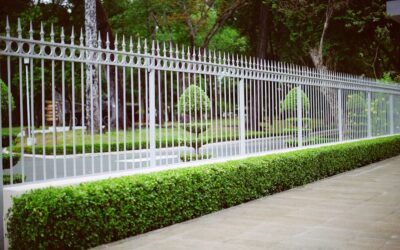
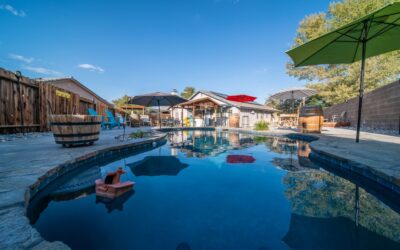
An aluminum fence gate is the hardest-working part of any aluminum fence, opening and closing thousands of times while shrugging off rain, sun, and sprinkler spray without rusting. Because a gate carries moving loads that a fence panel never does, it demands the right size, sturdy posts, and quality hinges and latches to stay square and functional for decades. This guide covers gate types and sizing, the hardware that matters, installation, costs, pool-safety code, and how to prevent the sagging that plagues poorly hung gates.
Part of our Decks & Outdoor guide — explore the full guide →
- Why Aluminum Gates Are So Popular
- Gate Types and Sizes
- The Posts Matter More Than the Gate
- Hinges: Self-Closing and Adjustable
- Latches and Locks
- Pool Safety Code You Cannot Ignore
- Installation Overview
- What It Costs
- Preventing Sag and Common Mistakes
- Grades of Aluminum Fencing
- Manual Versus Automatic Gates
- Maintenance and Longevity
Why Aluminum Gates Are So Popular
Aluminum fencing has become a default choice for homeowners who want the look of wrought iron without the maintenance. It never rusts, thanks to a powder-coated finish over corrosion-proof aluminum, needs no painting, and is lightweight yet strong. Gates share those benefits: an aluminum gate stays good-looking with almost no upkeep and, because it is light, puts less strain on hinges and posts than a heavy steel or wood gate. It is ideal around pools, along property lines, and as a decorative entry.
Gate Types and Sizes
- Single walk gates: The standard pedestrian gate, typically 3 to 5 feet wide. A 4-foot opening is the most common for easy passage with a wheelbarrow or mower.
- Double drive gates: Two leaves that meet in the middle, spanning 8 to 16 feet for driveways. They use a drop rod to secure the inactive leaf.
- Estate and arched gates: Decorative single or double gates with a curved top for entrances.
Gate heights match the fence, commonly 4, 4.5, 5, or 6 feet. When ordering, distinguish between the gate frame width and the total opening; the hinge and latch hardware take up space, so the rough opening between posts must be slightly wider than the gate frame, usually by the amount the manufacturer specifies (often around 1.5 to 3 inches total for hardware gaps).
The Posts Matter More Than the Gate
The single biggest cause of gate failure is undersized or poorly set posts. A gate hangs off one post and latches to another, and both take repeated stress. Use heavier-gauge gate posts, not standard line posts; many manufacturers sell a thicker-walled gate/end post specifically for this. Set gate posts deeper and in more concrete than line posts, below the frost line in cold climates, because any post movement translates into a sagging, misaligned gate. For wide double gates, oversized posts are non-negotiable.
Hinges: Self-Closing and Adjustable
Quality hinges keep a gate square and safe. Look for:
- Self-closing (spring) hinges, which pull the gate shut automatically. These are required by code around pools and are a convenience everywhere.
- Adjustable-tension hinges so you can tune how firmly the gate closes.
- Corrosion-proof materials to match the aluminum; stainless or powder-coated aluminum hinges.
Two hinges suffice for most walk gates; heavy or tall gates benefit from three. Brands like D&D Technologies (TruClose and LokkLatch) are the industry standard for durable, adjustable self-closing gate hardware.
Latches and Locks
Match the latch to the use. A simple gravity latch works for a garden gate. For pools and child safety, use a magnetic self-latching latch mounted high on the gate, out of a child’s reach, that latches automatically when the gate swings shut. Keyed or lockable latches add security at side-yard and driveway gates. For double drive gates, a drop rod pins one leaf to the ground so the other can latch to it.
Pool Safety Code You Cannot Ignore
If your aluminum fence gate is part of a pool barrier, strict code applies in most jurisdictions:
- The gate must be self-closing and self-latching.
- The latch release must be mounted at least 54 inches above the ground (or on the pool side, at least 3 inches below the top with no opening within 18 inches), so small children cannot reach it.
- The gate must open outward, away from the pool.
- Vertical picket spacing must not allow a 4-inch sphere to pass.
These rules exist to prevent drownings; always verify your local pool-barrier requirements before installing.
Installation Overview
- Set the gate posts in concrete, plumb and at the correct spacing for the gate width plus hardware gaps, and let the concrete cure fully before hanging.
- Position the gate in the opening on blocks to set the ground clearance (typically 2 to 4 inches).
- Attach the hinges to the hinge post and gate frame, using self-drilling screws or through-bolts per the manufacturer.
- Check that the gate is level and swings freely, then mount the latch on the opposite post.
- Adjust hinge tension and latch alignment so the gate closes and latches reliably.
What It Costs
- Single walk gate (gate only): $150 to $400 depending on grade and height.
- Double drive gate: $400 to $1,200.
- Hardware (hinges, latch, self-closing kit): $50 to $200.
- Professional installation: $200 to $600 per gate including posts and concrete.
Residential-grade aluminum is fine for most yards; commercial or industrial grades cost more but offer heavier pickets and rails for high-traffic or security uses.
Preventing Sag and Common Mistakes
- Undersized posts: Always use heavier gate posts, set deep in concrete.
- Hanging the gate before concrete cures: Wait, or the posts shift.
- Too little hardware clearance: Order posts spaced for the gate plus hinge and latch gaps.
- Wrong ground clearance: Leave enough gap so the gate never drags on grade or snow.
- Skipping an anti-sag brace or truss rod on wide gates, which keeps large leaves square.
Grades of Aluminum Fencing
Aluminum fence and gate products come in grades, and matching the gate grade to the use matters. Residential grade uses lighter rails and pickets, fine for decorative yard and garden gates. Commercial grade steps up rail and picket thickness for higher-traffic and taller applications. Industrial grade is the heaviest, for security and large spans. A wide double drive gate or a pool gate that gets constant use benefits from at least commercial-grade construction, which resists bending and holds its shape under repeated swinging. Because a gate works far harder than a fence panel, it is often smart to order the gate a grade heavier than the surrounding fence, especially for larger openings and high-use entries.
Manual Versus Automatic Gates
Most walk gates are manual, but driveway and estate gates can be automated. An automatic gate opener adds convenience and security, letting you open a driveway gate from your car or a keypad. Automation requires a heavier-duty gate and posts, a power source (or solar kit), and an opener rated for the gate’s weight and swing type. Adding safety features like photo-eye sensors is important to prevent the gate from closing on a vehicle, pet, or person. Automation runs $1,000 to $4,000 installed on top of the gate cost. For a simple walk gate, manual self-closing hardware is all you need; reserve automation for driveway entries where the convenience justifies the expense.
Maintenance and Longevity
Aluminum gates are about as low-maintenance as fencing gets, but a little care keeps them working smoothly. Hose off dirt and pollen a couple of times a year to preserve the powder-coated finish. Periodically check and tighten the hinge and latch fasteners, since repeated swinging can loosen them, and add a drop of lubricant to hinge pivots and the latch mechanism so they operate freely. Inspect self-closing hinges and pool latches regularly to confirm they still close and latch reliably, because these are safety devices. Touch up any deep scratches with matching paint to prevent the exposed aluminum from oxidizing unevenly. With this minimal upkeep, an aluminum gate stays functional and attractive for decades.
An aluminum fence gate rewards you with rust-free, low-maintenance access for decades, but only when the posts are heavy and deep, the hinges and latch are quality self-closing hardware, and pool-code safety is respected. Size the opening correctly, cure the posts before hanging, and tune the hardware, and your gate will swing true and latch securely for the life of the fence.