A storm door earns its keep for years, then one day the closer starts slamming or the handle goes loose, and you are left hunting for Andersen storm door parts that actually match your model. Andersen builds several distinct series, and the closer, latch, and glass system that fit a 3000 Series will not drop into an EMCO 400. Identify your door correctly and replacement is a 20-minute job. Guess, and you will be returning parts. This guide walks you through both.
Part of our Windows & Doors guide — explore the full guide →
- Identifying Your Andersen Storm Door First
- Door Closers: The Part That Fails Most
- Handles, Latches, and Deadbolts
- Glass and Screen Panels
- Weatherstripping, Sweeps, and Corner Pads
- Hinges, Rails, and Structural Hardware
- Matching Finishes and Colors
- Tools and Time for a Typical Repair
- Where to Buy Genuine Parts
- Repair or Replace? A Quick Framework
- Keeping a Storm Door Working Longer
- The Bottom Line
Identifying Your Andersen Storm Door First
Andersen sells storm doors under its own name and through the EMCO brand it acquired. The most common residential lines are the 2000, 3000, and 4000 Series, plus the EMCO 100, 200, 300, and 400 grades. Before ordering any Andersen storm door parts, find your series so components line up.
- Check the top or side rail for a printed model sticker or an embossed series number.
- Look inside the sweep channel at the bottom, where EMCO often stamps the grade.
- Measure the door thickness and the handle bore spacing; higher series use heavier hardware.
- Photograph the existing closer bracket, since mounting hole patterns differ between lines.
Door Closers: The Part That Fails Most
The pneumatic closer is the workhorse and the first thing to wear out. Andersen closers are hydraulic-pneumatic cylinders that mount from the door to the jamb bracket, with a hold-open washer that lets you prop the door on a breezy day. When the door slams or drifts shut too fast, the seal inside the cylinder has usually failed.
Replacement closers run about $15 to $30 each, and most homes benefit from a two-closer setup, one high and one low, for even control on full-view doors. Andersen sells them in white, sandtone, and bronze to match common frame colors. Swapping one means popping the retaining pin at the door bracket, sliding out the old cylinder, and reversing the process. Adjust the closing speed with the screw at the tube end after installation.
Handles, Latches, and Deadbolts
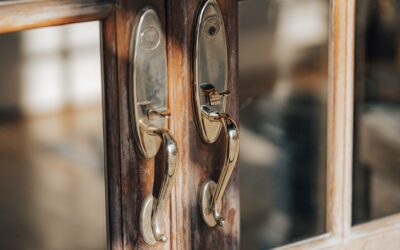
Handle sets are the second most-requested category. Andersen uses a few mortise latch systems, and the trim can be updated without replacing the internal mechanism in many cases. A loose handle is often just a backed-out mounting screw, so try tightening before you order.
When you do need parts, match these details:
- Bore spacing: The distance between the top and bottom handle screws, commonly around 5-1/2 inches on modern sets.
- Latch type: Mortise versus surface-mount, which affects the strike plate.
- Finish: Standard options include white, bronze, brass, nickel, and black to coordinate with the entry door.
Complete handle sets with a matching deadbolt typically cost $35 to $70. Individual spindles, springs, and strike plates are available for cheaper repairs when only one piece has broken.
Glass and Screen Panels
Full-view and self-storing Andersen doors use interchangeable glass and screen inserts. If a pane cracks, you usually replace the entire panel rather than the glass alone, because the glass is set into a frame. On retractable-screen models like the higher EMCO grades, the screen rolls into the top rail, and the spring roller or screen fabric can be serviced separately.
When ordering a glass panel, measure the daylight opening precisely, height and width, and confirm whether your door takes a low-E insulated pane or single-pane tempered glass. Insulated panels cost more but cut condensation and heat transfer noticeably on a west-facing entry.
Weatherstripping, Sweeps, and Corner Pads
The bottom sweep and perimeter weatherstrip are the parts that quietly determine whether the door actually blocks drafts. Andersen sweeps snap or screw into the bottom rail and compress against the sill. Over years of use they flatten and tear, letting in air and insects.
- Bottom sweeps: Vinyl or brush-style, cut to your door width, usually $10 to $20.
- Jamb weatherstrip: Kerf-in or adhesive-backed foam that seals the sides and top.
- Corner pads and expander: The adjustable bottom expander squares the door to an uneven sill.
Replacing all of it at once takes under an hour and often makes an aging door feel new.
Hinges, Rails, and Structural Hardware
Beyond the parts that wear from daily use, the door’s structural hardware occasionally needs attention. Andersen storm doors use a continuous piano-style hinge on many models, running the full height of the door for strength and even support. If the door begins to sag or bind, a bent or loose hinge is often the cause, and the screws into the jamb may simply need retightening into fresh wood or slightly relocated pilot holes.
The top and bottom rails, along with the corner keys that join them, hold the door square. On self-storing models, the sash channels that guide the sliding glass and screen can collect debris and stiffen up. A shot of dry silicone lubricant in the tracks restores smooth operation without attracting grime the way oil does. When corners loosen, tightening the internal corner-key screws often squares the door back up before you consider replacement.
Matching Finishes and Colors
One detail that trips up buyers is finish matching. Andersen and EMCO offer hardware and closers in several standard colors, and a bronze closer on a white door looks like an obvious repair. When you order, note your existing color code, commonly white, sandtone, terratone, bronze, or black, so replacement pieces blend in. Handle sets in particular come in finishes from brushed nickel to oil-rubbed bronze, and coordinating them with your entry door’s hardware pulls the whole entryway together.
- Photograph existing hardware in daylight to judge the true color before ordering.
- Order closers, handles, and sweeps in one session so finishes match across the door.
- Keep a spare closer on hand, since a failed one on a slamming door is worth fixing the same day.
Tools and Time for a Typical Repair
Most Andersen parts swaps need nothing more than a Phillips screwdriver, a drill for pilot holes, and 20 to 40 minutes. A closer replacement is the quickest, often under 15 minutes once you have the matching part. A handle set takes a bit longer because you are aligning the interior and exterior halves through the door. Glass panel and sweep replacements sit in the middle. None of these require special skills, which is exactly why repairing a storm door is so much smarter than replacing it for a single failed component.
Where to Buy Genuine Parts
Andersen runs an official parts store online where you enter your series and select components with matching finishes. Home centers stock common closers and sweeps, but for series-specific latches and glass you will get better results ordering direct or through an authorized dealer. Keep any paperwork or the model sticker photo handy, because the parts catalog is organized by series and the finish codes matter.
Repair or Replace? A Quick Framework
Most Andersen storm doors are worth repairing well past a decade. A new closer, handle set, and sweep together often run less than $100 and restore full function. Consider full replacement only when the door frame itself is bent, the corners have separated, or the glass system is obsolete and panels are no longer available.
Sourcing the right Andersen storm door parts comes down to one habit: identify the series first, measure twice, and match the finish. Do that and you will keep a solid storm door in service for years instead of paying for a full unit and a new installation.
Keeping a Storm Door Working Longer
A few maintenance habits dramatically extend the interval between parts orders. Twice a year, wipe down the sweep and weatherstrip and check that the door still seals tight against drafts. Lubricate the closer’s pivot points and the latch mechanism with a dry silicone spray, which keeps them moving without gumming up like oil. Tighten the hinge and handle screws before they work fully loose and elongate their holes.
Pay special attention to the closer on a windy site. The single most common cause of a wrecked storm door is a gust catching an unlatched door and slamming it, which cracks glass and bends closers. Always engage the hold-open washer or latch the door rather than letting it swing free. Replacing a worn closer at the first sign of slamming, rather than waiting for it to fail entirely, protects the glass and frame from that exact kind of wind damage and keeps the whole door in service for years longer.
The Bottom Line
Storm doors are simple machines, and Andersen designed theirs to be serviced. Closers, handles, glass panels, and sweeps are all replaceable with basic hand tools. Confirm your model series, order genuine components in the correct finish, and tackle the repair in an afternoon. It is one of the most satisfying and cost-effective fixes on the exterior of any home.