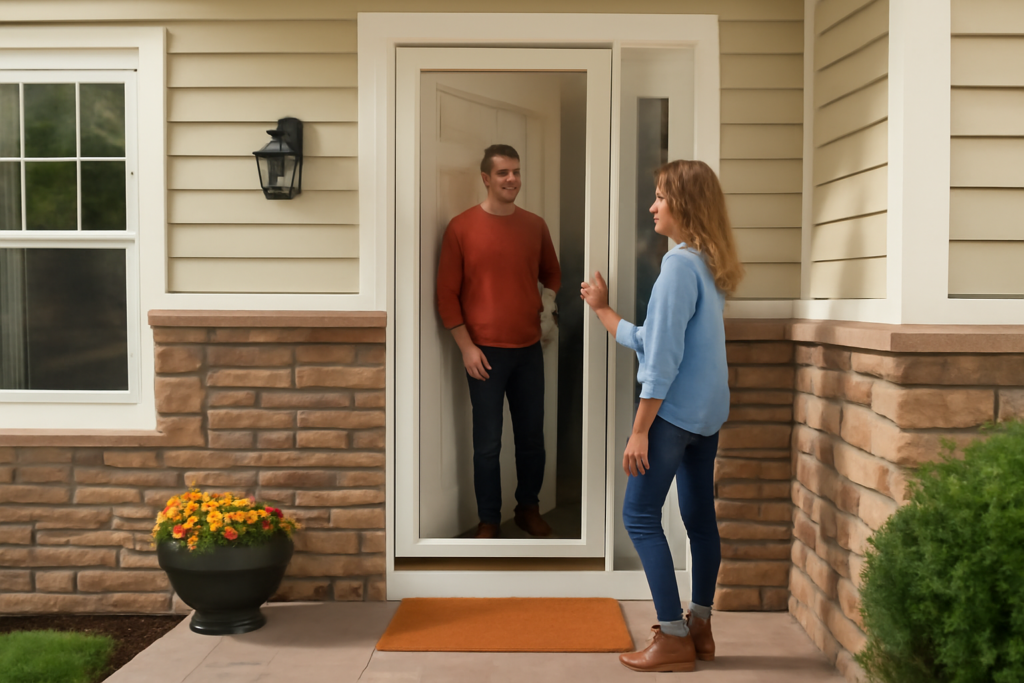
A storm door is one of the cheapest upgrades that pays you back in energy savings, curb appeal, and a longer life for your expensive entry door. The Andersen 10 Series storm door sits at the entry level of Andersen’s storm door lineup, aimed at homeowners who want a dependable, no-frills door at a value price. Sold widely through home centers, it is often the first door people compare against pricier full-view and retractable-screen models. This guide breaks down what the 10 Series actually offers, where it fits, and how to decide whether it is the right choice for your entry.
Part of our Windows & Doors guide — explore the full guide →
Where the 10 Series Fits in Andersen’s Lineup
Andersen numbers its storm door series to signal features and price, with lower numbers being more basic and higher numbers adding conveniences like retractable screens and heavier frames. The 10 Series is the foundational offering, so it prioritizes core function over premium extras. You get a solid aluminum-framed storm door with insulating glass and a screen for ventilation, at a price point that typically undercuts the 2000, 3000, and 4000 series above it.
This positioning makes the 10 Series a natural fit for rental properties, secondary entrances, budget-conscious replacements, and anyone who simply wants basic weather protection without paying for features they will not use. If you want a self-storing or retractable screen system, or the beefiest frame Andersen makes, you will be looking higher up the ladder. But for a straightforward front or back door upgrade, the 10 Series covers the essentials competently.
Key Features and Construction
The 10 Series is built on an aluminum frame designed to resist rust and hold up to daily use and weather exposure. It ships prehung in its own frame for a more manageable installation, and it comes in the common storm door colors, typically white and a darker sandtone or almond, to blend with popular trim colors. The glass is insulating to add a thermal buffer in front of your entry door, which cuts drafts in winter and heat gain in summer.
Core features you can expect from the 10 Series include:
- Rust-resistant aluminum frame in standard residential colors
- Insulating glass panel for a year-round thermal buffer
- An included screen for warm-weather ventilation
- A basic mounted handle set with a latch, and a wind chain or closer to control swing
- Prehung construction to simplify installation
Understand that the 10 Series uses an interchangeable rather than a retractable or self-storing screen system in its most basic configurations, meaning you swap between the glass and screen panels seasonally by hand. That manual swap is the main trade-off you accept for the lower price. It is a minor chore twice a year, but worth knowing before you buy.
Glass and Screen Options
Even at the entry level, ventilation is the whole point of a storm door in mild weather, so the screen and glass arrangement matters. On the 10 Series, you generally get a full or partial glass panel plus a screen insert you install when you want airflow. Some configurations offer a ventilating design where you slide or swap panels to open a screened section, while the most basic versions rely on a full panel changeout.
Because the glass is insulating, it does real work in front of your main door during heating and cooling season. In summer, swapping to the screen lets you pull a breeze through the house without opening the solid door to bugs. If you live somewhere with intense sun on that elevation, remember that a storm door can trap heat between itself and a dark entry door, so pair a storm door with a lighter door color or adequate ventilation to avoid heat buildup that can stress finishes and glass.
Sizing and Measuring Your Opening
Storm doors come in standard sizes to fit common entry openings, most often 32, 34, and 36 inches wide, with a standard 80- or 81-inch height. Before you buy, measure the width of your door opening at the top, middle, and bottom, and use the smallest measurement. Then measure the height on both sides. Manufacturers publish fit ranges for each nominal size, and the prehung frame accommodates minor variation, but a badly out-of-square opening will fight you.
Also confirm your hinge side and the direction you want the door to swing, since storm doors are handed. Most homeowners match the storm door hinge side to the entry door’s hinge side so both swing the same way. If your opening falls outside standard ranges or is significantly out of square, you may need trim adjustments or a different door line, so measure carefully before you leave the store.
Installation Overview
One reason the 10 Series appeals to DIYers is that a prehung storm door installation is genuinely within reach for a homeowner with basic tools and a free afternoon. The general sequence is to attach the hinge-side mounting rail, set the door into the opening and check it for plumb and even reveal, secure the frame, then install the closer, the handle set, and the sweep at the bottom. A helper makes holding the door far easier during the first fitting.
Take your time getting the door plumb before you drive the bulk of the screws, because a door that is even slightly racked will latch poorly and swing on its own. Adjust the closer tension so the door shuts firmly without slamming, and set the wind chain length so a gust cannot fling the door past its safe range. Budget two to three hours for a first-timer. If your opening needs significant shimming or trim work, factor in extra time or bring in a handyman.
Is the 10 Series Right for You?
The Andersen 10 Series storm door earns its place as a value pick: it delivers the fundamental benefits of a storm door, weather protection, ventilation, and a thermal buffer, at a price most budgets can absorb. It is an easy recommendation for secondary doors, rentals, and homeowners who want reliable basics from a well-known brand. The compromises are equally clear, chiefly the manual seasonal panel swap and the absence of premium features like retractable screens and heavier frames.
If you use your storm door heavily, want the convenience of a screen that appears and disappears on its own, or want the sturdiest hardware Andersen offers, stepping up a series or two is money well spent. But if you want a solid, affordable door that does exactly what a storm door is supposed to do, the 10 Series is a sensible, dependable choice that will serve a typical entry for years.
Maintenance and Care
One underrated advantage of an aluminum-framed storm door like the 10 Series is how little upkeep it demands. The frame will not rot or rust the way a poorly maintained wood door would, so routine care comes down to keeping things clean and moving freely. Wipe the frame and glass a few times a year with mild soap and water, and clean the screen with a soft brush or a gentle rinse to keep airflow strong when you switch to warm-weather ventilation. Avoid harsh abrasives that could scratch the finish or the glass.
Pay attention to the moving hardware, since that is where storm doors typically show wear first. Lubricate the closer and hinges lightly once or twice a year with a silicone spray so the door swings smoothly and shuts without dragging. Check the door sweep at the bottom periodically and replace it if it wears out, because a good sweep is what seals out drafts and driving rain. If the closer starts slamming the door or letting it drift, adjust the tension screw at the end of the closer cylinder rather than living with the annoyance. These small habits keep a budget storm door performing like new for the better part of a decade.
Common Problems and Fixes
Most storm door complaints trace back to a handful of easily corrected issues. A door that slams shut usually just needs the closer tension backed off, while one that will not fully close may need the tension increased or the hinges checked for binding. If the door latch does not catch, the strike plate is likely misaligned, loosen it, reposition it to meet the latch, and retighten. These are five-minute fixes that do not require a service call.
Heat buildup between the storm door and the entry door is worth understanding, especially on sun-facing elevations. Because the insulating glass traps solar heat, a dark entry door behind the storm door can get hot enough to stress finishes over time. The simple solutions are keeping the ventilation open during hot, sunny stretches, or choosing a lighter entry door color on high-sun exposures. If your 10 Series ever shows a foggy pane, that indicates a seal issue in the insulating glass, which is a warranty consideration to raise with the retailer. For the price, though, the 10 Series gives homeowners few headaches and a straightforward path to fixing the minor ones that do come up.