Most screen doors don’t fail because the frame breaks, they fail because the screen door hardware wears out, and a $12 closer or a loose handle is usually the whole problem. Understanding screen door hardware lets you fix a slamming, sagging, or drafty door in an afternoon instead of replacing the entire unit. I’ve swapped out hundreds of these parts, and the good news is nearly all of it is standardized and cheap.
Part of our Windows & Doors guide — explore the full guide →
- The Core Parts and What They Do
- Choosing a Handle Set
- The Closer: Fixing a Slamming or Sagging Door
- Hinges and Handling a Sagging Door
- Latches, Strikes, and Wind Chains
- Weatherstripping and Sweeps
- Tools, Cost, and When to Replace the Whole Door
- Matching Replacement Parts to Your Door
- Seasonal Adjustments and Upkeep
The Core Parts and What They Do
A storm or screen door is really a small system of components working together. Know the names and you can order the right replacement the first time.
- Handle set: The interior and exterior pull with a latch mechanism. Common styles are lever, mortise, and surface-mount push-button.
- Pneumatic closer: The tube-shaped piston that pulls the door shut gently. This is the part that fails most often.
- Hinges or piano hinge: Carry the door’s weight; a continuous piano hinge is common on aluminum storm doors.
- Latch and strike: The catch that holds the door closed against the frame.
- Wind chain and spring: A safety tether that stops the door from flying open and slamming in a gust.
- Sweep and expander: The bottom seal that blocks drafts and insects.
Each of these is sold separately, so you rarely need to buy a whole kit unless you’re building a door from scratch.
Choosing a Handle Set
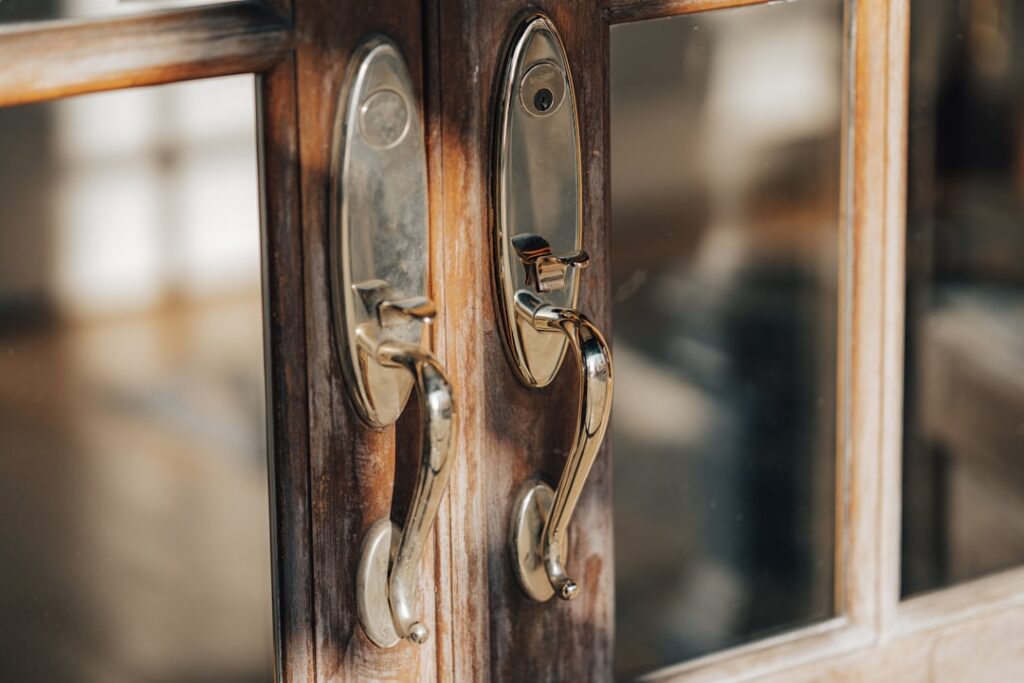
Handle sets come in two mounting styles. Surface-mount handles screw onto the face of the door and suit hollow aluminum storm doors. Mortise handle sets fit into a pocket cut in the stile and give a more substantial, residential feel, common on wood screen doors. Measure the center-to-center distance between the two mounting screws, usually around 3 to 4 inches, and the backset before ordering.
Finish matters for curb appeal and corrosion. Powder-coated aluminum and stainless steel hold up outdoors far better than plain zinc, which pits within a few seasons near the coast. Expect to pay $15 to $60 for a decent handle set, more for solid brass or designer finishes.
The Closer: Fixing a Slamming or Sagging Door
The pneumatic closer is the workhorse and the first thing to check when a door slams or won’t shut fully. It’s a piston with an adjustment screw at the end. Turning that screw clockwise slows the final close; counterclockwise speeds it up. If your door slams in summer but drags in winter, that’s normal, since the oil inside the cylinder thickens in cold weather and you’ll re-adjust seasonally.
When a closer leaks oil, hisses, or no longer holds tension, replace it. A standard closer costs $8 to $20 and mounts with two brackets, one on the door and one on the jamb. For heavy doors or high-traffic entries, install two closers, one high and one low, to share the load and stop the frame from racking. Set the hold-open washer on the piston rod to prop the door open when you need both hands free.
Hinges and Handling a Sagging Door
A door that scrapes the sill or won’t latch has usually dropped at the hinge side. On a wood screen door, the top hinge screws often strip out first because they carry the most leverage. The classic fix is to remove the short screws, tap glue-coated wood dowels or golf tees into the stripped holes, and drive longer 3-inch screws that reach into the framing behind the jamb.
Aluminum storm doors typically use a continuous piano hinge running the full height. If it bends or the rivets loosen, the whole strip is inexpensive to replace, around $15 to $30, and it restores a clean, gap-free swing.
Latches, Strikes, and Wind Chains
If the door closes but won’t stay shut, the latch and strike are misaligned. Loosen the strike plate on the jamb, close the door, and shift the plate until the latch drops in cleanly, then retighten. A little candle wax on the latch tongue quiets a squeak and smooths the action.
Never skip the wind chain. A sudden gust can tear a closer or crack a glass insert when the door flies wide open. The chain and its coil spring absorb that shock and are among the cheapest parts you’ll buy, usually under $10. Set the chain length so the door stops a few inches short of any adjacent wall.
Weatherstripping and Sweeps
The bottom sweep and side weatherstripping do double duty, blocking drafts and keeping insects out. Most sweeps are an aluminum channel with a vinyl or brush insert that slides or screws onto the door bottom. If you feel a draft or see daylight under a closed door, the sweep is worn. A replacement runs $8 to $20 and takes ten minutes.
Check the magnetic or compression weatherstripping around the frame too. On combination storm doors, a fresh perimeter seal noticeably cuts drafts and can trim a little off winter heating bills.
Tools, Cost, and When to Replace the Whole Door
You can service almost all screen door hardware with a Phillips screwdriver, a drill, a tape measure, and a level. Total parts for a full refresh, new closer, handle, sweep, and wind chain, typically run $50 to $120. That’s a fraction of a new storm door, which starts around $150 for basic aluminum and climbs past $400 for insulated models.
Replace the door itself only when the frame is bent, corroded through, or the glass and screen channels are cracked beyond repair. In most cases, refreshing the screen door hardware brings a tired door back to smooth, quiet, weather-tight operation for a small fraction of the cost. Keep a spare closer on the shelf, and you’ll never be stuck with a slamming door on a windy weekend.
Matching Replacement Parts to Your Door
The biggest frustration in screen door repair is buying a part that doesn’t fit, so measure before you shop. Closers are largely universal and adjust to fit, but confirm the length matches your door width and that the bracket style suits your frame. Handle sets are the fussier item; record the center-to-center screw spacing, the bore or mortise size, and whether the existing handle is surface-mounted or set into a pocket.
For latches, note whether yours is a mortise latch buried in the stile or a surface latch screwed to the face. Aluminum storm-door manufacturers like Andersen, Larson, and Pella use their own handle and latch patterns, so if you have a branded storm door, buying the matching manufacturer part guarantees the screw holes line up. When in doubt, remove the old part and take it to the hardware store to match it in person. A photo of the full door plus the removed part in hand solves nearly every fitment question.
Seasonal Adjustments and Upkeep
Screen door hardware needs light seasonal attention, mostly because the pneumatic closer responds to temperature. As mentioned, the oil inside thickens in cold and thins in heat, so plan to tweak the closer’s adjustment screw twice a year, slowing it in summer and speeding it in winter, to keep a consistent, gentle close. This two-minute adjustment prevents both slamming and the frustration of a door that won’t shut fully in the cold.
Once a year, run through a quick checklist to keep everything working. Tighten all visible screws, since vibration from repeated closing loosens them. Wipe grit out of the latch and strike, then add a drop of dry lubricant. Inspect the wind chain and its spring for stretch or corrosion, and confirm the sweep still contacts the sill. Check the piano hinge or hinges for loose rivets or stripped screws and address them before the door starts to sag. Fifteen minutes of annual maintenance keeps the whole system quiet, tight, and functioning for many seasons, and it heads off the small failures that otherwise strand a door propped open all summer.