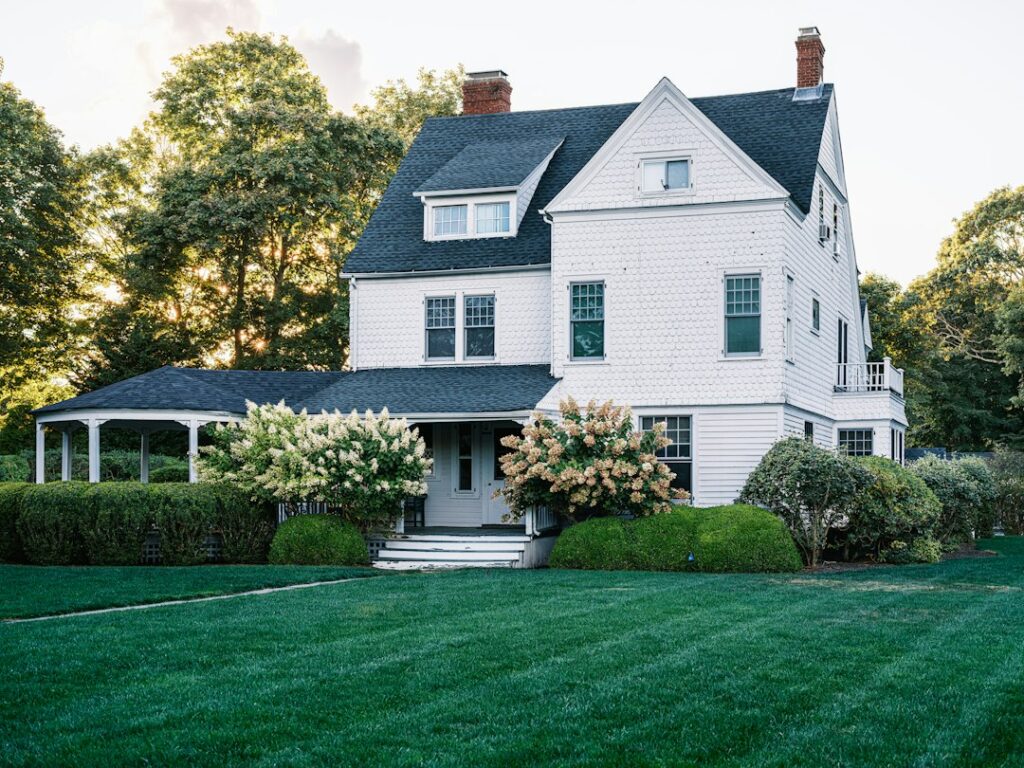
Plenty of homeowners pick a white from a tiny chip and then find it looks gray, cream or blinding once it covers a whole house. Arctic white siding refers to Arctic White, the clean, cool white that James Hardie offers as a factory-applied ColorPlus Technology finish on its fiber cement siding and trim. It is the brand’s go-to crisp white, widely used for trim on darker houses and for all-white farmhouse and modern exteriors.
Arctic White reads as a clean white without obvious yellow or beige, which makes it look fresh beside black windows, gray roofs and saturated front doors. In deep shade or on a north-facing wall it can lean slightly cool and soft, and next to a bright interior paint white it looks a touch grayer. That restraint is a big part of why it suits so many styles, from colonials to modern farmhouses.
- Arctic White Siding at a Glance
- How Arctic White Looks on a Real House
- Trim, Door and Window Pairings for Arctic White
- Arctic White vs Other Near Whites
- Installing and Caring for Arctic White Siding
- Ladder and Fall Safety
- Troubleshooting Arctic White Siding
- Cost Range and When to Call a Pro
- Frequently Asked Questions
Because it is a baked-on factory finish rather than paint, you choose it from the manufacturer’s regional palette, not from a paint fan deck. Availability depends on where you live and which product line your dealer stocks, so confirm it locally before you design around it.
Arctic White Siding at a Glance
The manufacturer does not publish every technical value on its consumer color pages, so the table sticks to what the brand states and flags what you should confirm on the current spec sheet.
| Spec | Value | What it means |
|---|---|---|
| Maker | James Hardie | Fiber cement siding, trim and soffit manufacturer |
| Finish type | ColorPlus Technology (factory baked-on) | Applied in a controlled factory setting, not on site |
| Color character | Clean, cool, crisp white | No strong yellow or beige cast; slightly cool in shade |
| Common uses | Trim, fascia, soffit, lap and panel siding | Often paired as trim with gray, blue, green and dark siding |
| Collection | Offered in regional Statement Collection palettes | Lineup varies by region; ask your dealer |
| Finish warranty | Stated by the maker as a 15-year limited finish warranty | Separate from the longer substrate warranty; confirm current terms |
| Substrate warranty | Stated as a 30-year limited non-prorated warranty | Covers the siding, trim and soffit board; check your region’s document |
| LRV | Not published on the color page | Ask the dealer or request a physical sample to judge brightness |
Warranty terms differ by product and region and can change, so read the current warranty document before you buy. Physical samples matter more with whites than with any other color.
How Arctic White Looks on a Real House
Sunlight changes white siding more than most people expect. On a south or west face in full sun, Arctic White looks bright and clean. On a north face or under deep eaves, it reads softer and cooler, sometimes with a faint gray note. That is normal for any white that does not carry a warm pigment.
The surrounding materials also shift it. A warm tan brick or a cedar porch ceiling can make it look cooler by contrast, while black windows and a charcoal roof push it brighter. Put a full-size sample board on the actual wall, step back to the curb, and look at it in morning and late afternoon light before you sign off.
Texture changes the color too
Wood-grain textures cast tiny shadows that make any white look a little darker than a smooth board. Smooth panels and trim look the brightest. If you mix smooth trim with textured lap siding in the same color, expect a slight difference in how they read.
Trim, Door and Window Pairings for Arctic White
Arctic White works in two main roles: as the main siding color on an all-white or white-and-black home, and as the trim color on a darker house. These pairings are common starting points.
As the main siding color
- Trim: matching Arctic White trim for a monochrome farmhouse look, or a soft black fascia and gable trim for contrast
- Windows: black frames give the sharpest modern look; white frames keep it classic
- Front door: deep navy, blue-green gray, forest green, soft black, or a natural stained wood
- Roof: charcoal or black shingles or a dark metal roof
As trim on darker siding
- Deep grays and charcoal siding for a crisp, high-contrast outline
- Muted blue siding for a coastal look
- Sage and gray-green siding for a softer, traditional feel
One pairing to approach carefully: Arctic White beside creamy, beige or tan elements. A cool white next to warm cream can make the cream look dingy and the white look stark. If your stone, brick or roof leans warm, sample a warmer white from the same palette alongside Arctic White before choosing.
Arctic White vs Other Near Whites
Within the same manufacturer’s palette, other light colors sit close to Arctic White but behave differently. Light Mist, for example, is a pale gray rather than a white, and it reads distinctly gray on a full wall. If you want a white that never looks gray, sample Arctic White beside your other candidates on the same wall.
If you are matching paint to Arctic White, for a garage door, railing or shutters in another material, no off-the-shelf paint color is an exact match. Paint stores can scan a physical Hardie sample or touch-up container and mix a computer match. Compare that mix to the siding outdoors, not under store lighting, and adjust if it looks warmer or brighter.
Installing and Caring for Arctic White Siding
Fiber cement installation follows the manufacturer’s installation guide, and following it is usually a condition of the warranty. Cut edges, nail placement and clearances to grade and roof lines all matter.
Tools and materials
- Arctic White siding and trim pieces, ordered from the same production run when possible
- Manufacturer-approved touch-up kit and caulk in the matching color
- Fiber cement shears or a dust-reducing circular saw blade, used with dust collection
- N95 respirator or better, safety glasses and hearing protection
- Soft brush, garden hose and a mild siding cleaner for routine care
Care steps
- Rinse the siding from top to bottom with a garden hose once or twice a year.
- For dirt or mildew spots, use a soft brush and a mild siding cleaner approved for factory-finished fiber cement, then rinse well.
- Avoid high-pressure washing close to the surface, which can damage the finish and drive water behind laps.
- Touch up nail heads and minor chips with the matching touch-up kit, using a small brush and thin coats.
- Check caulk joints at windows and trim every year and replace cracked caulk with a color-matched product.
Ladder and Fall Safety
White siding shows dirt on soffits and upper walls first, so cleaning and touch-ups often mean ladder work. Set an extension ladder at a 4 to 1 angle (1 foot out for every 4 feet up), on firm level ground, and extend it at least 3 feet past the roofline if you step off. Keep three points of contact, do not overreach, and move the ladder instead. Use a long-handled brush from the ground where you can. For two-story walls, high gables or steep lots, hire a pro with scaffolding or a lift rather than working from an extended ladder.
Troubleshooting Arctic White Siding
Siding looks gray or dingy. Often it is simply dirt or pollen. Wash a test area first. If clean siding still looks gray, it may be shade or nearby warm materials changing how the white reads.
Touch-up spots are visible. Over-applied touch-up paint looks shinier. Use thin coats and only on the damaged spot, not broad patches.
Trim and siding look slightly different. Different textures, sheens and production runs can vary a little. Order trim and siding together and inspect boards before installation.
Green or black spots on the north side. Mildew grows on shaded, damp walls. Clean with a mild siding cleaner, then trim back plants to improve airflow.
Cost Range and When to Call a Pro
Factory-finished fiber cement usually costs more than primed boards you paint on site, but it removes the first paint job and comes with a finish warranty. Installed fiber cement siding commonly runs in a broad range of roughly $10 to $15 or more per square foot, depending on region, product line, house height and trim complexity. Get several written quotes that name the exact product, color and trim details.
Whole-house siding is a job for an experienced siding contractor, ideally one familiar with the manufacturer’s install requirements, since improper installation can affect the warranty. Homes built before 1980 may have older siding or underlayment that contains asbestos, so have suspect materials tested before tear-off. DIY work is best limited to cleaning, minor touch-ups and small repairs you can reach safely.
Frequently Asked Questions
Is Arctic White a true white?
Arctic White is a clean, cool white without obvious yellow or beige. It looks bright in sun and slightly softer and cooler in shade, and it can look a little grayer next to a very bright interior paint white.
Does Arctic White siding yellow over time?
The manufacturer says its ColorPlus finishes are designed to resist fading from UV exposure better than ordinary site-applied paint. Regular washing keeps dirt and pollen from making it look dull.
What color front door goes with Arctic White siding?
Deep navy, forest green, blue-green gray, soft black and natural stained wood all pair well. Saturated reds also work for a classic look.
Can I paint over Arctic White siding later?
Yes. Factory-finished fiber cement can be repainted with a quality exterior acrylic paint after cleaning. Check the warranty first, since repainting may affect finish coverage.
Is Arctic White available everywhere?
Not always in every product. The manufacturer offers regional palettes, so ask a local dealer which siding and trim profiles come in Arctic White where you live.