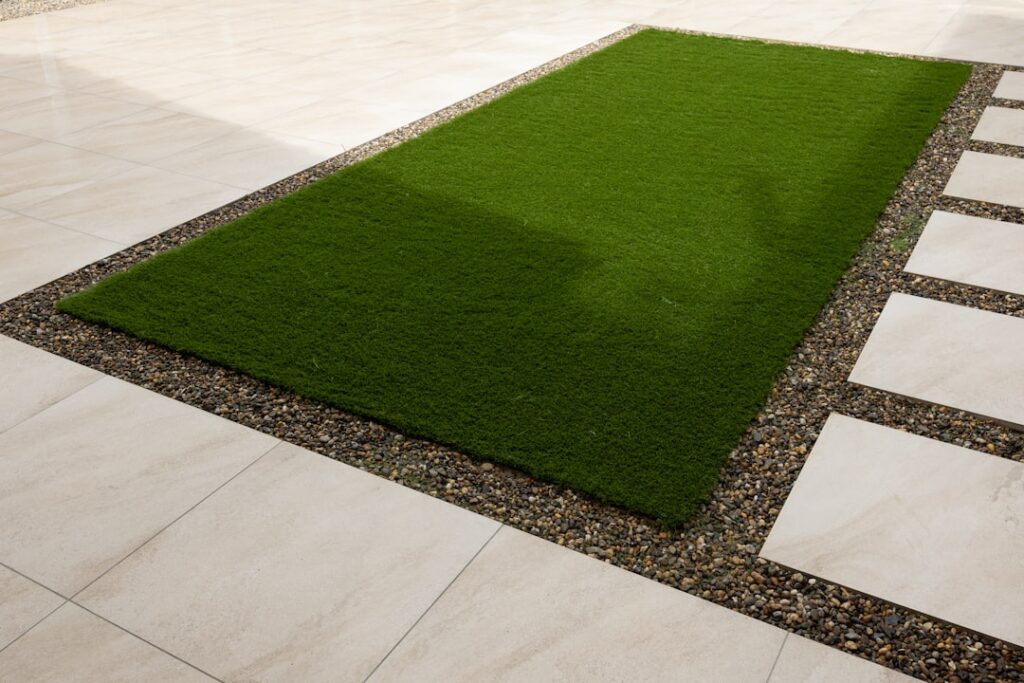
The green outdoor “grass carpet” you see on patios, balconies, and play areas is more capable than the thin rolls of yesteryear, but choosing the wrong product still leads to fading, drainage problems, and a flat, fake look within a season. A quality artificial grass carpet outdoor solution comes down to four things: proper drainage, a durable backing, true UV resistance, and a well-prepared base. Get those right and you get a low-maintenance green surface that looks good for years.
Part of our Windows & Doors guide — explore the full guide →
This guide explains what to look for, how to prep the ground, where these products work best, and where their limits honestly lie.
- What Outdoor Grass Carpet Actually Is
- Drainage: The Most Overlooked Feature
- Backing and Durability
- UV Resistance Matters Outdoors
- Base Preparation
- Best Uses for Outdoor Grass Carpet
- An Honest Look at the Limits
- Choosing the Right Pile and Color
- Loose Rugs vs. Permanent Installation
- Maintenance Keeps It Looking Real
What Outdoor Grass Carpet Actually Is
Outdoor grass carpet, also called artificial turf or fake grass rug, is a synthetic surface made from polyethylene, polypropylene, or nylon fibers tufted into a backing. It comes in rolls or pre-cut rugs and ranges from thin, indoor-outdoor turf to thick, lush landscape-grade turf that mimics real lawn. The terms overlap, but generally the thicker the pile and the better the backing, the more it holds up outdoors.
Drainage: The Most Overlooked Feature
Drainage is what separates outdoor-rated turf from a cheap rug that turns into a soggy, smelly mat. Outdoor grass carpet must let rainwater pass straight through rather than pooling on top.
- Perforated or fully permeable backing: look for turf with drainage holes or a fully permeable backing that allows water to flow through quickly.
- Avoid solid rubber backing outdoors: some indoor-outdoor carpets have a closed backing that traps water, leading to mold, odor, and a slippery surface.
For patios and balconies, a well-draining turf prevents standing water and lets the surface dry fast after rain. Pet owners especially need free-draining turf so urine rinses through instead of lingering.
Backing and Durability
The backing holds the blades in place and determines how long the product survives foot traffic and weather. Quality outdoor turf uses a robust, multi-layer backing, often a primary layer plus a polyurethane or latex coating, that locks the fibers tightly and resists fraying. Cheaper rugs shed blades and pull apart at the seams within a year or two. Check the face weight and pile density too: a higher face weight and tighter tuft gauge feel fuller underfoot and bounce back better from compression.
UV Resistance Matters Outdoors
Constant sun is the enemy of synthetic grass. Without UV protection, the fibers fade, turn brittle, and lose their color, often within a single hot summer. Always choose turf labeled UV-resistant or UV-stabilized, which means the fibers are treated to withstand prolonged sun exposure. This single feature is the difference between turf that looks fresh after five years and a rug that goes pale and crunchy fast. For sunny patios and rooftops, do not compromise on UV rating.
Base Preparation
For loose rugs on a patio, prep is minimal: just clean the surface so debris does not show through. For permanent installation over soil, base prep is the most important step and the one homeowners most often rush.
- Remove existing grass and soil to a depth of three to four inches.
- Add a compactable aggregate base, such as crushed stone or decomposed granite, and grade it for slight slope so water drains away.
- Compact the base thoroughly with a plate compactor to prevent settling and lumps.
- Add a thin leveling layer of fine sand or stone dust and smooth it.
- Lay the turf, seam pieces carefully, secure the edges with landscape staples or nails, and brush the fibers upright.
- Apply infill like silica sand for landscape-grade turf to weigh it down and keep blades standing.
A weed barrier fabric under the base helps prevent growth from pushing through over time.
Best Uses for Outdoor Grass Carpet
- Patios, decks, and balconies: a soft, green surface where real grass cannot grow.
- Rooftop terraces: lightweight greenery without soil or watering.
- Play areas: a cushioned, mud-free surface for kids, often paired with a padded underlay.
- Pet runs: easy-to-rinse turf that drains and resists digging.
- Pool surrounds and small yards: tidy green space that needs no mowing.
An Honest Look at the Limits
Artificial grass carpet is durable and low-maintenance, but it is not maintenance-free or perfect. Dark turf can get hot in direct summer sun, sometimes uncomfortably so for bare feet. It does not regenerate, so high-traffic paths can flatten over time, and stains or pet messes need occasional rinsing. Quality turf carries a real cost, and the cheap thin rugs that look like a bargain rarely last. It also will not biodegrade, which is worth weighing against the water and mowing it saves.
Choosing the Right Pile and Color
The look and feel of outdoor grass carpet come down to pile height and color blend, and the most realistic products pay attention to both.
- Pile height: shorter piles around 1 to 1.25 inches feel firm and tidy, ideal for putting greens and high-traffic patios, while longer piles of 1.5 to 2 inches look lush and lawn-like but flatten faster under heavy use.
- Color blend: the most natural turf mixes several shades of green with tan or brown thatch fibers at the base, mimicking a real lawn rather than a flat, uniform green.
- Density: more fibers per square inch feel fuller and recover better from foot traffic.
Bring home a sample and view it in natural daylight before committing, since turf can look very different indoors under store lighting.
Loose Rugs vs. Permanent Installation
How you plan to use the grass carpet shapes the whole approach. A loose turf rug rolled out on a balcony, patio, or deck is the simplest option: no base prep, easy to lift for cleaning, and movable if you rent. Choose a permeable-backed product so water drains through, and weigh down or secure the edges so wind does not catch it. Permanent installation over soil is a bigger commitment that delivers a seamless, lawn-like result, but it demands proper excavation, a compacted aggregate base, secured seams, and infill, as covered earlier. For most homeowners testing the idea, starting with a quality loose rug is the low-risk way to see whether outdoor turf fits your space before investing in a full install.
Maintenance Keeps It Looking Real
Upkeep is light but not zero. Rinse the surface periodically to remove dust and pet waste, brush the fibers occasionally to keep them upright, and clear leaves and debris before they mat down. Spot-clean spills promptly. With UV-rated fibers, a good backing, proper drainage, and a solid base, an outdoor grass carpet stays green and inviting for many years, giving you a clean, mow-free green space wherever real grass falls short.