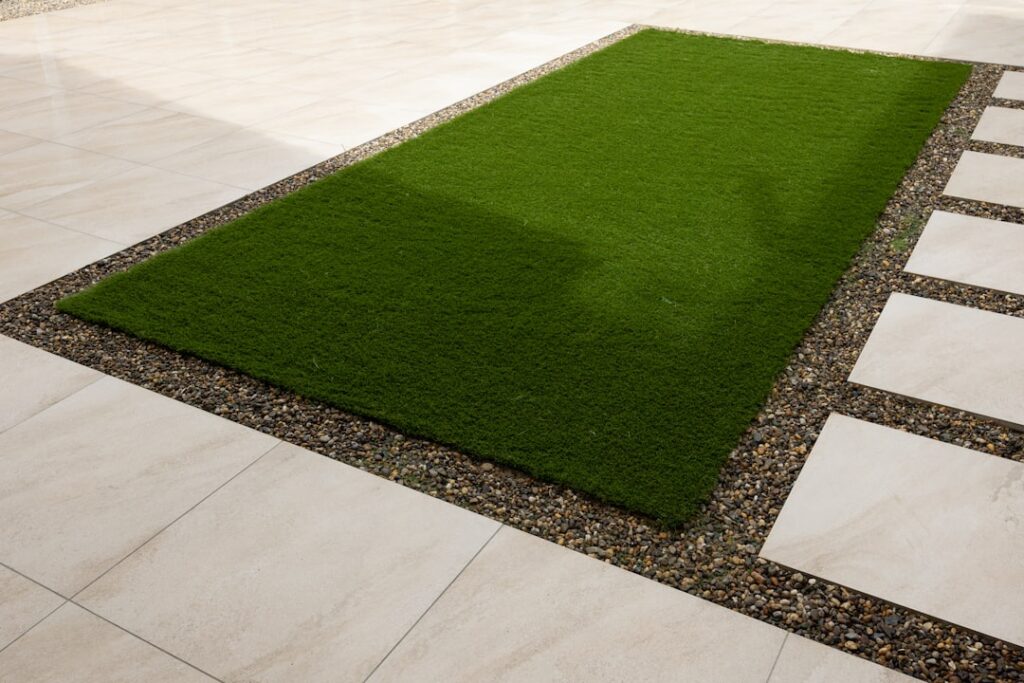
An artificial grass outdoor rug brings the soft, green look of a lawn to spaces where real grass will never grow, like a concrete patio, a wood deck, a rooftop terrace, or an apartment balcony. Unlike a full turf installation that requires base prep and infill, a turf-style rug is a ready-made piece you simply roll out, trim to fit, and secure. For $30 to $200 you can transform a gray slab into a comfortable, barefoot-friendly surface in an afternoon.
Part of our Windows & Doors guide — explore the full guide →
These rugs have improved dramatically in the last decade, with realistic multi-tone blades, drainage backings, and UV coatings that resist fading. This guide explains the specs that separate a quality rug from a cheap one, the sizes you can buy, how to keep it from sliding, how to clean it, and how it stacks up against a patch of real grass for a patio.
What an Artificial Grass Outdoor Rug Actually Is
A turf rug is synthetic grass, usually polyethylene or polypropylene fibers, tufted into a backing and cut into standard rug dimensions with finished edges. It is engineered for outdoor use, meaning the fibers carry a UV inhibitor and the backing sheds water rather than trapping it. Think of it as the middle ground between an indoor-outdoor mat and a permanent turf lawn: more realistic and cushioned than a doormat, far less involved than a landscaping project.
People use these rugs to green up patios, define a seating area on a deck, cover worn balcony concrete, create a pet-relief spot, or add a playful surface for kids. Because they are self-contained pieces, renters love them; when you move, you roll the rug up and take it with you, leaving no trace on the property.
Pile Height and Face Weight
Pile height, the length of the grass blades, typically ranges from 0.5 to 1.5 inches on outdoor rugs. Shorter piles around 0.5 to 0.75 inch feel firm underfoot, resist matting, and are the easiest to sweep and vacuum, which makes them ideal for high-traffic patios and pet areas. Longer piles near 1.25 to 1.5 inches look lusher and more lawn-like but can flatten in seating zones and take more effort to keep upright.
Face weight, measured in ounces per square yard, tells you how much yarn is packed into the rug, and it is the best single indicator of density and durability. Budget rugs run 20 to 40 ounces, while premium rugs reach 60 to 80 ounces or more, feeling plush and standing up to years of foot traffic. A dense, mid-height rug in the 45-to-60-ounce range hits the sweet spot of realism, comfort, and longevity for most homeowners.
Drainage Backing Matters
The backing is what separates a true outdoor rug from an indoor mat that will mildew on your patio. Quality artificial grass rugs have a perforated latex or polyurethane backing with drainage holes, commonly spaced every 4 inches in a grid, that let rain and hose water pass straight through instead of pooling on top. A rug with roughly 24 to 30 holes per square yard drains fast enough to dry within an hour of a shower.
If you are covering a deck, drainage is doubly important so water reaches the boards below and evaporates rather than sitting and rotting the wood. Avoid solid-backed indoor turf rugs outdoors; they trap moisture, grow mold underneath, and can leave stains on stone or wood. Always confirm the product lists a permeable or drainage backing before you buy it for an exposed area.
Common Sizes and Where They Fit
Turf rugs come in the same familiar footprints as regular area rugs, which makes planning easy. Popular sizes include 4-by-6 feet for a balcony or entry, 5-by-8 feet for a small patio seating group, and 6-by-9 feet for a larger deck or dining set. Runners around 2-by-6 or 3-by-10 feet suit walkways, side yards, and narrow balconies, and many brands sell rolls you can cut to a custom shape with a sharp utility knife from the backing side.
Measure your space and leave a few inches of clearance from walls and railings so water can escape at the edges. If you need to cover a large or irregular area, buying two rugs and butting them seam-to-seam is often cheaper and easier to handle than one oversized piece, and a strip of outdoor seaming tape underneath hides the joint.
Securing the Rug on Decks and Concrete
A turf rug that slides is a trip hazard, so anchoring it is worth a few extra minutes. On a wood deck or over soil, landscape staples, the U-shaped 6-inch galvanized pins used for weed fabric, driven through the perimeter and every couple of feet along the middle hold the rug flat and let it drain freely. On concrete or a balcony where you cannot drive stakes, double-sided outdoor carpet tape or removable turf tape along the edges keeps it in place without residue.
For heavy wind zones like rooftops and high balconies, combine edge tape with a few weighted planters or furniture legs set on the corners. Avoid solid glue-downs on rented property, and never fully seal the perimeter on a drainage rug, or you will trap the very water the backing is designed to release. The goal is stable but breathable.
Cleaning and Maintenance
Keeping an artificial grass outdoor rug looking fresh takes little effort. For routine care, shake it out or sweep debris with a stiff broom, and hose it down when it gets dusty; the drainage backing lets water run right through. For spills or general grime, mix a mild dish soap with water, scrub gently with a soft brush, and rinse thoroughly so no soap film remains to attract dirt.
For pet messes, pick up solids, then rinse the spot and follow with a 50-50 white vinegar and water solution or an enzyme cleaner made for turf to neutralize odor. Let the rug air-dry, and fluff any matted blades by brushing against the grain with a broom. Twice a year, lift the rug to sweep out anything that settled underneath and to let the surface below dry fully, which prevents mildew and staining.
Pet-Friendly and Kid-Friendly Options
Turf rugs are a favorite for households with dogs, and some are marketed specifically as pet turf with tighter drainage and antimicrobial backings that resist odor. For a balcony potty area, choose a short 0.5-to-0.75-inch pile in a dense face weight so urine drains straight through and solids lift off easily, and place the rug over a tray or directly on a surface you can hose. Rinse pet spots daily and treat weekly with an enzyme cleaner to keep odor from building in the backing.
For children’s play areas, look for rugs labeled lead-free and non-toxic, and remember that synthetic turf heats up in direct summer sun, sometimes reaching 20 to 30°F above air temperature on a hot afternoon. Site the rug in partial shade, choose a lighter blade color that absorbs less heat, or hose it down before barefoot play. A cushioned foam pad underneath adds comfort and a small measure of fall protection for toddlers.
Cost, Lifespan, and Real Grass Comparison
Priced by area, turf rug material runs about $1 to $4 per square foot, so finished rugs land between $30 for a small balcony piece and $200 for a large, high-density rug. Cheaper rugs with low face weight and thin UV coatings may fade or mat within a couple of seasons, while a quality rug lasts 3 to 8 years outdoors depending on sun exposure and traffic. Look for a stated UV warranty and a heavier face weight if you want the longer end of that range.
Compared with growing real grass on a patio, a rug wins on practicality nearly every time: no soil, no mowing, no watering, no muddy patches, and it works over concrete where a lawn simply cannot exist. Real grass offers cooling, better drainage into soil, and genuine ecological value, but it is a non-starter on a hard-surface patio or balcony. For those spaces, a well-chosen artificial grass outdoor rug delivers the green, soft-underfoot look you want with a fraction of the upkeep.