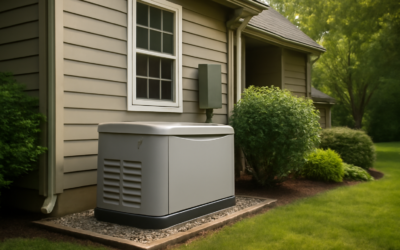
When the grid drops at 2 a.m., most people with portable generators are outside with a flashlight, pulling a cord and dragging extension cords through a window. An automatic standby generator skips all of that. It sits on a pad beside the house, watches utility power around the clock, starts itself within seconds of an outage, and switches your circuits over without anyone lifting a finger. When power returns, it hands the load back and shuts down on its own.
That hands-off operation comes from three parts working together: the engine-driven generator, an automatic transfer switch, and a controller that ties them together. Understanding how they interact helps you judge whether your home can support a standby system and what the installation will involve. This guide explains the outage sequence step by step, the weekly self-test, and the fuel, electrical, site, and permit requirements that come before a permanent home generator can be installed.
If you are comparing specific models or working out kilowatt sizing, those are separate decisions. Here the focus is on what the system does and what your house needs to host one.
How an Automatic Standby Generator Works
Every home standby electric generator follows the same basic sequence, whether it powers a few essential circuits or the whole house.
- Sensing: the transfer switch continuously monitors incoming utility voltage. When it drops below a set threshold or disappears, the controller registers an outage.
- Delay: the controller waits a few seconds to make sure the outage is real and not a brief flicker. This prevents needless starts during momentary dips.
- Start and warm-up: the engine cranks, fires on natural gas or propane, and stabilizes its speed and output. This typically takes around 10 to 30 seconds from the moment power fails.
- Transfer: once output is stable, the automatic transfer switch disconnects the house from the utility line and connects it to the generator. The two sources are never connected at the same time.
- Running: the generator carries your circuits. Many systems include load management modules that shed large loads, like a second air conditioner or a water heater, if demand approaches capacity.
- Retransfer: when utility power returns and stays steady for a set period, the switch moves the house back to the grid.
- Cool-down: the engine runs unloaded for a few minutes to cool evenly, then shuts off and returns to standby.
The whole cycle is automatic. You might notice lights blink out for a few seconds and come back, and that is about it.
The Automatic Transfer Switch Explained
The automatic transfer switch, or ATS, is the safety centerpiece of any standby generator for a house. Its job is to make certain that generator power never flows back onto utility lines, a condition called backfeed that can seriously injure or kill line workers restoring service. It also protects the generator from being hit by returning utility voltage.
There are two common configurations:
- Whole-house (service-rated) switch: installed between the utility meter and your main panel, it transfers the entire panel. Paired with load management, this lets a moderately sized unit run most of the home.
- Essential-circuits switch: a smaller subpanel that holds only selected circuits, such as the furnace, refrigerator, sump pump, well pump, and some lights. This keeps generator size and cost down.
Either way, the switch is part of your home’s electrical service, and connecting it means working inside the main panel or at the meter. That is licensed electrician territory in every jurisdiction.
The Weekly Exercise Cycle
Automatic backup generators are designed to test themselves. On a schedule you choose, usually once a week or once every two weeks, the controller starts the engine and runs it for a short period, often 5 to 20 minutes. Most units exercise without transferring load, so your power is never interrupted.
This routine does several things. It circulates oil, keeps seals lubricated, charges the starting battery, and dries out moisture that could corrode internal parts. It also surfaces problems before an actual outage. If the engine fails to start during exercise, the controller logs a fault, and many units send an alert to a phone app or display a warning light. Set the exercise time for a weekday midmorning so the noise does not bother neighbors and you are likely to notice a problem.
What Your Home Needs Before Installation
A permanent home generator is closer to a new appliance hookup plus an electrical service upgrade than to a simple purchase. Check these requirements before you commit.
Fuel Supply
Most home generator systems run on natural gas or propane. Natural gas needs a utility meter and service line large enough to feed the generator and your existing appliances at the same time, and many homes need a meter upgrade from the gas company. Propane homes need a tank sized for multi-day run time; a large standby unit can burn through a small tank quickly under heavy load. Diesel models exist but are less common for houses. All gas piping and connections are licensed-professional work, with a permit and a pressure or leak test.
Electrical Service
Your main panel must have space and compatibility for the transfer switch, and older or crowded panels sometimes need an upgrade first. The installer will review your service size, grounding, and the circuits you want backed up. Load calculations determine both the generator size and whether load-shedding modules are needed.
Site and Pad
The unit sits on a level composite or concrete pad outdoors. Manufacturers and local codes set minimum clearances from windows, doors, vents, and combustible walls, commonly around 5 feet from openings and often more under local rules. The spot also needs service access on all sides, reasonable distance to the gas meter and panel to keep runs short, and ground that does not flood.
Permits and Approvals
Expect an electrical permit, a gas or mechanical permit, and sometimes zoning or HOA approval for noise and placement. Some towns limit generator sound levels at the property line or restrict exercise times.
Carbon Monoxide and Safe Placement
Standby generators burn fuel, so they produce carbon monoxide just like a portable unit. They are designed for outdoor use only and must never be enclosed in a garage, shed, or crawlspace. Keep exhaust away from windows, doors, soffit vents, and air intakes, and follow the clearances in the maker’s manual and local code. Install carbon monoxide alarms on every level of the home and near sleeping areas, and test them monthly. If an alarm sounds during an outage, get everyone outside and call 911 before investigating.
Maintenance and Troubleshooting
Standby units need regular care to stay dependable. Typical tasks include changing oil and filters on the schedule in the manual, often annually or after a set number of run hours, replacing the starting battery every few years, and keeping vegetation, snow, and debris clear of the enclosure.
- Fails to start on exercise: check the controller display for a fault code. Weak batteries are the most common cause.
- Starts but does not transfer: the transfer switch or its control wiring may be at fault. Call your service technician; do not open the switch.
- Shuts down under load: possible overload. Review which appliances were running and whether load management is configured correctly.
- Runs rough or smokes: could indicate fuel pressure problems or overdue service. Stop using it and schedule a technician.
- Exercise stopped happening: the controller clock may have reset after a power event. Reprogram the schedule.
Many owners buy an annual service plan from the installing dealer, which typically includes an inspection, oil change, and battery test.
General Cost Ranges
Total installed cost depends heavily on unit size, transfer switch type, fuel run length, and local labor. As broad ranges, an essential-circuits system often lands somewhere around $6,000 to $12,000 installed, while a whole-house unit with a service-rated switch commonly runs $10,000 to $20,000 or more. Gas meter upgrades, long trenches, propane tanks, panel replacements, and permits can each add significantly. Get at least two written quotes that itemize the equipment, switch, fuel work, pad, and permits.
When to Call a Licensed Professional
Installing an automatic standby generator is not a DIY project. The transfer switch ties into your main electrical service, the fuel line is a gas connection that must be pressure tested, and both require permits and inspections in almost every jurisdiction. Hire a licensed electrician or a certified generator dealer for the electrical side and a licensed gas fitter or plumber for the fuel line. If you ever smell gas near the unit or meter, leave the area and call the gas utility from a safe distance. Homeowners can safely handle visual checks, clearing debris, and watching the exercise cycle, but leave opening the enclosure’s electrical compartments and any wiring to a pro.
Frequently Asked Questions
How fast does an automatic standby generator turn on?
Most units sense the outage, start, and transfer power within about 10 to 30 seconds, depending on the controller delay and warm-up settings.
Does a standby generator need a transfer switch?
Yes. The automatic transfer switch is what lets the system run without you and keeps generator power from backfeeding onto utility lines, which protects line workers.
How often does a standby generator run its self-test?
Usually weekly or every other week for about 5 to 20 minutes. The exercise cycle keeps the engine lubricated, charges the battery, and flags faults before an outage.
Can a standby generator run on propane?
Yes. Most home standby units run on natural gas or propane. Propane homes need a tank large enough for several days of expected run time.
Where can an automatic backup generator be placed?
Outdoors on a level pad, with clearances from windows, doors, and vents set by the maker’s manual and local code, often at least 5 feet from openings. Never install one indoors or in a garage.