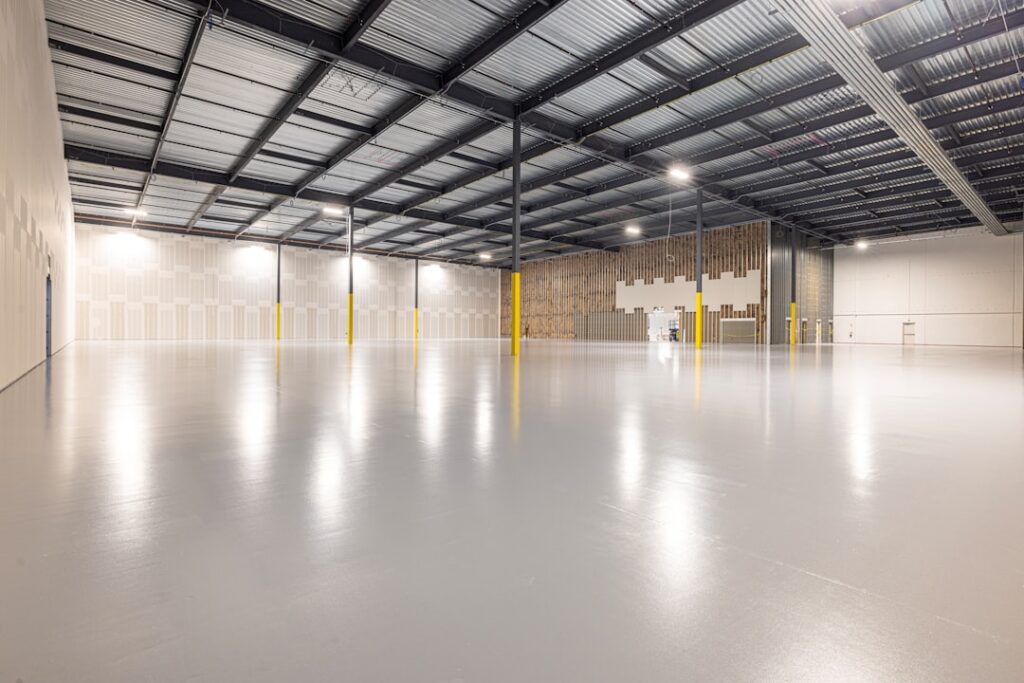
Epoxy turns a dull gray slab into a glossy, chemical-resistant floor that shrugs off dropped tools and oil spills, which is why it dominates garages, basements, and workshops. But the quotes are all over the map, and much of the price is invisible: it is in the prep you cannot see once the floor is glossy. The average cost of epoxy flooring runs about $3 to $12 per square foot installed, and this guide breaks down exactly what pushes you toward the low or high end, plus the safety realities that a smart install accounts for.
- The Price Range at a Glance
- Coating Type Drives the Price
- Prep Is the Hidden Cost
- Moisture and Why It Matters to Cost
- Safety: Fumes and Ventilation
- Sample Project Costs
- DIY vs. Hiring a Pro
- Cost by Location in the Home
- How Long an Epoxy Floor Lasts
- Ways to Control the Cost
- Frequently Asked Questions
The Price Range at a Glance
- DIY kit (per sq ft): $1.50 to $3.
- Professional standard coating: $4 to $7 per sq ft.
- Professional premium/metallic systems: $8 to $12 per sq ft or more.
For a typical 2-car garage of about 400 to 500 sq ft, expect $600 to $1,500 for a solid pro-installed floor, and $700 to $1,200 for a DIY kit floor. High-end metallic or flake systems in that same garage can reach $3,000 to $6,000.
Coating Type Drives the Price
Water-Based Epoxy
The thinnest and cheapest, common in DIY kits. Lower solids means less build and durability, often needing recoats sooner. Roughly $1.50 to $3 per sq ft DIY.
Solid (100%) Epoxy
The professional standard. High solids create a thick, durable, glossy coat that lasts many years. Runs $4 to $7 per sq ft installed.
Flake/Broadcast Systems
Solid epoxy with decorative color flakes broadcast into it and sealed with a clear topcoat. Hides imperfections, adds grip, and looks great. Typically $5 to $9 per sq ft.
Metallic Epoxy
Metallic pigments swirled for a marbled, three-dimensional finish. The most labor-intensive and expensive, $8 to $12-plus per sq ft.
Prep Is the Hidden Cost
The biggest reason two epoxy quotes differ is surface preparation, and it is not optional. Epoxy only bonds to a properly profiled, clean, dry slab. Prep can include:
- Diamond grinding or shot blasting to open the concrete pores: $1 to $3 per sq ft.
- Crack and pit repair with patching compound: varies by condition.
- Degreasing and etching to remove oil and contaminants.
- Moisture testing. A slab that wicks moisture will push the coating off, so a moisture test is essential and a vapor barrier primer may be needed.
A bargain bid that skips grinding is the one that peels in a year. Prep is where good installers earn their price.
Moisture and Why It Matters to Cost
Concrete on grade can transmit water vapor from the soil below. If that vapor gets trapped under an epoxy film, it delaminates the coating in bubbles and sheets. A proper job includes a moisture test (calcium chloride or relative humidity probe), and if readings are high, a moisture-mitigation primer, which adds cost but saves the whole floor. Treat any epoxy install as a job that needs good prep and dry conditions; skipping moisture control is the most expensive shortcut you can take.
Safety: Fumes and Ventilation
Epoxy and its solvents give off strong fumes that are harmful to breathe, and prep grinding creates hazardous silica dust. A responsible install, whether DIY or pro, treats protection as mandatory:
- Work in a well-ventilated space with windows open and fans exhausting air out of the room.
- Wear an organic-vapor respirator rated for epoxy and solvent fumes, not just a dust mask, plus chemical-resistant gloves and eye protection.
- Use proper dust control and respiratory protection during grinding, since concrete dust contains silica.
- Keep ignition sources away from solvent-based products and follow the label’s cure and re-occupancy times.
Because prep, moisture control, and ventilation all matter so much, budget for a job done right rather than the cheapest possible coating.
Sample Project Costs
- DIY 2-car garage, 450 sq ft, water-based kit: about $2 per sq ft, roughly $900 in materials.
- Pro 2-car garage, 450 sq ft, solid epoxy with flakes, full grinding prep: about $6 per sq ft, roughly $2,700.
- Pro basement, 800 sq ft, metallic system: about $10 per sq ft, roughly $8,000.
DIY vs. Hiring a Pro
DIY kits cut material cost dramatically, but the results depend entirely on your prep. Renting a concrete grinder ($75 to $150 per day), testing moisture, and coating within the epoxy’s pot life takes real effort, and the thinner water-based kits do not last as long as a pro-grade solid epoxy. For a utility garage you use hard, a pro floor with proper prep is often worth the premium because it will not peel. For a low-stakes basement or shed, a careful DIY kit can look great for years.
Cost by Location in the Home
Where you put epoxy changes the price because conditions and prep differ:
- Garage: The most common install. A 2-car garage (400 to 500 sq ft) runs $600 to $1,500 for a solid pro floor, more with flakes or metallic. Oil-stained slabs need extra degreasing.
- Basement: Similar per-foot pricing, but moisture is a bigger concern below grade, so moisture testing and a vapor-mitigation primer are often required, adding cost.
- Commercial and shop floors: Larger areas earn a lower per-foot rate, but high-traffic durability requirements can push toward premium systems.
- Patios and exterior slabs: Need UV-stable topcoats (standard epoxy ambers in sunlight), which adds product cost.
How Long an Epoxy Floor Lasts
Longevity tracks closely with prep and coating type, which is why cutting corners on prep is false economy. A properly prepped solid-epoxy garage floor typically lasts 10 to 20 years, and a professional flake or polyaspartic-topped system can go longer under heavy use. A thin DIY water-based kit over poorly prepped concrete may start peeling in 1 to 3 years. Reapplying a topcoat every several years extends the life of any epoxy floor and refreshes the gloss. When you divide the cost by years of service, a well-prepped pro floor often beats a cheap kit on true cost per year.
Ways to Control the Cost
- Prep the slab yourself if you are able, renting a grinder and degreasing, then hiring out only the coating, though many pros prefer to control their own prep for warranty reasons.
- Choose a solid color over metallic; the decorative systems carry the biggest labor premium.
- Get moisture tested first so you know whether mitigation is needed before comparing bids.
- Bundle multiple areas (garage plus basement) into one visit to spread mobilization costs.
- Get three itemized quotes that spell out the prep method, since that is where prices legitimately diverge.
Frequently Asked Questions
What is the average cost of epoxy flooring?
Installed, it runs about $3 to $12 per square foot. DIY kits land $1.50 to $3, professional solid epoxy $4 to $7, and premium flake or metallic systems $8 to $12-plus. A typical 2-car garage costs $600 to $1,500 for a solid pro floor.
Why do epoxy quotes vary so much?
The biggest variable is surface prep. Diamond grinding, crack repair, and moisture mitigation add $1 to $3 per sq ft or more but are what make the floor bond and last. A low bid usually skips grinding, which is why cheap epoxy floors peel.
Do I need a respirator to apply epoxy?
Yes. Epoxy and its solvents release fumes that are harmful to breathe, so wear an organic-vapor respirator, not just a dust mask, and work in a well-ventilated room with fans moving air out. Also use dust protection when grinding concrete, since the dust contains silica.
Is DIY epoxy worth it?
For low-stakes spaces, a careful DIY kit can look great and save half the cost. The catch is prep: you must grind or etch the slab, test for moisture, and coat within the epoxy’s pot life. For a hard-used garage, a pro floor with full prep usually lasts longer.
Epoxy flooring pricing is really a prep story. The coating itself is a modest part of the cost; grinding, crack repair, and moisture control are what separate a $3 floor that peels from an $8 floor that lasts a decade. Budget for real prep, insist on moisture testing, ventilate and wear a proper respirator, and epoxy rewards you with one of the toughest, easiest-to-clean floors you can own.