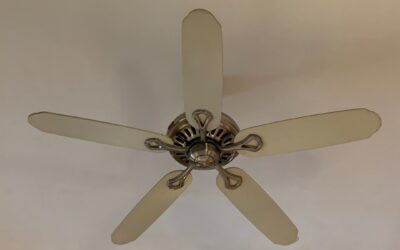
A ceiling fan is one of the most cost-effective comfort upgrades you can add to a home, cutting cooling bills in summer and helping circulate warm air in winter. But the price tag depends heavily on whether you are swapping an existing fixture or wiring a fan where none existed before. The average cost to install a ceiling fan ranges from about $150 to $350 for a straightforward replacement and climbs to $500 or more when new wiring, a switch, or ceiling reinforcement is involved. This guide breaks down every part of the cost so you can budget with confidence.
Average Ceiling Fan Installation Cost
For most homeowners, total installation costs fall into these general ranges, covering both the fan and the labor:
- Simple replacement (existing wiring and box): $150 to $350
- New installation with existing wiring nearby: $300 to $550
- New installation requiring new wiring and switch: $500 to $2,000
- High ceilings or vaulted rooms: add $100 to $300
The fan itself accounts for a big chunk of the variance. Budget models start around $50, quality mid-range fans run $150 to $400, and premium designer or smart fans can top $500 to $1,000.
Labor Costs Explained
Electricians and handymen typically charge either by the hour or a flat rate per fan. Expect these labor figures:
- Hourly electrician rate: $50 to $100 per hour
- Flat rate for a simple swap: $100 to $200
- Complex install with new circuit: $200 to $500-plus in labor
A basic replacement usually takes an electrician one to two hours. Installing a fan where there was no fixture, running new wiring through walls and ceilings, and adding a wall switch can stretch to a half or full day of work, which is why those jobs cost significantly more.
What Drives the Price Up
Several factors turn a simple job into a bigger one. Knowing them helps you anticipate the quote.
Existing Wiring and Junction Box
If a ceiling light or fan is already there, the wiring and electrical box are in place, making replacement quick and cheap. Installing a fan in a spot with no existing fixture means running new wiring, which is the single biggest cost driver.
Fan-Rated Support Box
Ceiling fans are heavier than light fixtures and move, so they require a fan-rated electrical box that can support the weight and vibration. If your existing box is not rated for a fan, replacing it adds $50 to $150. This is a critical safety step, not an optional one.
Ceiling Height and Type
High or vaulted ceilings require ladders, scaffolding, or a downrod extension and more time, adding to labor. Plaster ceilings in older homes are harder to work with than drywall and can raise costs.
Switch and Controls
Adding a wall switch, a dimmer, or a separate control for the light and fan speed involves more wiring. Smart fans and remote-control kits add convenience but also cost.
Replacement vs. New Installation
The clearest way to predict your cost is to identify which scenario you are in. Replacing an existing fan or light fixture is the easy case: the wiring, box, and switch already exist, so an electrician simply removes the old unit and hangs the new one. This is the $150 to $350 range and often a same-hour job.
A brand-new installation in a room with no overhead fixture is a different animal. The electrician must run wiring from a power source, cut into the ceiling and walls, install a fan-rated box, and add a switch. Because this involves fishing wire and patching, costs climb to $500 to $2,000 depending on how far the wiring must travel and how accessible the space is.
DIY vs. Hiring a Pro
Handy homeowners can replace an existing fan themselves and save the labor cost, since the wiring is already in place. You will need a fan-rated box, a voltage tester, a ladder, and a helper to support the fan while you connect the wires. Budget one to two hours and take care to turn off the breaker and verify the power is off.
New installations that require running wiring or adding a circuit are best left to a licensed electrician. Working inside walls and tying into your panel carries real fire and shock risk, and many areas require permits and inspection for new circuits. The cost of a pro is small compared with the danger of a mistake or a fan that falls.
Additional Costs to Consider
Beyond the fan and basic labor, budget for these possible extras:
- Fan-rated support box: $50 to $150
- New wall switch or dimmer: $50 to $200
- Downrod for high ceilings: $10 to $50
- Removal and disposal of old fixture: often included
- Drywall patching after new wiring: $75 to $300
How to Save Money
Choose a location that already has a ceiling fixture to avoid the expense of new wiring. Buy the fan yourself from a home center rather than paying an installer’s markup, and confirm it includes a mounting kit. Bundle multiple fan installs into one service call to spread out the trip charge, and get two or three quotes for larger jobs.
For a simple swap, doing the work yourself with a fan-rated box eliminates the labor cost entirely, bringing your total down to just the price of the fan and a $20 box. Just never skip the fan-rated box or the power-off safety check.
Bottom Line
For most homeowners replacing an existing fixture, the average cost to install a ceiling fan lands comfortably between $150 and $350 including a mid-range fan. New installations that require wiring push the total higher, sometimes well past $1,000. Identify whether you are replacing or installing fresh, factor in a fan-rated box and any switch upgrades, and you will have a realistic budget before the first quote comes in.
Cost by Fan Type
The style and features of the fan you choose affect the total noticeably. Beyond basic models, upgraded fans add cost but also comfort and convenience.
- Standard ceiling fan: $50 to $150 for the unit
- Fan with integrated light kit: $100 to $300
- Remote or smart-controlled fan: $150 to $500
- Large-diameter or outdoor-rated fan: $200 to $600
- Designer or high-end fan: $500 to $1,000-plus
Outdoor and damp-rated fans for covered porches cost more because they are built to resist moisture. Larger blade spans, needed for great rooms and high ceilings, also command higher prices and may require a longer downrod.
Energy Savings from a Ceiling Fan
A ceiling fan is one of the few upgrades that pays you back over time. In summer, a fan lets you raise the thermostat by about 4°F with no loss of comfort, since the moving air makes you feel cooler. That can trim cooling costs meaningfully over a season.
In winter, running the fan in reverse at low speed pushes warm air that collects near the ceiling back down into the room, easing the load on your heating system. A fan costs only pennies a day to run, far less than air conditioning, making it an efficient year-round comfort tool. Choosing an ENERGY STAR-rated model maximizes those savings.
Frequently Asked Questions
Can I install a ceiling fan where a light fixture is now?
Yes, and it is the easiest and cheapest scenario since the wiring and box already exist. The key requirement is swapping in a fan-rated electrical box, since a fan is heavier and vibrates more than a light fixture.
Why do I need a fan-rated box?
Ceiling fans weigh more and move, so they require a box specifically rated to support that weight and motion. A standard light-fixture box can fail under a fan, which is a serious safety hazard. Installing one adds only $50 to $150.
Is it cheaper to install multiple fans at once?
Often yes. Bundling several installations into one service call spreads the electrician’s trip charge across all the fans, lowering the per-fan cost compared with separate visits.
Whether you are doing a quick swap or wiring a fan into a new spot, understanding each cost component lets you budget accurately. For most replacements, the average cost to install a ceiling fan stays comfortably in the $150 to $350 range, while new wiring is the main factor that pushes the total higher.