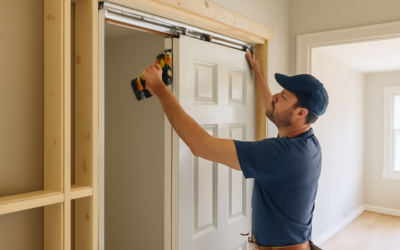
Pocket doors slide neatly into the wall instead of swinging into the room, reclaiming the roughly 10 square feet of floor space a standard hinged door wastes. That space savings is why they are so popular in bathrooms, closets, pantries, and tight hallways. But the cost to install a pocket door varies enormously depending on one factor: whether you are building a new wall or cutting into an existing finished one. Understanding that split, along with the labor, hardware, and hidden costs, lets you budget accurately before you commit.
Part of our Windows & Doors guide — explore the full guide →
Average Cost Range at a Glance
For most homeowners, a pocket door project runs between $1,000 and $3,500 fully installed, with the national average landing around $2,000. The wide range reflects the difference between an easy install during construction and a demanding retrofit into a load-bearing wall.
- New construction or open wall: $500 to $1,200
- Retrofit into existing non-load-bearing wall: $1,500 to $3,500
- Retrofit into a load-bearing wall: $2,500 to $5,000+
- DIY materials only: $150 to $600
The single biggest cost driver is what is already inside the wall and whether it carries structural load, which we will break down next.
Why Retrofits Cost So Much More
Installing a pocket door in a new or open wall is straightforward because the framing is exposed and the pocket frame slots right in. Retrofitting into an existing finished wall is a different job entirely. The installer must remove drywall from both sides, open up the wall, reframe the opening to accept the pocket cavity, and then patch, tape, and repaint the wall afterward.
The complications multiply if the wall contains anything. Electrical wiring, outlets, switches, plumbing pipes, or HVAC ducts inside the wall all have to be rerouted before the pocket cavity can go in, and that means bringing in an electrician or plumber. A load-bearing wall adds the biggest expense, since it requires a temporary support and a properly sized header to carry the load above the wider rough opening.
Breaking Down the Costs
Understanding where the money goes helps you spot where you can save and where you should not cut corners.
Materials and Hardware
The pocket door frame kit, which includes the split-stud pocket assembly and the track, runs $70 to $200 for standard sizes. The door slab itself ranges from $50 for a hollow-core builder door to $400 or more for a solid-wood or glass-panel door. Quality sliding hardware, the rollers, track, and guides, costs $50 to $250, and premium soft-close hardware sits at the top of that range.
- Pocket frame kit: $70 to $200
- Door slab: $50 to $400+
- Track and roller hardware: $50 to $250
- Handle, edge pull, and privacy latch: $20 to $80
- Drywall, trim, and paint for patching: $50 to $150
Labor
Labor is where retrofits get expensive. A carpenter charges $70 to $120 per hour, and a new-wall install may take only 3 to 5 hours, while a retrofit into a finished wall can run 8 to 16 hours across framing, install, and drywall repair. Expect labor alone to total $300 to $600 for an open wall and $1,000 to $3,000 for a demanding retrofit.
Cost Factors That Move the Price
Several variables push your quote up or down, so account for them when comparing bids.
- Load-bearing wall: adds $1,000 to $2,500 for temporary support and a structural header
- Utilities in the wall: rerouting wiring or plumbing adds $200 to $1,500 depending on complexity
- Door size: double pocket doors or oversized slabs cost more in framing, hardware, and labor
- Door material: solid wood and glass slabs cost several times more than hollow-core
- Soft-close and premium hardware: adds $50 to $200 but greatly improves feel and longevity
- Wall finish repair: matching existing texture and paint takes extra labor
DIY Versus Hiring a Pro
A confident DIYer can install a pocket door in a non-load-bearing wall for materials cost alone, roughly $150 to $600, saving $1,000 or more in labor. The framing and hardware installation are within reach for anyone comfortable with a level, a saw, and patience, and pocket frame kits come with clear instructions.
That said, hire a professional if the wall is load-bearing, if it contains plumbing or electrical you would have to reroute, or if you want a flawless drywall and paint finish afterward. Structural work and utility rerouting are not places to learn on the job. Many homeowners split the difference by doing the demolition themselves and hiring out the framing and finish work.
Ways to Save Money
You do not have to accept the highest quote. A few smart moves trim the cost meaningfully.
- Install during a remodel when the wall is already open, which can cut the price by more than half
- Choose a non-load-bearing interior wall free of wiring and plumbing whenever possible
- Use a quality hollow-core door instead of solid wood if the door does not need soundproofing
- Handle demolition and drywall patching yourself, leaving only the framing to a pro
- Buy a complete pocket door kit rather than sourcing frame, track, and hardware separately
Hardware Quality Makes or Breaks It
If there is one place not to cut costs on a pocket door, it is the sliding hardware. The cheapest pocket door kits use lightweight plastic rollers and thin tracks that bind, sag, and derail within a few years, turning a space-saving feature into a daily annoyance. Better hardware uses ball-bearing steel rollers rated for the door’s weight and a sturdy track that keeps the door gliding smoothly for decades.
Soft-close mechanisms, which gently decelerate the door in the last few inches so it never slams, add $50 to $150 but dramatically improve the feel and prevent damage. For a heavier solid-wood or glass door, upgraded heavy-duty hardware is not optional; it is what keeps the door hanging true. Spending an extra $100 to $200 on quality track and rollers is cheap insurance against a callback to reopen the wall and fix a failed cheap kit, which would cost far more than the upgrade.
Sound and Privacy Considerations
Pocket doors have one well-known weakness: because the door slides into a hollow wall cavity rather than sealing tightly in a frame, they transmit more sound than a standard swinging door. For a pantry or closet this is irrelevant, but for a bathroom or bedroom it matters. If privacy and quiet are priorities, plan for it in the budget.
A solid-core door slab instead of hollow-core blocks noticeably more sound, though it costs more and needs heavier hardware. Adding acoustic sealing strips along the jamb and a quality privacy latch improves both sound control and the sense of a proper closure. Some homeowners also insulate the wall cavity around the pocket frame during installation for extra sound dampening. These upgrades add modestly to the total but make a pocket door genuinely suitable for a bathroom, where the standard hollow-core version would feel flimsy and offer little privacy.
Is a Pocket Door Worth It?
For rooms where a swinging door wastes precious space, a pocket door is often worth the investment despite the retrofit cost. In a small bathroom, a cramped laundry room, or a tight hallway, reclaiming that floor space genuinely improves how the space functions, and the clean, modern look adds appeal. If you are already opening a wall for a remodel, adding a pocket door is a bargain.
Budget realistically based on your specific wall. Plan for $500 to $1,200 if the wall is open, and $1,500 to $3,500 or more for a finished-wall retrofit, especially if it is load-bearing or holds utilities. Knowing the true cost to install a pocket door up front lets you weigh the space savings against the price and decide whether to DIY the simple parts or hand the whole project to a carpenter.