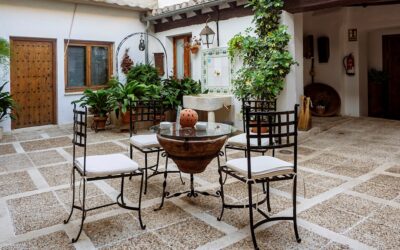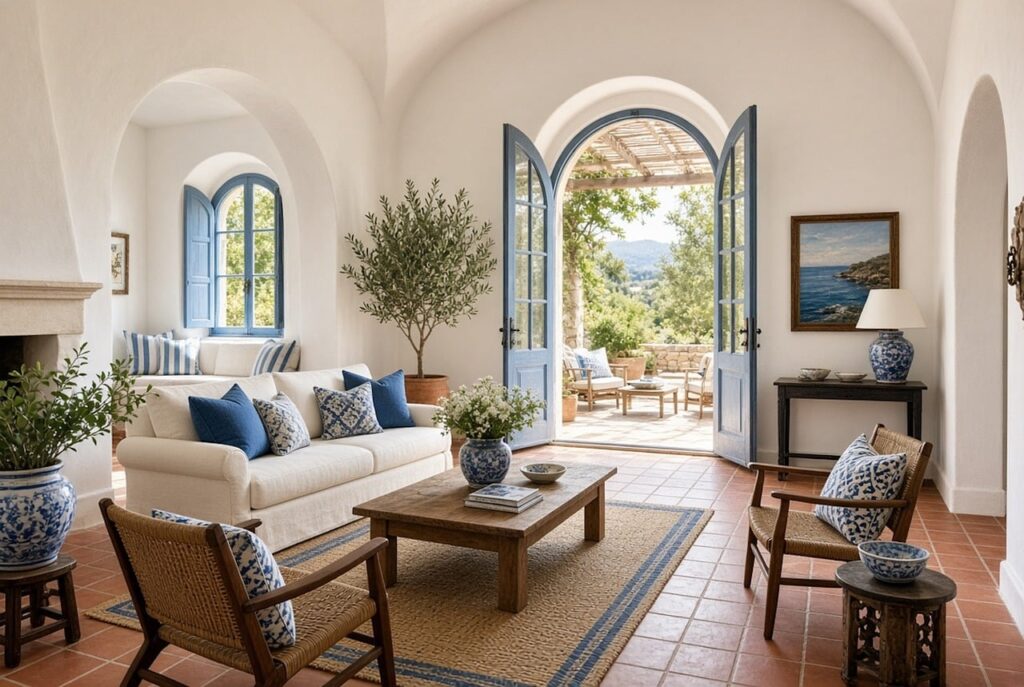
Real estate data from Zillow shows a well-designed outdoor living space returns 60 to 80% of build cost at resale while delivering years of usable square footage you live in during three or four seasons. A back patio done right is not just a concrete pad — it is a sized, leveled, drained, and detailed extension of the house that matches furniture scale and traffic flow. This guide covers the four main surface materials, correct sizing, and the details that separate a builder-grade slab from a patio you actually want to spend time on.
Part of our Decks & Outdoor guide — explore the full guide →
Sizing Before Anything Else
Pick the size before the material. A cramped patio does not function no matter how nice the stone. Rough minimums by use case:
- Dining for 4: 10 ft by 10 ft (100 sq ft)
- Dining for 6 to 8: 12 ft by 14 ft (168 sq ft)
- Conversation seating for 4: 12 ft by 12 ft (144 sq ft)
- Dining and conversation zones: 16 ft by 20 ft (320 sq ft)
- Full outdoor living room plus grill: 20 ft by 24 ft (480 sq ft)
Add 36 inches of clearance around every chair for pulled-back seating. A table that nominally seats 6 needs at least 10 ft clear on the long side to work.
Concrete: Cheapest Permanent Option
Poured concrete is the budget workhorse at $6 to $12 per sq ft installed, or $4 to $6 per sq ft for materials if you DIY. A 4-inch slab over a 4-inch compacted base handles patio furniture and foot traffic for decades.
Decorative concrete — stamped, stained, or exposed aggregate — runs $12 to $20 per sq ft and mimics stone at half the price. Specify control joints every 10 linear feet to manage cracking, and tool a 3/4-inch edge radius for a finished look.
Paver Patios
Concrete pavers from Belgard, Pavestone, and Techo-Bloc install at $15 to $28 per sq ft professionally. Individual pavers can be lifted and reset if the base settles, unlike poured concrete which cracks permanently.
- Excavate 7 to 9 inches deep below finished grade
- Install and compact 4 to 6 inches of road base gravel
- Lay a 1-inch bed of coarse sand, screeded flat
- Set pavers in pattern with 1/8-inch joints
- Tamp with a plate compactor over a sacrificial foam pad
- Sweep polymeric sand into joints and wet per product directions
Herringbone patterns resist shifting better than running bond and suit driveways that see vehicle weight. Running bond works for foot-traffic patios.
Flagstone for a Natural Look
Irregular flagstone (limestone, sandstone, or quartzite) delivers the most natural-looking patio at $20 to $35 per sq ft installed. Dry-laid flagstone on compacted base matches the process for pavers but uses larger irregular stones set with 1/2 to 1.5-inch joints filled with gravel, polymeric sand, or creeping thyme.
Mortar-set flagstone on a concrete slab costs $25 to $45 per sq ft but stays flat and weed-free indefinitely. Pick this for formal patios where you want tight joints and zero shifting.
Composite and Wood Decks at Grade
If you want a surface that feels warmer underfoot than stone, a low-profile deck built at grade works. Composite boards from Trex, TimberTech, or AZEK run $30 to $50 per sq ft installed including substructure. Pressure-treated pine decks cost $20 to $35 per sq ft.
Decks require a joist structure with proper ledger attachment, footings below frost line, and permits in most jurisdictions. Over a 2-foot grade difference, a deck often beats a patio because retaining walls become expensive fast.
Drainage Is Non-Negotiable
Every patio needs to slope away from the house at 1 to 2%, which is 1/8 to 1/4 inch per foot. Water sitting against a foundation causes leaks, basement flooding, and long-term structural damage far more expensive than the patio itself.
For large patios, add a French drain along the low edge that ties into a dry well or drains to daylight. Trench drains across doorways catch runoff before it reaches the house on patios that abut exterior walls.
Define Zones with Borders and Level Changes
A patio that reads as one big rectangle is less useful than the same square footage divided into zones. Change materials, drop a step, or use a soldier course of pavers to define dining from lounging from grilling. Even a 2-inch change in elevation signals “different space” to the brain.
Planting beds around the edges soften the hard stone or concrete and anchor the patio visually to the rest of the yard.
Overhead Cover Options
Shade extends usable hours in summer. Budget options include a 10 ft by 13 ft sail shade ($60 to $150) or a retractable awning ($500 to $1,500). Pergolas from kits like Yardistry or Backyard Discovery run $1,500 to $4,000 installed. Custom-built cedar pergolas start at $5,000 and climb fast with louvered or motorized roofs.
A covered roof extension from the house is the most valuable shade but requires engineering, permits, and $15,000 to $40,000 depending on size and finish.
Lighting That Extends the Day
String lights are the cheapest upgrade — a 48-foot Brightech Ambience Pro run ($60) strung from house to pergola to tree creates outdoor-cafe ambiance in an hour. Pathway lights, step lights, and accent spots on trees layer illumination across the yard.
Run low-voltage wiring (12V) from a transformer on the exterior wall, with photocell or timer control. Smart outdoor lighting systems from Malibu, Kichler, or Ring add app and voice control.
Furniture Scale and Placement
Scale furniture to the patio, not the other way around. A 48-inch round dining table works on a 10 ft by 10 ft patio; anything larger needs a bigger surface. Leave 36 inches of walking clearance around every furniture grouping. Test the layout with chalk or cardboard cutouts before ordering pieces you cannot return easily.