The patio floor you pick determines whether the backyard becomes the favorite room of the house or a maintenance chore. The smartest backyard patio floor ideas match climate, drainage, and how often you actually use the space against material lifespan. A polished concrete patio in Minnesota cracks in five winters. Flagstone laid loose on sand in the Pacific Northwest sprouts moss within two seasons. Match the floor to the climate first, then make it look good.
Part of our Decks & Outdoor guide — explore the full guide →
Poured Concrete
Poured concrete remains the volume leader for residential patios. Standard broom-finished concrete runs $6 to $12 per square foot installed by a pro. The finish is utility-grade but durable: a 4-inch thick slab over compacted base with #4 rebar on 18-inch centers lasts 30 to 50 years if poured by someone who knows control joints. Cut control joints every 8 to 10 feet to manage cracking.
For more visual interest, stamped concrete adds pattern and color for an upcharge of $4 to $10 per square foot. Look at Bomanite or Brickform stamps from a concrete supply yard. Acid-stained or integrally colored concrete deepens the look without the molding cost. Reseal stamped concrete every two to three years with a solvent-acrylic from H&C or Eagle, around $40 per gallon covering 200 square feet.
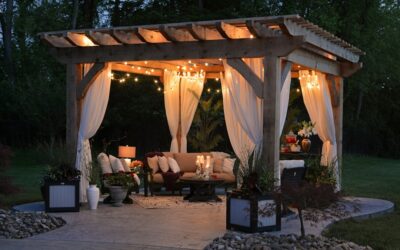
Once your patio flooring is in place, think about how you’ll use the space. A gazebo adds shade and structure, while a good outdoor furniture set turns it into a spot you’ll actually want to hang out in. A deck box is also worth considering if you need somewhere to stash cushions and outdoor gear.
We may earn a commission when you purchase through our links.
Pavers
Concrete pavers are the most popular paver because they offer pattern variety at moderate cost. Brands like Belgard, Techo-Bloc, and Cambridge produce hundreds of profiles in 12 to 24 inch formats. Expect:
- Concrete pavers: $12 to $25 per square foot installed
- Clay brick pavers: $15 to $30 per square foot installed
- Permeable pavers: $18 to $35 per square foot installed
Pavers have one advantage over concrete: individual units can be lifted to fix tree root heaves, sprinkler leaks, or settled spots, then reset. Concrete cracks require a saw cut or full slab replacement. The downside is weed pressure between joints. Use polymer sand from SureBond, Techniseal, or Alliance Gator that hardens with water; expect to refresh joints every 5 to 7 years.
Flagstone and Natural Stone
Natural stone is the upmarket move. Flagstone from Pennsylvania Bluestone, Arizona Buckskin, or Tennessee Crab Orchard ranges $20 to $50 per square foot installed depending on stone type, thickness, and setting method. Dry-laid stone on a base of crushed gravel and sand drains naturally and shifts gracefully with frost cycles, though weeds and unevenness become issues over time. Wet-set stone on a concrete slab with mortared joints lasts longer and stays flat but costs $35 to $70 per square foot installed.
For dry climates, granite and slate also work well. Avoid limestone in freeze-thaw climates because it spalls; avoid travertine in northern climates for the same reason. Sandstone falls in between and works for most US zones if sealed with a penetrating sealer like Glaze N Seal or Aqua Mix.
Decking and Composite Options
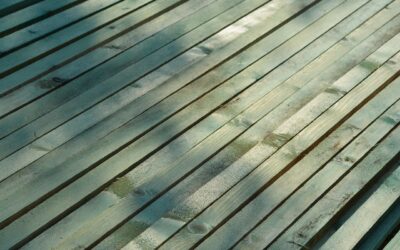
Not every patio is at grade. Raised wood and composite decks are the most common solution when the back door is more than 12 inches above grade. Pressure-treated southern yellow pine remains the cheapest deck material at $25 to $45 per square foot installed but needs annual sealing. Cedar at $30 to $55 per square foot looks better but rots faster in wet climates. Composite from Trex, TimberTech, or Fiberon runs $35 to $75 per square foot installed and lasts 25 to 30 years with almost no maintenance.
For ground-level construction, Bison Innovative Products and Buzon make pedestal systems that elevate pavers or composite tiles 1 to 6 inches off a subfloor. Use these on roofs, balconies, and over concrete slabs that drain poorly.
Gravel, Decomposed Granite, and Pea Stone
Gravel patios are the cheapest, fastest, and most flexible option. Decomposed granite (DG) at $4 to $8 per square foot installed creates a hard, semi-permeable surface that compacts under traffic. Pea stone runs the same range but stays loose, which is awkward under chair legs and bare feet. Crushed limestone or 3/8 inch crushed bluestone falls in between.
For longevity, install permeable underlayment fabric like Mirafi 140N at $0.50 per square foot, then top with 4 inches of base rock and 2 inches of finish gravel. Add steel or aluminum edging from Edge Pro or Permaloc to contain the gravel; expect $4 to $10 per linear foot.
Tile and Porcelain Pavers
2cm thick porcelain pavers are the fastest-growing outdoor flooring category. Brands like MSI Arterra, Daltile, and Florim make porcelain tiles in 24 by 24 and 24 by 48 inch formats specifically rated for outdoor use, with DCOF above 0.42 for slip resistance. Pricing runs $12 to $25 per square foot for the tile and $8 to $18 per square foot installed depending on setting method.
Set 2cm porcelain on a mortared concrete slab with epoxy thinset like Mapei Kerabond T or Laticrete 254 Platinum, or on a pedestal system for raised installations. The tile is freeze-thaw rated, stains less than concrete, and looks like stone or concrete at a fraction of the maintenance.
Sizing, Drainage, and Code
A useful patio sized for furniture starts at 12 by 14 feet, which fits a 6-person dining table and chairs with circulation. Add 4 feet on a side for an outdoor sofa setup. For grilling and dining together, plan on 16 by 20 feet minimum. Slope the patio away from the house at a minimum 1/8 inch per foot, with 1/4 inch per foot preferred. Anything flatter pools water against siding.
Most residential patios under 200 square feet at ground level fall outside IRC R105.2 permit requirements, but raised patios and decks over 30 inches above grade require permits and structural inspection. Check with your local building department before ordering material. HOA approval is often a separate process and frequently dictates material and color.
Picking the Right Surface for Your Climate
Climate is the biggest filter on material choice:
- Cold (Midwest, Northeast, Mountain West): concrete with proper joints, pavers, or 2cm porcelain on pedestals
- Hot dry (Southwest): flagstone, stamped concrete, light-colored porcelain
- Hot humid (Southeast, Gulf): brick pavers, sealed concrete, ipe decking
- Wet temperate (Pacific Northwest): composite decking, mortared flagstone, permeable pavers
- Coastal (any region): non-corrosive materials, avoid plain steel edging or untreated metal
The single best long-term value across most climates is a properly installed concrete paver patio with polymer sand joints. The combination of moderate cost, repairability, and visual options keeps it the top recommendation from landscape designers and contractors year after year.
Prefer to explore on your own?
See how new flooring looks in your actual room in seconds — free, no signup.
Try the free Floor Studio →