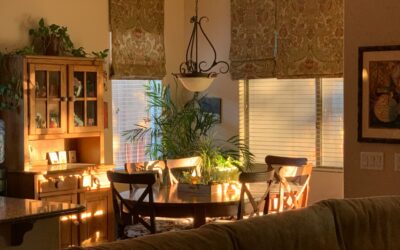
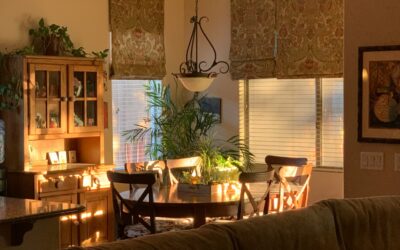
Buy the wrong woven shade and you will know by the first evening, when every lamp in the room turns your window into a lit display for the street. Bamboo roman shades bring warm texture and filtered daylight to a room, but unlined woven wood offers little nighttime privacy. The right choice comes down to four decisions: which natural material you want, which fold style suits the room, whether you need a privacy or blackout liner, and whether an inside or outside mount fits your window.
Here is the quick version. Choose bamboo for a clean, even look and good durability, rattan for a chunkier, more rustic texture and jute or grass weaves for a soft, casual feel. Pick a flat fold for a tailored modern look or a hobbled fold for a fuller, layered drape. Add a privacy liner for bedrooms and street-facing rooms, and a blackout liner where you need to sleep in. Inside mounts look built-in but need window depth; outside mounts block more light and hide imperfect frames.
- Bamboo Roman Shades vs Other Woven Roman Shades
- Flat Fold vs Hobbled Fold
- Liners: Privacy, Light Filtering and Blackout
- Cord Safety: Choose Cordless or Motorized
- Inside Mount vs Outside Mount
- Tools and Materials for Installation
- How to Measure and Install Step by Step
- Care and Troubleshooting
- Typical Cost Ranges
- When to Call a Pro
- Frequently Asked Questions
The sections below walk through each of those choices, how to measure correctly, installation basics, care, typical costs and when a professional fitting is worth it.
Bamboo Roman Shades vs Other Woven Roman Shades
Many retailers group every natural-fiber shade under the label woven wood or natural roman shades. The material you choose changes how the shade looks, filters light and wears over time.
| Material | Look and Texture | Best For |
|---|---|---|
| Bamboo | Uniform slats, smooth, even color | Living rooms, kitchens, clean modern spaces |
| Matchstick bamboo | Fine thin reeds, delicate stripes | Light filtering, casual rooms, sunrooms |
| Rattan | Thicker, knobby, more variation | Rustic, coastal and boho interiors |
| Jute and grasses | Soft, loosely woven, organic | Bedrooms and relaxed spaces with a liner |
| Wood reeds | Stained or painted flat strips | Traditional rooms, matching wood trim |
Bamboo is technically a grass, but its dense stalks make it among the most durable choices, and it takes stains evenly. Matchstick roman shades use very thin split bamboo that lets more light through and costs less, though the fine reeds can snag. Rattan roman shades have a heavier, more handmade character that suits coastal and farmhouse styles. Wood roman shades built from basswood or similar reeds look more formal and can be matched to cabinet or floor tones.
Flat Fold vs Hobbled Fold
The fold style decides how the shade looks both raised and lowered.
Flat Fold Roman Shades
Flat fold roman shades hang as a smooth panel when lowered and stack into neat, crisp pleats when raised. They show off the weave pattern clearly and read as clean and contemporary. Because the stack is compact, they work well on shallow windows and above kitchen sinks where you want the full glass exposed.
Hobbled (Soft Fold) Roman Shades
Hobbled shades have permanent cascading folds even when fully lowered, which creates depth and a softer, more tailored-traditional look. They use more material, so they can cost more and create a thicker stack. They suit tall windows in dining rooms and bedrooms where the extra texture adds warmth.
Liners: Privacy, Light Filtering and Blackout
Unlined woven shades filter light beautifully by day, but they become see-through at night when interior lights are on. Liners solve that.
- No liner: Maximum texture and daylight. Best for rooms where privacy is not a concern, such as a back-facing sunroom.
- Privacy liner: A light fabric that blocks views in both directions while still letting soft light glow through. The most popular choice for living rooms and street-facing windows.
- Blackout liner: A dense, opaque layer that blocks most light. Ideal for bedrooms, nurseries and media rooms. Expect small light gaps at the edges on inside mounts.
- Thermal liner: Adds insulation that helps reduce heat gain in summer and drafts in winter.
Some shades offer a detachable or separate-lift liner that you can raise independently, giving you filtered light by day and privacy at night from one product. It costs more but gives the most flexibility.
Cord Safety: Choose Cordless or Motorized
Older roman shades use exposed lift cords on the back of the fabric and a pull cord at the side. Both are recognized strangulation hazards for young children, and roman shades have been a specific concern because children can reach the inner cords. The Consumer Product Safety Commission recommends cordless or motorized window coverings in homes with children. Cordless bamboo roman blinds lift with a gentle push on the bottom rail, and motorized versions run on a remote or smart switch. If you keep an older corded shade, install cord cleats high out of reach and consider a retrofit kit or replacement.
Inside Mount vs Outside Mount
An inside mount sits within the window frame for a clean, built-in look that shows off trim. It needs enough depth, usually at least 2 to 3 inches for a flush fit, and square frames. An outside mount attaches to the wall or trim above the window, covers the whole opening and overlaps the sides, which blocks more light, hides out-of-square frames and makes the window look larger if mounted high.
For blackout goals, outside mount wins because it reduces edge gaps. For tailored rooms with nice casings, inside mount usually looks better.
Tools and Materials for Installation
- Steel tape measure and pencil
- Drill/driver with bits sized for the included screws
- Level
- Wall anchors if brackets land on drywall without framing behind
- Step stool or small ladder
- The shade, mounting brackets and any valance clips
How to Measure and Install Step by Step
- Decide the mount. Check frame depth for inside mount; if it is too shallow, go outside mount.
- Measure inside mounts at three points. Measure width at the top, middle and bottom of the opening and use the narrowest. Measure height at left, center and right and use the longest. Do not deduct anything; the maker takes small clearance deductions.
- Measure outside mounts for overlap. Add about 1.5 to 3 inches per side to the width, and add 3 inches or more above the frame for the headrail so the shade stacks above the glass.
- Mark bracket positions. Place brackets a few inches in from each end of the headrail and add a center bracket on wide shades.
- Drill pilot holes and mount brackets. Screw into framing or the window header; use anchors on drywall.
- Attach the headrail. Snap or slide it into the brackets and lock it in place.
- Test and train the folds. Raise the shade fully and leave it up for a day or two so folds set evenly, especially on hobbled styles.
Care and Troubleshooting
Dust woven shades every few weeks with a soft brush or the brush attachment on a vacuum at low suction. Spot clean with a barely damp cloth and mild soap, then let the area air dry. Avoid soaking, steam cleaning or placing them in humid bathrooms without ventilation, since natural fibers can warp or mildew.
- Shade hangs crooked: Level the headrail and check that lift cords or straps are equal length.
- Folds uneven: Raise fully and hand-straighten each pleat, then leave it raised overnight.
- Light gaps at the sides: Common on inside mounts; add side light-blocking strips or switch to outside mount.
- Fading on sunny windows: A liner protects the back of the weave and slows fading.
Typical Cost Ranges
Ready-made bamboo roman shades in standard sizes are the most affordable option, often priced within a modest budget per window. Custom-sized shades with privacy or blackout liners, specialty rattan or jute weaves, hobbled folds and cordless lifts cost substantially more, and motorization adds a significant premium per window. Professional measuring and installation is usually billed per window, with discounts for whole-house orders.
When to Call a Pro
Consider a professional measure and install for very large or oddly shaped windows, bay windows, high windows above stairs, motorized shades tied into a home automation system or custom orders where a measuring mistake would be costly. Many custom retailers guarantee the fit only if their installer measures.
Frequently Asked Questions
Do bamboo roman shades provide privacy at night?
Unlined bamboo roman shades do not; people outside can see in when lights are on. Add a privacy or blackout liner for street-facing rooms and bedrooms.
What is the difference between bamboo roman blinds and matchstick shades?
Both are woven bamboo, but matchstick roman shades use very thin split reeds that filter more light and look more delicate, while standard bamboo uses wider, flatter slats for a more even surface.
Are rattan roman shades more durable than bamboo?
Both are durable indoors. Bamboo tends to be more uniform and resists snagging well, while rattan offers a chunkier texture with more natural variation. Durability depends more on weave quality than material.
Should I choose flat fold or hobbled woven roman shades?
Choose flat fold for a clean, modern look and compact stack, and hobbled for fuller cascading folds and a softer, traditional feel. Hobbled styles use more material and cost a bit more.
Can natural roman shades go in a bathroom?
They can in a well-ventilated bathroom away from direct shower spray. In humid, poorly vented bathrooms, natural fibers may warp or mildew, so a faux-wood or synthetic woven shade is a safer choice.