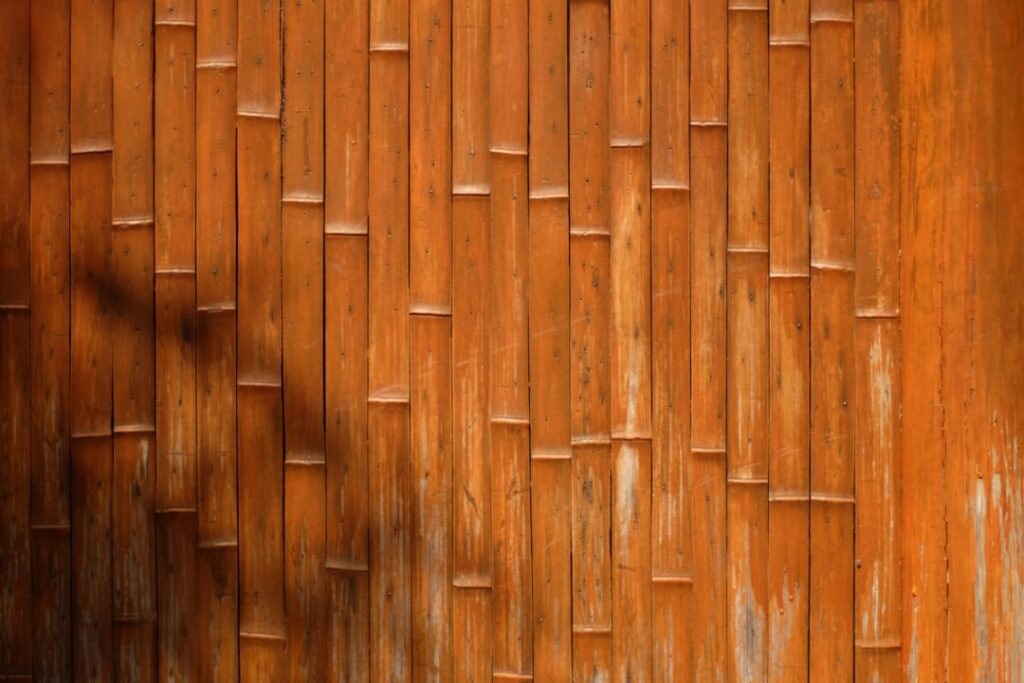
Bamboo grew up in the flooring world as long planks, but the tile format has carved out its own niche, and it solves problems that planks do not. Bamboo tile gives you the renewable, fast-growing appeal of bamboo in a modular size that suits walls, backsplashes, and floors alike. There is also a separate category of porcelain tile printed to look like bamboo, which trips up a lot of shoppers. This guide covers both, walks through where bamboo tile makes sense, and where another material is the smarter call.
Part of our Tile & Grout guide — explore the full guide →
What Counts as Bamboo Tile
The term covers a few distinct products, so pin down which one you mean before you buy.
- Solid and strand bamboo tile: Real bamboo, milled into tile-sized squares or short planks. Strand-woven versions shred and compress the fiber under heat and resin for serious hardness.
- Bamboo wall tile: Thin bamboo pieces on a mesh backing, used as a textured accent on walls and ceilings.
- Bamboo-look porcelain tile: Ceramic or porcelain printed with a bamboo grain. Fully waterproof, no upkeep of real wood, but not actual bamboo.
If sustainability and the warmth of real wood drive your decision, you want real bamboo. If you need a waterproof floor for a bathroom or a busy kitchen, bamboo-look porcelain is the safer engineering choice.
Why Homeowners Choose Bamboo
Bamboo’s headline appeal is environmental. It is technically a grass, and it regrows in three to five years versus the decades a hardwood takes to mature. That makes it one of the more renewable flooring materials on the market. Strand-woven bamboo also happens to be exceptionally hard, often rating well above oak on the Janka scale, so it shrugs off dents that would mark softer woods.
Beyond the eco story, people like the clean, contemporary grain. Bamboo reads modern and minimal, with a tighter, more uniform figure than most hardwoods.
Bamboo Tile Cost
Real bamboo tile generally runs $4 to $9 per square foot for the material, with strand-woven and higher-grade products at the top of that band. Bamboo wall tile sold in mosaic sheets is priced per sheet and varies by maker. Bamboo-look porcelain typically lands around $3 to $8 per square foot. Professional installation adds roughly $3 to $8 per square foot depending on the method. Across the board, bamboo competes closely with mid-grade hardwood and quality porcelain.
Water Resistance: Know the Limits
This is where buyers get burned. Real bamboo is wood, and wood and standing water do not mix. Bamboo handles normal household humidity fine and tolerates a quick wipe-up, but it is not waterproof. Standing water, flooding, or a steamy bathroom with poor ventilation will swell, cup, or discolor a real bamboo floor over time.
If you want the bamboo look in a full bathroom, a laundry room, or a basement, choose bamboo-look porcelain instead. Porcelain is impervious to water, frost-resistant, and rated for any room in the house. Save the real bamboo for living rooms, bedrooms, hallways, and offices.
Installing Bamboo Tile
Installation depends entirely on the product. Real bamboo tile and short planks usually install one of three ways.
- Nail-down over a plywood subfloor, the traditional hardwood method, for solid bamboo.
- Glue-down with a flooring adhesive over a clean, flat slab or subfloor.
- Floating click-lock for engineered bamboo, which snaps together over an underlayment with no fasteners or glue.
Let real bamboo acclimate in the room for at least 72 hours before installing so it adjusts to your home’s humidity. Bamboo-look porcelain installs like any tile, set in thinset over a flat, prepared substrate with proper spacers and grout. Bamboo wall mosaics go up with a construction adhesive suited to the backing.
Bamboo Tile vs. Other Flooring
It helps to see where bamboo lands against the alternatives you are probably also considering.
- Versus hardwood: Strand-woven bamboo is often harder than oak and grows back far faster, but real hardwood offers a deeper range of species and a longer refinishing life on solid boards.
- Versus laminate: Bamboo is a genuine natural material with real grain, while laminate is a printed image over fiberboard. Bamboo feels and ages like wood; laminate is cheaper and very scratch-resistant.
- Versus luxury vinyl: Vinyl is fully waterproof and budget-friendly, which bamboo is not, but it is plastic and lacks the authenticity of real bamboo.
If sustainability and a real-wood feel top your list, bamboo is hard to beat. If waterproof performance is the priority, vinyl or bamboo-look porcelain make more sense.
Pros and Cons at a Glance
The upside of real bamboo is a renewable, fast-growing material that is genuinely hard, attractively modern, and competitively priced against mid-grade hardwood. The downsides are its sensitivity to moisture, the variable quality across cheap imports, and limited refinishing life on thin products. Buy from a reputable maker, since low-grade bamboo can off-gas, dent, or delaminate. Quality matters more here than in many flooring categories.
Care and Maintenance
Real bamboo wants the same care as a hardwood floor. Sweep or dust-mop regularly to keep grit from scratching the finish. Damp-mop with a wood-floor cleaner, never a sopping wet mop, and wipe spills promptly. Use felt pads under furniture and area rugs in high-traffic lanes. Over many years, solid bamboo can sometimes be sanded and refinished, though thinner strand and engineered products have limited refinish life, so check the wear layer before you assume it can be redone.
Bamboo-look porcelain needs almost nothing. Sweep and damp-mop, and seal the grout lines in wet rooms. It will not scratch, fade, or swell, which is exactly why it earns its place in bathrooms and entryways.
Is Bamboo Tile Right for Your Project?
Go with real bamboo tile if you value sustainability, want the warmth and hardness of an actual wood surface, and you are installing it in a dry living space. Choose bamboo-look porcelain if you need the aesthetic in a wet or high-abuse area and want zero maintenance. Either way, bamboo tile gives you a distinctive, contemporary look, and matching the right grade to the right room is the difference between a floor you love and one you regret.
Prefer to explore on your own?
See how new flooring looks in your actual room in seconds — free, no signup.
Try the free Floor Studio →