
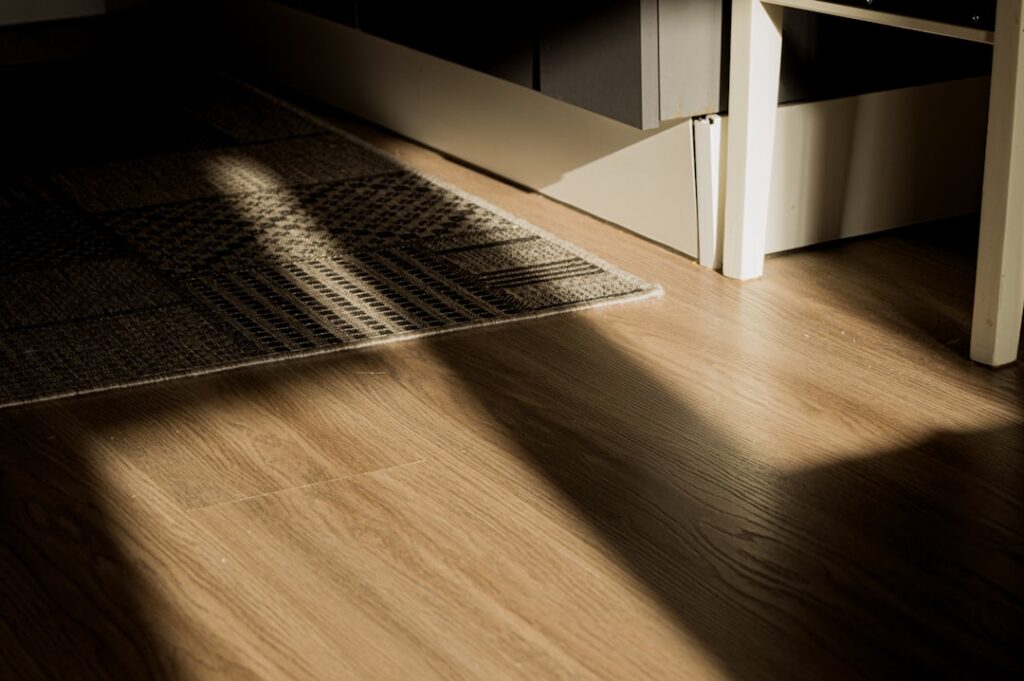
The rustic appeal of weathered, century-old barn boards is undeniable, but real reclaimed wood is expensive, inconsistent, and high-maintenance. Barnwood vinyl flooring solves that problem by printing convincing weathered-wood décors onto durable, waterproof luxury vinyl planks. You get the gray-washed, knotty, distressed character of an old barn floor with none of the splinters, gaps, or moisture worries. Here is how barnwood-look LVP works, what makes it convincing, and whether it belongs in your home.
- What Barnwood Vinyl Flooring Is
- The Weathered Looks You Can Get
- The Pros of Barnwood Vinyl
- The Cons to Keep in Mind
- How to Pick a Convincing Barnwood Floor
- Where to Use Barnwood Vinyl
- Installation and Care
- Barnwood Vinyl vs Real Reclaimed Wood
- Matching Barnwood Vinyl to Your Décor
- Is Barnwood Vinyl Right for You?
What Barnwood Vinyl Flooring Is
Barnwood vinyl is luxury vinyl plank or tile designed to mimic reclaimed barn wood. A high-resolution photographic layer captures the weathered grain, saw marks, nail holes, and color variation of aged lumber, then a clear wear layer protects it. The plank itself is built on a flexible, SPC, or WPC core, making it waterproof and dimensionally stable. The result is a floor that reads as authentic reclaimed wood from across the room but performs like modern vinyl underfoot.
The Weathered Looks You Can Get
Barnwood is a style category, not a single color, and the range is wide. Common décors include:
- Gray-washed barnwood: The classic silvered, sun-bleached look of weathered exterior boards.
- Brown and rustic tones: Warmer, aged hardwood tones with knots and grain variation.
- Mixed-width and multi-tone: Planks that vary in shade to imitate a floor pieced together from salvaged boards.
- Whitewashed and driftwood: Lighter, coastal-leaning weathered finishes.
- Distressed and hand-scraped textures: Embossed surfaces that add real tactile depth.
The best products use varied plank designs and embossed-in-register texturing so no two boards look identical, which is what sells the reclaimed illusion.
The Pros of Barnwood Vinyl
The advantages over genuine reclaimed wood are significant, and they go beyond price.
- Waterproof: Unlike real wood, barnwood LVP handles kitchens, bathrooms, basements, and spills without worry.
- Affordable: A fraction of the cost of authentic reclaimed lumber, typically $2 to $6 per square foot.
- Consistent and clean: No splinters, no embedded nails, no rot, and no surprises.
- Durable: A tough wear layer resists scratches, dents, and fading better than soft old wood.
- Easy to install: Most barnwood vinyl uses click-lock floating installation, friendly to DIYers.
- Low maintenance: Sweep and damp-mop; no refinishing or sealing required.
The Cons to Keep in Mind
Barnwood vinyl is not perfect, and honesty matters. It is an imitation, so purists and design experts may notice it is not real wood up close, and it will not add the same resale cachet as authentic reclaimed lumber. Cheaper products with low-resolution printing or limited plank patterns can look fake and repetitive, with the same board image appearing over and over. Like all vinyl, it can be damaged by sharp objects and very high heat, and it cannot be sanded or refinished, so a worn plank must be replaced rather than restored. Choosing a quality product avoids most of these issues.
How to Pick a Convincing Barnwood Floor
The difference between a floor that fools the eye and one that looks plasticky comes down to a few features. Look for these when shopping:
- High plank variation: The more unique board patterns in a collection, the more natural the floor looks. Twelve or more variations beats four.
- Embossed-in-register texture: The surface texture should line up with the printed grain for realistic depth.
- A thick wear layer: Look for 12 mil or more for residential use, 20 mil or higher for busy households.
- Realistic edge treatment: Beveled or micro-beveled edges mimic the gaps between individual reclaimed boards.
- Matte, low-sheen finish: Aged wood is not glossy, so a low-gloss finish reads as more authentic.
Where to Use Barnwood Vinyl
One of the biggest advantages is that you can put it anywhere. Real reclaimed wood is risky in wet or below-grade spaces, but waterproof barnwood vinyl thrives in kitchens, bathrooms, laundry rooms, basements, and entryways. It also works beautifully in living areas, bedrooms, and farmhouse or industrial-style interiors. Because the rustic look pairs naturally with both modern and country décor, it is a flexible choice for whole-home installation where you want a consistent floor throughout.
Installation and Care
Most barnwood LVP installs as a floating click-lock floor over a clean, flat, dry subfloor, and many products include an attached underlayment. Acclimate the planks per the manufacturer’s instructions, and keep expansion gaps at the walls. Maintenance is minimal: sweep regularly, damp-mop with a vinyl-safe cleaner, use felt pads under furniture, and avoid dragging heavy items. With basic care, a quality barnwood vinyl floor holds its weathered good looks for many years.
Barnwood Vinyl vs Real Reclaimed Wood
It is worth weighing the imitation directly against the real thing. Genuine reclaimed barnwood carries authentic history, true depth, and resale prestige, but it is expensive, often $10 to $20 or more per square foot, and demands careful sourcing, milling, and finishing. It can also harbor old nails, insect damage, and inconsistent thickness, and it remains vulnerable to moisture and wear like any solid wood. Barnwood vinyl trades that authenticity for waterproof performance, consistency, and a fraction of the cost. For a high-end design statement in a dry living room where budget is no object, real reclaimed wood wins. For nearly every other situation, especially kitchens, basements, busy households, and tighter budgets, vinyl delivers the look and far more practicality. Be honest about which matters more to you, the genuine material or the everyday livability.
Matching Barnwood Vinyl to Your Décor
The weathered look pairs with more styles than people expect, and choosing the right tone makes the difference. Gray-washed and driftwood tones suit modern farmhouse, coastal, and industrial interiors and keep rooms feeling light and airy. Warmer brown and rustic tones lean traditional and cozy, working well in cabins, dens, and country kitchens. For an open-concept home, a mixed-width, multi-tone barnwood floor unifies spaces while adding character. Consider your wall colors and cabinetry: cooler gray barnwood balances warm wood cabinets, while warm-toned planks soften an otherwise cool, modern palette. Order samples and view them in your own lighting before committing, since weathered décors can read very differently under warm versus cool light, and the right tone ties the whole room together.
Is Barnwood Vinyl Right for You?
Barnwood vinyl flooring is an excellent choice if you love rustic, reclaimed-wood style but want waterproof durability, easy maintenance, and a friendly price. It is less ideal if only genuine reclaimed lumber will satisfy you or if you want a floor you can refinish someday. Invest in a quality product with high plank variation and a thick wear layer, and the weathered-barnwood look will convince almost everyone while standing up to real life. For most homeowners, that is exactly the right trade.
Prefer to explore on your own?
See how new flooring looks in your actual room in seconds — free, no signup.
Try the free Floor Studio →

