Real Calacatta marble can run $180 per square foot and stains if you so much as look at it with a glass of red wine. Calacatta tile gives you that same dramatic white-and-gold drama in a porcelain body that shrugs off acid, water, and foot traffic. The bold, sweeping veins that made the original Italian marble famous are now printed and textured onto tile so convincingly that most guests will never know the difference. This guide walks through what defines the look, where to use it, and what you should actually pay.
Part of our Tile & Grout guide — explore the full guide →
What Makes Calacatta, Calacatta
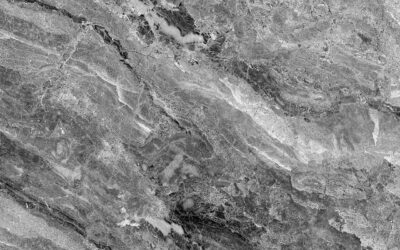
The name refers to a specific marble quarried in the Apuan Alps of Italy, prized for its bright white background and thick, dramatic veining in gray and warm gold. It is often confused with Carrara, but the two are distinct. Carrara has a softer, grayer base with fine, feathery gray veins. Calacatta is whiter and bolder, with fewer but much more pronounced veins that often carry a golden or taupe tone.
When that look is reproduced in tile, manufacturers use high-definition inkjet printing over a porcelain or ceramic body. The best versions vary the pattern across multiple tile faces so you do not see the same vein repeated across your floor, which is the dead giveaway of a cheap imitation.
Porcelain, Ceramic, or Marble: Which Calacatta to Buy
The word “Calacatta” on a tile sample can mean very different products. Knowing the body material matters as much as the pattern:
- Porcelain Calacatta tile: Dense, water-resistant, and rated for floors and walls. The most practical choice for kitchens, bathrooms, and high-traffic areas.
- Ceramic Calacatta tile: Softer and more affordable, better suited to walls and backsplashes than busy floors.
- Genuine Calacatta marble tile: The real stone cut thin. Stunning, but porous, prone to etching from acids, and demanding to maintain.
For most homeowners, porcelain is the sweet spot. It carries the look, resists staining without sealing, and handles the wear that would slowly dull real marble.
Finishes That Change the Whole Mood
The same pattern reads very differently depending on the surface finish. A polished finish reflects light and gives you the glossy, luxurious marble look that suits formal spaces and feature walls. The trade-off is that polished floors show smudges and can be slick when wet.
A matte or honed finish softens the shine and reads more contemporary. It hides water spots better and offers more grip underfoot, which makes it the smarter pick for bathroom floors and entryways. Some lines also offer a textured or structured finish specifically engineered for shower floors and outdoor use, where slip resistance is non-negotiable.
Where Calacatta Tile Works Best
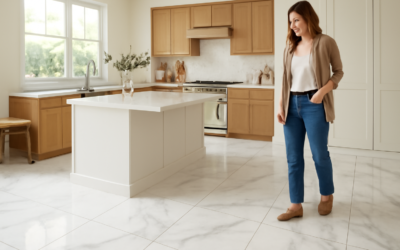
This is a statement material, so it shines in spaces where you want a focal point. In kitchens, a Calacatta backsplash running from counter to ceiling creates a single dramatic surface, and large-format floor tiles with minimal grout lines make a small kitchen feel larger and more cohesive.
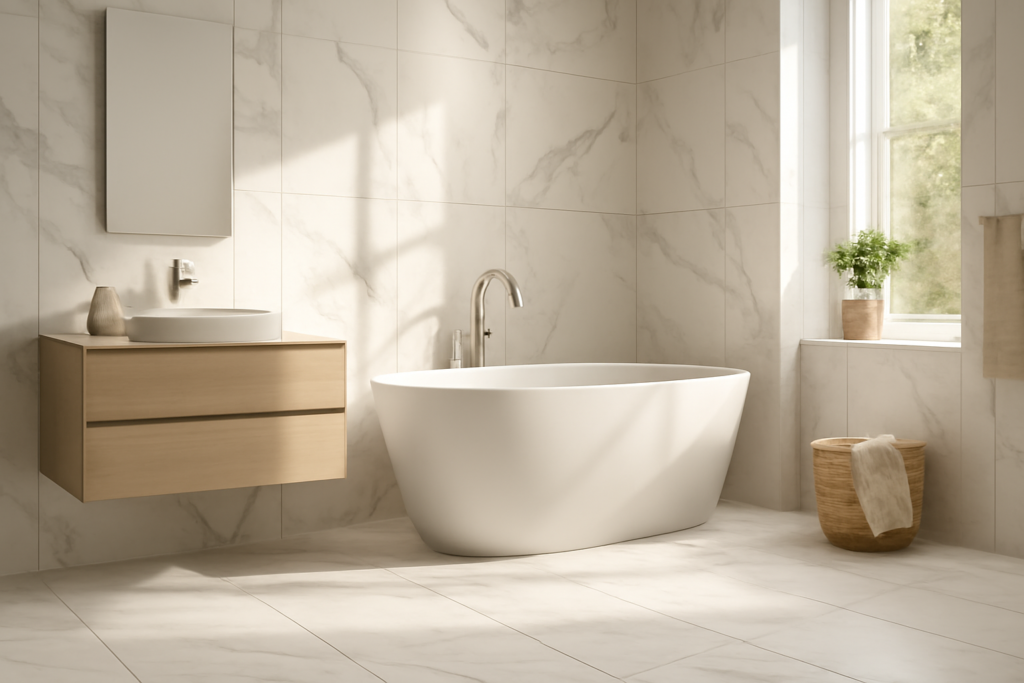
Bathrooms are the other natural home. A shower wall in book-matched Calacatta, where two tiles mirror each other to create a butterfly pattern of veining, looks custom and expensive. On floors, a honed finish keeps things safe and elegant. Just be intentional: pairing busy Calacatta on every surface can overwhelm a room, so it usually works best as the hero against simpler companions.
Tile Sizes and Layout Choices
Large-format tiles, such as 24-by-48 inch or 32-by-32 inch panels, are the trend for a reason. Fewer seams mean the dramatic veining flows uninterrupted and the floor reads more like a slab of stone. They do require a very flat substrate, so budget for substrate prep if your subfloor is uneven.
Smaller formats like 12-by-24 inch tiles are easier to handle, more forgiving on imperfect floors, and cheaper to install. Hexagons, subway shapes, and mosaics in a Calacatta pattern give you the look in accent areas like niches and backsplashes without the cost or weight of large panels.
What You Should Expect to Pay
Pricing varies widely by quality and format. As a general guide:
- Ceramic Calacatta tile: roughly $2 to $5 per square foot.
- Standard porcelain: about $4 to $9 per square foot.
- Large-format, high-definition porcelain: $9 to $20 per square foot.
- Genuine marble tile: $15 to $50 or more per square foot before sealing and upkeep.
Installation typically adds $7 to $15 per square foot, and large-format work runs higher because it demands more substrate prep and careful handling. Grout color is a free design decision that has a big effect: a white or pale gray grout keeps the seamless marble illusion, while a dark grout turns the floor into a grid that fights the natural look.
Caring for Calacatta Tile
This is where porcelain quietly wins. Porcelain Calacatta needs no sealing and cleans with a pH-neutral cleaner and a damp mop. Avoid acidic or harsh abrasive cleaners that can dull the finish over time, especially on polished surfaces. Wipe spills when they happen and keep grout lines clean, since grout, not the tile, is where dirt usually shows.
If you chose genuine marble, the rules change. Real Calacatta needs sealing on a schedule, immediate cleanup of anything acidic, and pH-neutral products only. That maintenance gap is exactly why so many homeowners choose the porcelain version and never look back.
Installation Tips Worth Knowing
Even the best tile fails if it is installed poorly, and large-format Calacatta is less forgiving than small tile. The substrate must be flat, because any dip or hump shows up as lippage, where one tile edge sits higher than its neighbor. For tiles 15 inches or larger, many pros use a leveling clip system to keep edges flush during setting, and they apply mortar to both the floor and the back of the tile, a technique called back-buttering, to ensure full coverage and prevent hollow spots that crack later.
Plan the layout to put the most dramatic veining where it counts, such as the center of a feature wall or the visible field of a floor. Because the pattern repeats across a limited number of tile faces, lay out several boxes before setting and shuffle them so the same vein does not land next to itself. A little dry-layout time up front is the difference between a floor that looks like natural stone and one that looks like printed tile.
Is It Right for Your Home
If you love the look of Italian marble but want a surface you can live on without babying it, Calacatta tile in porcelain is one of the best value moves in flooring and surface design. You get the high-end aesthetic, the durability of porcelain, and a maintenance routine that amounts to little more than regular mopping. Choose the finish for the room, keep the grout light, and let the veining do the talking.
Prefer to explore on your own?
See how new flooring looks in your actual room in seconds — free, no signup.
Try the free Floor Studio →