The fast-moving brown creature you keep finding near the water heater is almost certainly a house centipede (Scutigera coleoptrata), and despite appearances, a basement centipede is one of the most useful beneficial predators living in a typical American home. They eat cockroaches, silverfish, spiders, bedbug nymphs, termites, and ants. That said, almost no one wants 30 of them sprinting across the laundry room floor, so the real goal is control of the conditions that attract them rather than panic extermination.
This guide explains why basements host centipedes, how to eliminate the moisture and food sources that draw them in, and which treatments actually work versus which are marketing fluff.
Identifying a House Centipede
House centipedes have 15 pairs of long thin legs, a 1 to 1.5-inch body, and three dark stripes running down the back. They move at roughly 16 inches per second — fast enough to startle anyone. Unlike larger outdoor centipedes, they rarely bite humans and when they do the bite is roughly equivalent to a bee sting, requiring no medical attention for most people.
Do not confuse them with millipedes (slow, cylindrical, two pairs of legs per segment) or earwigs (pincers at rear). Both are different pests with different control strategies. Correct ID changes the treatment approach.
Why Centipedes Live in Basements
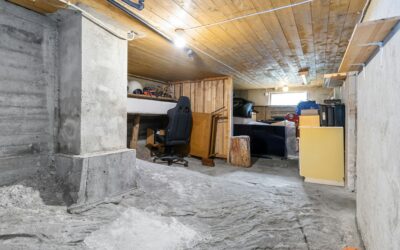
Centipedes require 75%+ relative humidity and small prey to hunt. Basements deliver both. A typical unconditioned basement sits at 60 to 70°F with 70 to 85% humidity — nearly ideal centipede habitat. The presence of centipedes almost always signals that other insects are present too, since centipedes do not eat wood, cloth, or food scraps.
Finding centipedes tells you something about the basement itself. If you see more than two or three per month, you have moisture and a secondary pest problem that will not resolve on its own.
Control Moisture First
Moisture is the single most important lever. A dehumidifier set to 45 to 50% relative humidity dries the basement enough that centipedes find it inhospitable and most of their prey dies off within weeks. A quality dehumidifier like the hOmeLabs 50-pint ($230) or Frigidaire FFAP5033W1 ($280) handles a 1,500 square foot basement.
Also address water intrusion. Fix leaky pipes, seal foundation cracks with hydraulic cement, extend downspouts 6 feet away from the foundation, and grade soil to slope away from the house. A sump pump with battery backup matters in basements that flood even occasionally.
Eliminate the Food Source
- Seal gaps around utility penetrations with expanding foam
- Install door sweeps on any basement exterior door
- Remove clutter — cardboard boxes are silverfish and roach havens
- Vacuum corners and along baseboards weekly
- Use sticky traps to track what other insects are present
Cardboard holds moisture, provides food for silverfish and cockroaches, and creates hiding spots for all of the above. Switching to plastic storage bins reduces pest populations meaningfully within 30 to 60 days.
Treatment Options That Actually Work
Diatomaceous earth (food-grade, not pool-grade) sprinkled along baseboards and in wall cracks dehydrates centipedes and their prey over 3 to 7 days. A $15 bag treats an entire basement. Wear a mask when applying — the dust is an irritant.
Residual insecticide sprays with bifenthrin or deltamethrin (like Ortho Home Defense) applied to baseboards, window wells, and foundation penetrations create a barrier that kills insects on contact and for 90+ days afterward. Avoid fogger-style bug bombs — they do not penetrate the cracks where centipedes actually hide.
Glue traps along walls catch individuals and tell you where activity is concentrated. Professional pest control runs $150 to $400 for initial service plus quarterly treatments.
What Does Not Work
Ultrasonic pest repellers have no measurable effect on centipedes despite marketing claims — consumer testing consistently shows no population reduction. Peppermint oil, cedar, and other natural repellents annoy individual centipedes briefly but do not displace established populations.
Squishing individual centipedes accomplishes nothing because they hunt alone but reproduce independently. You have to change the conditions that support them, not chase them one at a time.
Seal Entry Points
Centipedes enter through gaps as narrow as 1/8 inch. Walk the basement perimeter with a flashlight and a tube of exterior caulk. Seal gaps around:
- Foundation wall and sill plate joint
- Plumbing stack penetrations
- Electrical service entry
- Dryer vent and bathroom exhaust through-wall fittings
- Basement window frames and weep holes
Outside, remove leaf litter and mulch piles touching the foundation. Centipedes live in damp leaf debris and follow the scent of other insects through the foundation cracks from those spots.
Prevention for Finished Basements
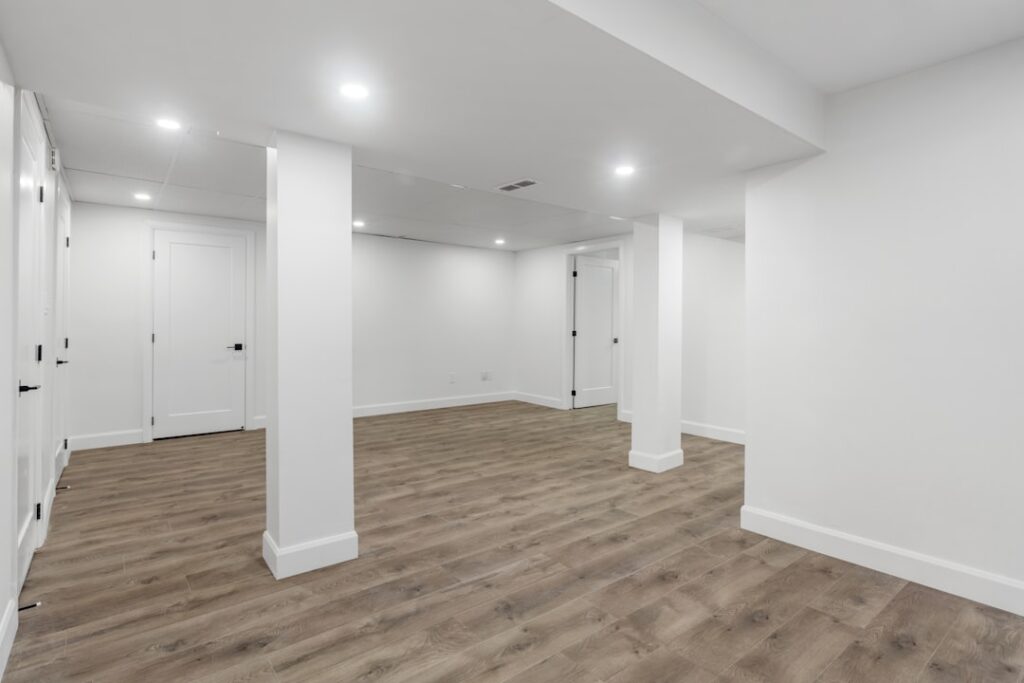
Finished basements with drywall, flooring, and HVAC typically stay dry enough to deter centipedes without extra effort. But avoid storing cardboard boxes against exterior walls, keep HVAC humidity at or below 50%, and seal the sill plate during finishing if you are renovating.
If your home has an open crawl space rather than a full basement, vapor barrier installation ($500 to $1,500 professional) cuts ground moisture dramatically and eliminates the subterranean moisture source that feeds centipede populations.
When to Call a Pest Professional
Call a licensed pest control operator if you see more than five centipedes per week after implementing moisture control, if you find nests of other insects (termite tubes, carpenter ant frass, roach clusters), or if anyone in the household has an allergic reaction to a bite. Pros apply treatments homeowners cannot legally purchase and can identify the underlying pest ecosystem driving the centipede presence.
A one-time basement treatment plus quarterly preventive service runs about $350 to $700 per year in most markets — worth it if moisture control alone is not enough or if the basement is finished and repeated DIY treatment is impractical.