
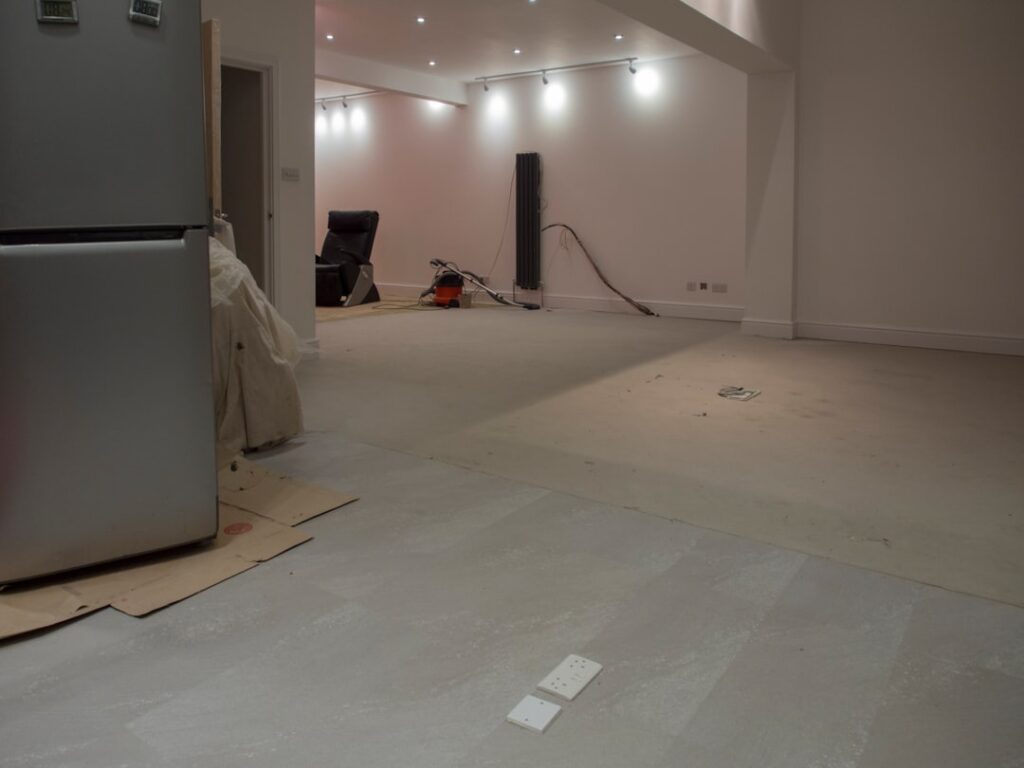
Basement flooring options have expanded dramatically over the past decade. Where basements were once relegated to bare concrete, indoor-outdoor carpet, or simple paint, homeowners now have access to a full range of attractive, functional, and moisture-resistant materials that can turn a below-grade space into a genuine extension of the home. The key is matching the right material to your basement’s specific conditions and intended use.
Part of our Epoxy, Concrete & Garage Floors guide — explore the full guide →
This guide compares the eight best basement flooring options, covering their strengths, limitations, and costs so you can make an informed decision.
- Basement Flooring Challenges
- 1. Luxury Vinyl Plank (LVP)
- 2. Porcelain Tile
- 3. Epoxy Floor Coating
- 4. Rubber Flooring
- 5. Carpet Tiles
- 6. Engineered Hardwood
- 7. Painted or Stained Concrete
- 8. Laminate Flooring (Waterproof)
- How to Choose the Right Basement Flooring
- Subfloor Preparation for Basements
- Final Thoughts
Basement Flooring Challenges
Before choosing a material, understand what makes basements different:
- Moisture: Concrete basement floors allow moisture to wick upward through the slab via capillary action. Even dry-looking basements typically have some level of moisture vapor transmission.
- Flooding risk: Heavy rain, snowmelt, plumbing failures, and water heater leaks can introduce standing water to basements.
- Temperature: Basements are cooler than above-grade rooms and experience less temperature variation, which affects material performance differently than main-floor conditions.
- Concrete subfloor: Most basements have a concrete slab that may be uneven, cracked, or coated with old paint or adhesive.
Any flooring you choose needs to handle these conditions or be protected from them with proper preparation.
1. Luxury Vinyl Plank (LVP)
Luxury vinyl plank is the most popular basement flooring choice and for good reason. It is 100% waterproof, installs easily as a floating floor over concrete, and comes in realistic wood and stone visuals that make basements feel like finished living spaces.
Rigid-core LVP (both SPC and WPC constructions) handles the moisture and temperature conditions of basements without expanding, warping, or growing mold. The click-lock installation requires no adhesive, and most products can go directly over concrete with a simple moisture barrier and underlayment pad.
Cost: $3 to $7/sq ft materials; $5 to $11/sq ft installed.
Best for: Family rooms, home theaters, bedrooms, any finished basement living space.
2. Porcelain Tile
Porcelain tile is the most durable and moisture-resistant option available. Its water absorption rate below 0.5% makes it essentially impervious to basement moisture. Porcelain handles standing water, humidity, and temperature changes without any degradation. It is also the easiest basement floor to clean and maintain.
The main drawback is comfort. Porcelain over concrete is cold and hard, and basements are already cooler than main-floor rooms. Radiant floor heating solves the cold issue, and area rugs add comfort in seating areas. Installation requires thinset and grouting skills, so professional installation is recommended.
Cost: $5 to $10/sq ft materials; $8 to $15/sq ft installed.
Best for: Laundry areas, utility rooms, bathrooms, high-end finished basements.
3. Epoxy Floor Coating
Epoxy flooring transforms an existing concrete slab into a seamless, waterproof surface. It bonds directly to the concrete, creating a hard, chemical-resistant finish that handles heavy use. Decorative options include metallic pigments, colored flakes, quartz broadcast, and solid colors.
Epoxy requires thorough surface preparation (grinding or acid etching) and moisture testing, as high moisture vapor transmission through the slab can cause the coating to delaminate. It is an excellent choice for workshops, gyms, and utility basements where function matters more than residential comfort.
Cost: $3 to $6/sq ft DIY; $6 to $12/sq ft professional.
Best for: Home gyms, workshops, utility areas, garages that connect to basements.
4. Rubber Flooring
Rubber flooring is the go-to for basement home gyms and play areas. Interlocking rubber tiles install over concrete without adhesive, absorb impact, insulate against the cold slab, and handle moisture without problems. They also dampen sound, which is a benefit in basements below living spaces.
For gyms, 8mm to 12mm thick rubber tiles handle dropped weights and cardio equipment. For playrooms, smoother-surface rubber tiles in colors provide cushioning for kids without the mold risk of carpet.
Cost: $2 to $8/sq ft materials; mostly DIY installation.
Best for: Home gyms, playrooms, recreation areas.
5. Carpet Tiles
Carpet tiles bring warmth and softness to basements without the moisture risks of wall-to-wall carpet. Individual tiles can be pulled up and dried or replaced if water intrusion occurs. Many carpet tiles designed for basements feature waterproof backing and synthetic fibers that resist mold and mildew.
The modular format allows creative design with mixed colors and patterns. They install with pressure-sensitive adhesive or peel-and-stick backing, making them a straightforward DIY project. For basements with occasional minor moisture issues, carpet tiles are a practical way to get carpet comfort with manageable risk.
Cost: $2 to $6/sq ft materials; DIY installation.
Best for: Bedrooms, family rooms, home offices in dry basements.
6. Engineered Hardwood
Engineered hardwood can work in basements, but only in specific conditions. The plywood core is more stable than solid wood, and quality engineered products handle moderate humidity variations. However, engineered hardwood is not waterproof, and any flooding or sustained moisture will damage it.
If your basement is consistently dry, has no history of water intrusion, and you run a dehumidifier to maintain 35% to 55% relative humidity, engineered hardwood is viable. Choose a product with a plywood core (not HDF) and install over a proper moisture barrier. Glue-down installation provides better stability than floating in basement environments.
Cost: $5 to $15/sq ft materials; $10 to $18/sq ft installed.
Best for: Dry basements converted to premium living spaces, in-law suites, home offices.
7. Painted or Stained Concrete
For a budget-friendly option, painting or staining the existing concrete slab is hard to beat. Concrete stain penetrates the slab surface, creating a mottled, organic appearance in various earth tones. Floor paint provides a solid color with a slightly textured finish. Both options seal the concrete surface and are easy to clean.
The downside is durability. Painted floors chip and peel in high-traffic areas, requiring touch-ups every few years. Stained concrete holds up better but still benefits from a clear topcoat sealer for protection. Neither provides insulation or cushion, so the floor remains cold and hard.
Cost: $1 to $4/sq ft for DIY paint or stain and sealer.
Best for: Budget basements, workshops, storage areas, laundry rooms.
8. Laminate Flooring (Waterproof)
Waterproof laminate flooring is a newer category that addresses traditional laminate’s fatal flaw: water sensitivity. These products use water-resistant cores and sealed edges to handle spills and light moisture. For basements, waterproof laminate installed over a proper moisture barrier can work in dry conditions.
Standard (non-waterproof) laminate should never be installed in basements. Even waterproof laminate is a riskier choice than vinyl for below-grade installations because the core, while treated, is still fundamentally an organic material. If your basement has any moisture history, vinyl is the safer bet.
Cost: $2 to $5/sq ft materials; $5 to $9/sq ft installed.
Best for: Dry basements where you prefer laminate’s scratch resistance and realistic appearance over vinyl.
How to Choose the Right Basement Flooring
Start with Moisture
Test your concrete slab for moisture before selecting a material. Tape a plastic sheet to the floor and check for condensation after 48 to 72 hours. If moisture is present, narrow your choices to fully waterproof options: vinyl, tile, epoxy, or rubber.
Consider the Use
- Living space / family room: LVP or carpet tiles
- Home gym: Rubber tiles or epoxy
- Bedroom / guest suite: LVP, engineered hardwood (dry basements), or carpet tiles
- Home office: LVP, carpet tiles, or engineered hardwood
- Workshop / utility: Epoxy or painted concrete
- Bathroom / laundry: Porcelain tile or vinyl
Factor in Comfort
Basements are cooler than above-grade rooms, so comfort underfoot matters more. Vinyl with an attached pad, rubber tiles, and carpet tiles all provide insulation and cushion over cold concrete. Tile, epoxy, and painted concrete do not, unless paired with radiant heating or area rugs.
Think About Worst-Case Scenarios
If your basement has never flooded, that does not mean it never will. Choosing a waterproof floor material gives you peace of mind. Even better, choose a material that can dry out and recover after water exposure. Vinyl planks can be pulled up, dried, and reinstalled. Carpet tiles can be removed individually. Tile and epoxy are unaffected by standing water.
Subfloor Preparation for Basements
Regardless of the flooring material, prepare the concrete slab properly:
- Repair cracks with concrete patching compound.
- Grind or fill high and low spots to create a flat surface.
- Clean thoroughly to remove dust, efflorescence, and old coatings.
- Test for moisture and address any issues before installing flooring.
- Install a moisture barrier (6-mil poly sheet) for floating floors over concrete.
Final Thoughts
The best basement flooring option depends on your moisture conditions, intended use, comfort preferences, and budget. Luxury vinyl plank is the most versatile all-around choice for finished basements, handling moisture while providing attractive, comfortable flooring. Tile and epoxy offer maximum durability and water resistance for utility and wet areas. Rubber tiles are purpose-built for gyms and play areas. And carpet tiles bring warmth to dry basements with the added benefit of easy replacement if problems arise. Start by testing your concrete for moisture, then match the material to your specific situation.
Prefer to explore on your own?
See how new flooring looks in your actual room in seconds — free, no signup.
Try the free Floor Studio →

