An unheated basement runs 10 to 25 degrees colder than your main floor in January, and that cold concrete steals heat from the rooms above 24 hours a day. Choosing the right basement heating options depends less on raw BTU output and more on how you use the space, whether it has existing ductwork, and whether moisture and ceiling height limit your installations. Get this wrong and you spend twice — once on the wrong system, then again on the right one.
Extending Your Existing HVAC System
If you already have a forced-air furnace upstairs, adding a few supply registers and one or two cold-air returns is the cheapest path to a warm basement. Plan on $400 to $1,200 for a contractor to cut, run flex duct, and install registers. The catch is that most furnaces sized for the upstairs cannot handle the additional 800 to 1,500 square feet without losing performance on the main level. Your HVAC tech should do a Manual J calculation before adding zones.
Where it works: open finished basements with adequate furnace headroom. Where it fails: tight ranch-style homes with undersized 60,000 BTU furnaces already running flat-out in February.
Ductless Mini-Split Heat Pumps
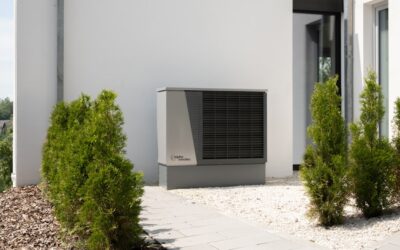
A 12,000 to 18,000 BTU mini-split with a single wall head heats a typical 800 to 1,200 square foot basement efficiently down to about 5°F. Mitsubishi Hyper-Heat and Fujitsu Halcyon units run all the way to -15°F without auxiliary heat. Installed cost runs $3,500 to $6,500. Operating cost is roughly 40 percent lower than electric resistance heat thanks to inverter compressors that ramp output to load.
Mini-splits also dehumidify, which matters in a basement. Most basements run 60 to 70 percent humidity in summer, and a mini-split keeps it under 55 percent without a separate dehumidifier.
Electric Baseboard Heaters
For finished basements under 600 square feet or for occasional-use spaces, hardwired electric baseboards remain the budget winner. Cadet and King units run $40 to $90 each, plus $200 to $400 for a 240-volt circuit if one does not exist. Sizing is straightforward: 10 watts per square foot in well-insulated spaces, 15 watts per square foot in poorly insulated walls.
- 200 sq ft office: 2,000-watt baseboard, single 240V circuit, $250 installed DIY
- 500 sq ft media room: Two 2,500-watt units on dedicated circuits
- 800+ sq ft full basement: Skip baseboards — operating cost outpaces a mini-split within two winters
Hydronic Radiant Floor Heat
If you are pouring a new slab or finishing for the first time, this is the gold standard. PEX tubing snaked across the slab and tied to a small boiler or tankless water heater warms the floor to 78°F to 82°F, which radiates upward into the entire space. Cost runs $8 to $15 per square foot installed, with another $1,800 to $4,500 for the boiler.
Existing slab? Electric radiant mat systems like SunTouch or Warmly Yours go down under tile or LVP for $6 to $10 per square foot. They are perfect for bathrooms but expensive to operate as primary heat for a large room.
Wood and Pellet Stoves
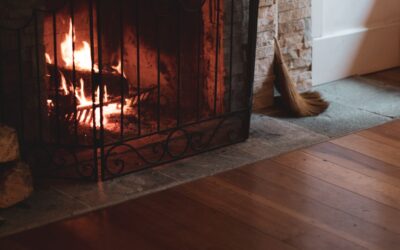
A small wood stove or pellet stove dropped into a basement can heat 1,000 square feet plus the floors above. The catch is that basements are below grade, so chimney draft fights gravity. You need a Class A insulated chimney running through the rim joist and up past the roofline — typically $1,200 to $2,500 in chimney materials alone.
Pellet stoves are simpler because they use power-vented exhaust and pull combustion air from outside. Harman, Quadra-Fire, and Englander all make models rated 35,000 to 50,000 BTU that suit basements well. Pellet fuel runs $250 to $400 per ton, and one ton heats most basements for 6 to 10 weeks.
Space Heaters and Portable Solutions
For occasional use, a $150 to $250 oil-filled radiator or 1,500-watt ceramic tower handles a single room of 150 to 250 square feet. They draw 12.5 amps on a standard 15-amp circuit, so do not run two on the same breaker. Look for tip-over safety, programmable thermostats, and an ECM motor on the fan. DeLonghi, Vornado, and Dr. Heater all make units that hold up to daily use.
Portable propane heaters should never run in finished basements. Even ventless models add 8,000 BTU of latent moisture per gallon burned, which condenses on cold concrete walls and feeds mold growth.
How Insulation Changes Your Sizing
Before you size any heating system, address the envelope. Two inches of XPS rigid foam against the foundation walls cuts heat loss by 60 percent and pushes a 600 square foot basement into the “small heater” category. Insulating the rim joist with closed-cell spray foam stops a major air leak at the band board. Uninsulated basements need roughly 50 percent more BTUs than properly insulated ones.
Operating Cost Comparison
Electric resistance heat (baseboards, space heaters, electric radiant) all cost the same per BTU delivered — roughly 11 to 16 cents per kWh translates to about $35 to $50 per million BTU depending on your utility rate. Mini-split heat pumps with a 12 SEER2 rating deliver the same BTU for $15 to $22, roughly half the cost. Natural gas furnace extension lands at $10 to $15 per million BTU. Wood stoves run $5 to $12 if you cut your own firewood and $20 to $30 if you buy it cord-by-cord. Over a 10-year horizon, the higher upfront cost of a mini-split or a duct extension typically pays back within 4 to 7 years versus electric resistance.
Picking the Right Combination
Most homeowners end up with a layered approach: an extended duct or mini-split for steady whole-basement heat, plus a small electric mat under tile in the bathroom, plus a portable or pellet stove for cold snaps. Plan the system around how you will use the space — a home theater watched 8 hours a week deserves different heating than a daily home office or a finished apartment for in-laws. A licensed HVAC contractor will run Manual J load calculations for free with most installation quotes.