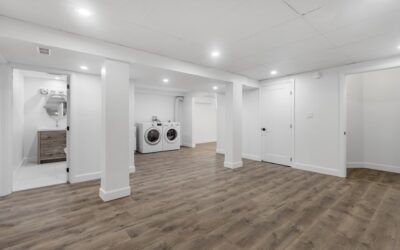
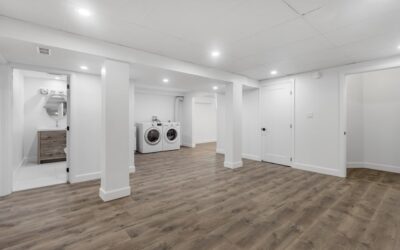
Finishing basement walls transforms a dark, concrete box into usable living space — but basements present unique challenges that above-grade rooms do not. Moisture intrusion, humidity, limited ceiling height, and cold concrete walls all influence which basement wall panels perform best long-term. Standard drywall over wood framing works in dry basements but fails in damp ones. Specialized waterproof and mold-resistant panels cost more upfront but prevent the costly remediation that follows when moisture ruins a conventional finish.
Standard Drywall on Framed Walls
The traditional approach — 2×4 stud walls against the foundation with fiberglass insulation and 1/2-inch drywall — costs $3-$6 per square foot installed and produces a finish identical to any room above grade. This method allows running electrical, plumbing, and data behind the wall, and accommodates any paint, wallpaper, or trim detail.
The risk is moisture. Even basements that appear dry can develop condensation on the cold foundation wall. Moisture migrates through concrete and condenses on the warm side (your insulation and drywall), creating mold behind the wall where you cannot see it until the damage is extensive. Use this method only in verified dry basements — run a moisture test by taping a 12-inch square of plastic sheeting to the foundation wall for 48 hours. If moisture appears under the plastic, your basement needs a moisture management approach rather than standard framing.
Insulated Basement Wall Panels
Products like InSoFast ($2-$3 per square foot), Owens Corning Basement Finishing System ($4-$6 per square foot), and ThermalDry panels ($3-$5 per square foot) combine insulation and a finished surface in one product. These rigid foam panels attach directly to the foundation wall with adhesive or mechanical fasteners, providing insulation (R-5 to R-13) while creating a finished surface ready for paint or paneling.
InSoFast panels are among the most popular DIY options — they feature built-in studs for attaching drywall, R-8.5 insulation value, and a tongue-and-groove connection that eliminates thermal bridging. A 400-square-foot basement wall area costs $800-$1,200 in InSoFast panels plus $400-$600 in drywall and finishing supplies. The entire installation takes a weekend for two people.
Waterproof Vinyl Basement Panels
For basements with known moisture issues, waterproof vinyl basement wall panels provide a finished look without any organic materials that mold can consume. Products like Trusscore ($3-$5 per square foot) and DRIcore SMARTWALL ($4-$7 per square foot) are PVC-based, completely waterproof, and install over furring strips or directly to the foundation. They wipe clean, resist impact, and never need painting.
The trade-off is aesthetics — vinyl panels look clean and bright but lack the warmth and finish options of painted drywall. They suit utility areas, laundry rooms, workshops, and playrooms where durability matters more than formal appearance. For a finished basement living room or bedroom, combine waterproof panels with a skim coat or decorative wainscoting to elevate the look.
Rigid Foam Direct-to-Wall
Attaching rigid foam insulation directly to the foundation wall with construction adhesive provides the simplest moisture-safe insulation approach. Use 1.5-2 inches of XPS (extruded polystyrene) or polyiso foam ($0.50-$1.50 per square foot). The foam acts as both insulation and a vapor barrier, preventing warm moist air from contacting the cold foundation. Finish over the foam with drywall on furring strips or vinyl panels.
This method is recommended by building science experts at organizations like the Building Science Corporation because it keeps the insulation on the cold side of the assembly, preventing condensation within the wall. Standard fiberglass insulation in a framed wall puts the insulation on the wrong side — the warm side faces the cold concrete, and moisture condenses at the interface.
Cost Comparison
- Drywall on framed walls: $3-$6/sq ft installed. Cheapest but highest moisture risk
- Insulated panels + drywall (InSoFast): $4-$7/sq ft installed. Good balance of cost, insulation, and moisture management
- Waterproof vinyl panels: $5-$9/sq ft installed. Best moisture protection, limited aesthetics
- Rigid foam + drywall on furring: $4-$8/sq ft installed. Best building science approach for cold climates
- Professional basement finishing system (Owens Corning): $15-$25/sq ft fully installed. Premium option with warranty and professional installation
Installation Considerations
Address any active water intrusion before installing any basement wall panels. No panel system is designed to hold back liquid water — they manage vapor and condensation only. Fix foundation cracks ($200-$600 per crack), improve exterior drainage, and ensure gutters discharge at least 6 feet from the foundation before finishing walls. Sealing the rim joist area (where the foundation meets the framing above) with spray foam eliminates a major source of cold air and moisture entry.
Leave a 1/2-inch gap between the bottom of any wall panel and the concrete floor. This gap allows moisture to evaporate from the floor edge without wicking into the wall material. Snap-on vinyl base trim covers the gap while maintaining the drainage path. Never run any basement wall panel tight to the floor — that single mistake causes more basement mold problems than any other installation error.