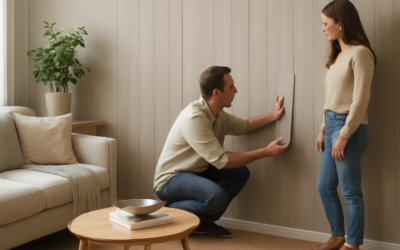
Tile looks great until you are scrubbing grout lines for the third weekend in a row. Vinyl wall panels were designed to solve exactly that problem: they deliver a waterproof, wipe-clean surface for bathrooms, kitchens, basements, and laundry rooms without the grout, the dust, or the multi-day install of traditional tile. Available in plank, tile, and large-format sheet styles, they have become a go-to for homeowners who want durable walls on a realistic budget and timeline. This guide covers the main types, what they cost, and how to put them up.
What Vinyl Wall Panels Are
Vinyl wall panels are rigid or semi-rigid sheets made primarily from PVC, often with a printed decorative layer and a clear protective wear layer on top. They mimic everything from marble and subway tile to wood and concrete. Because the core is plastic, the panels are fully waterproof, which is the main reason they show up in showers and wet rooms where drywall and paint would fail.
They differ from vinyl flooring mainly in thickness and how they attach. Wall panels are lighter and are bonded with adhesive or interlocked into a track system, rather than floated over a subfloor like LVP.
Main Types to Consider
Not all panels install or perform the same way. The main categories are:
- Large-format sheet panels: 4-foot by 8-foot sheets that cover a wall fast with almost no seams. Popular for shower surrounds.
- Plank-style panels: Narrower boards that click or glue together, often used for accent walls and wainscoting.
- Tile-look panels: Printed to look like ceramic or subway tile, sometimes with grooves that mimic grout lines.
- Peel-and-stick vinyl tiles: Thin, self-adhesive squares meant for low-moisture decorative use.
Where Vinyl Wall Panels Work Best
These panels shine in moisture-prone and high-traffic spaces. Bathrooms and shower surrounds are the classic application, since a sheet system creates a near-seamless waterproof barrier. Basements benefit because the panels tolerate humidity better than drywall. Kitchens, laundry rooms, and mudrooms are also good fits where easy cleanup matters. They are less ideal where you want a true high-end natural material look up close, or above stoves where direct high heat is a concern.
Cost Expectations
Vinyl wall panels usually undercut tile on total installed cost, mostly because labor is faster. General ranges:
- Peel-and-stick tiles: $1 to $5 per square foot.
- Plank and tile-look panels: $3 to $8 per square foot.
- Large-format sheet panels: $5 to $15 per square foot.
- Professional installation: often $3 to $8 per square foot, well below tile labor.
A standard tub surround in sheet panels might total $400 to $1,200 in materials and labor, compared with significantly more for tile once you factor in waterproofing and grout work.
Pros and Cons
Vinyl wall panels are not perfect for every project. Weigh both sides:
Advantages
- Fully waterproof with few or no grout lines to clean.
- Fast installation, often over existing tile or drywall.
- Lighter and easier to cut than tile.
- Lower total cost than most tile jobs.
Drawbacks
- Can look less authentic than real stone or ceramic up close.
- Seams and adhesive must be done correctly to stay waterproof.
- Some panels can be damaged by sharp impacts or high heat.
How to Install Vinyl Wall Panels
Most panel systems are within reach for a careful DIYer over a weekend. The general process:
- Prep the wall. The surface must be clean, dry, flat, and sound. Fill holes and let any moisture issues be resolved first.
- Measure and plan your layout, starting from a level reference line so panels stay square.
- Cut panels with a fine-tooth saw or a sharp utility knife and straightedge.
- Apply the manufacturer’s recommended adhesive, or engage the interlocking edges for click systems.
- Press panels firmly and check for level as you go.
- Seal all edges, corners, and seams with the specified waterproof sealant in wet areas. This step is what keeps water out of the wall.
Always follow the specific manufacturer instructions, since adhesives and trim pieces vary between brands.
Vinyl Wall Panels vs. Tile and Drywall
It helps to weigh panels against the alternatives they replace. Compared with ceramic tile, vinyl panels install far faster, weigh less, and skip grout entirely, but they trade away some of tile’s premium feel and unlimited design flexibility. Compared with painted drywall, panels win decisively in wet areas, since paint and drywall absorb moisture and eventually peel, bubble, or grow mold. The panels also resist impacts and scuffs better than a painted wall. Where drywall and paint still make sense is in dry rooms where you want a smooth, paintable surface you can easily change color later.
Common Installation Mistakes to Avoid
Most problems with vinyl wall panels trace back to a few avoidable errors. Installing over a wall that is damp, dirty, or uneven causes panels to bond poorly and telegraph bumps. Skimping on the sealant at seams and corners in a shower lets water sneak behind the panels, defeating the whole purpose. Cutting with a dull blade leaves ragged edges that do not seat cleanly. And rushing the adhesive cure time before exposing the panels to water can break the bond. Take time on prep, use the manufacturer’s recommended adhesive and sealant, and let everything cure fully before use.
Cleaning and Maintenance
Routine care is simple: wipe panels with a soft cloth and a mild, non-abrasive cleaner. Avoid harsh solvents and scouring pads that can dull the wear layer. In showers, squeegee the panels after use to limit soap scum and check the sealed seams once or twice a year, resealing if any caulk lifts. Done right, vinyl wall panels can hold up for 15 to 20 years with little more than regular wiping.
Are Vinyl Wall Panels Right for You?
If you want a waterproof, low-maintenance wall surface installed quickly and affordably, vinyl wall panels are a strong choice, especially for bathrooms, basements, and laundry areas. If your priority is a premium, touch-it-and-believe-it natural material, traditional tile or stone may still win. For most homeowners balancing budget, durability, and a clean modern look, panels deliver an excellent return for the effort.
Prefer to explore on your own?
See how new flooring looks in your actual room in seconds — free, no signup.
Try the free Floor Studio →