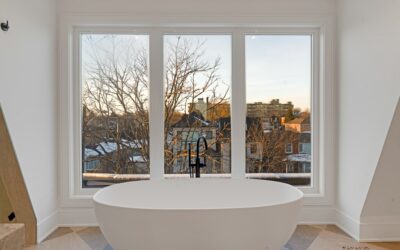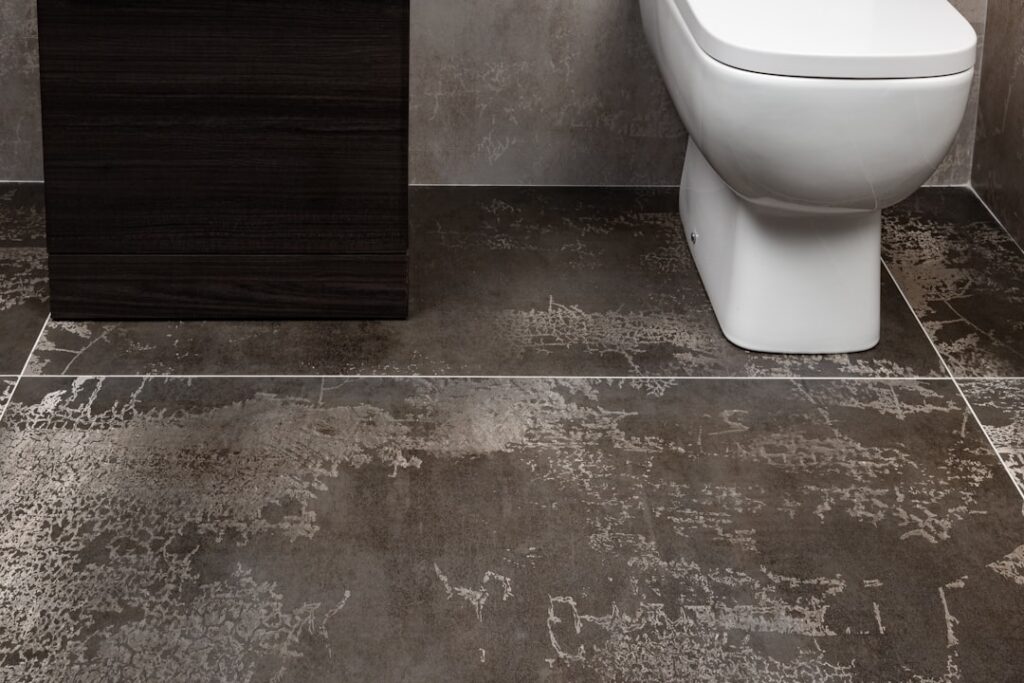
There’s a reason nearly every model home and rental flip lands on the same bathroom palette: a bathroom grey floor white walls scheme is almost impossible to get wrong. Grey grounds the room and hides water spots and dust far better than a light floor, while white walls keep even a windowless powder room feeling bright and open. Together they read as clean, modern, and neutral enough to work with any fixture finish or towel color you throw at it.
Part of our Bathroom Remodeling & Flooring guide — explore the full guide →
But “grey and white” hides a lot of decisions. The undertone of the grey, the flooring material, the grout color, and the way you break up all that neutral determine whether the room feels crisp and designed or cold and flat. Here’s how to make the combination sing.
Why Grey Floors and White Walls Are So Popular
Grey occupies a sweet spot between the starkness of black and the maintenance headache of white flooring. It masks the everyday reality of a bathroom, water marks, footprints, stray hair, better than almost any other color, which means the floor looks clean between deep cleans. White walls, meanwhile, reflect light and expand the sense of space, a genuine advantage in the small footprints most bathrooms occupy.
The palette is also endlessly flexible. Because the base is neutral, you can shift the entire mood with accessories: warm brass fixtures and wood accents make it cozy and spa-like, while chrome and black hardware push it sharp and contemporary. Repaint a vanity or swap the towels and you have a new look for under $100.
Choosing the Right Grey Flooring
The floor is the anchor, so the material choice sets both the look and the maintenance load.
Porcelain and Ceramic Tile
Large-format grey porcelain, in 12×24 or 24×24 planks or squares, is the gold standard for bathrooms. It’s fully waterproof, extremely durable, and available in everything from concrete-look to marble-look finishes. Expect $3 to $10 per square foot for the tile, plus $7 to $14 per square foot for professional installation.
Luxury Vinyl Plank and Tile
Grey wood-look LVP is the budget-friendly favorite for DIYers. It’s 100 percent waterproof, warmer and softer underfoot than tile, and clicks together without mortar. Material runs $2 to $6 per square foot and it’s realistic enough that most guests won’t know it isn’t stone or wood.
Natural Stone
Grey slate, limestone, or honed marble delivers unmatched depth and texture, but it needs periodic sealing and costs more, often $8 to $20 per square foot installed. Reserve it for a primary bath where you’ll enjoy the upgrade daily.
Getting the Undertone Right
This is the detail that separates a polished bathroom from an off-looking one. Greys carry either cool (blue/green) or warm (beige/greige) undertones, and mismatching them against your white walls is the most common misstep.
A cool grey floor pairs best with a crisp, bright white on the walls, think a clean white with no yellow. A warm greige floor looks better against a soft white with a hint of cream, which keeps the room from feeling clinical. Hold your flooring sample against a white paint chip in the actual bathroom light before committing. If the white looks dingy next to the floor, the undertones are fighting.
Grout Color Makes or Breaks Tile
Homeowners agonize over tile and then default to whatever grout the installer has on the truck. Don’t. Grout color dramatically changes the finished look.
- Matching grey grout: Blends the joints so the floor reads as a seamless surface. Best for a modern, monolithic look.
- Slightly darker grout: Defines each tile subtly and, crucially, hides dirt better than a light grout. A safe, practical middle ground.
- White grout: Creates a graphic grid, popular with patterned or hexagon tile, but it stains and yellows fast on a floor. Avoid it underfoot unless you love scrubbing.
Whatever color you choose, use an epoxy grout or seal a cementitious grout after installation. A quality grout sealer runs about $15 to $30 and saves you years of discoloration.
Breaking Up the Neutrals
A grey-and-white bathroom can tip into flat and boring if you stop at just those two colors. Layer in contrast and texture to give the eye somewhere to land.
- A wood-tone vanity in warm oak or walnut adds instant warmth against cool grey and white.
- Black hardware and fixtures sharpen the palette and create crisp definition.
- Greenery, even a single potted plant, brings life and softens the hard surfaces.
- Textured white wall tile, like fluted or zellige, keeps the walls from reading as a blank slab.
- Warm metals, brushed brass or gold, glow beautifully against grey and white.
Tricks for Small Bathrooms
The grey-and-white palette is a small-bathroom secret weapon, but a few moves maximize the effect. Run the same large-format floor tile up into the shower to eliminate visual breaks that chop up the space. Use a lighter grey rather than charcoal on the floor to keep the room from feeling closed in. Extend white paint or tile all the way to the ceiling to draw the eye upward. And choose a large mirror, or a mirrored wall, to double the perceived square footage and bounce light around.
Lighting the Palette Correctly
Grey and white are both highly sensitive to light temperature, and the wrong bulbs can wreck an otherwise perfect scheme. Warm bulbs in the 2700K to 3000K range keep the white walls soft and the grey floor from turning cold and blue. Push to daylight bulbs at 5000K or higher and the room takes on a harsh, clinical glare that flattens the grey and makes white grout look grey and dingy.
For a bathroom where you apply makeup or shave, aim for a balanced 3000K to 3500K, which renders skin tones naturally without going icy. Layer the lighting too: a main ceiling fixture plus sconces flanking the mirror eliminate the harsh downward shadows that a single overhead light casts. Dimmable LEDs, at $15 to $40 for a switch, let you shift the mood from bright morning routine to relaxed evening bath.
Common Mistakes to Avoid
- Clashing undertones: A cool blue-grey floor under warm cream walls looks disjointed. Match warm to warm, cool to cool.
- Too much cool grey: An all-cool-grey-and-bright-white room can feel like a hospital. Warm it with wood, plants, or brass.
- White floor grout: It stains and yellows quickly in a wet, high-traffic zone.
- Forgetting texture: Flat paint and flat tile everywhere reads cheap. Mix in a fluted, veined, or matte-versus-gloss element.
Frequently Asked Questions
What wall color goes with a grey bathroom floor?
White is the most versatile and popular choice, but soft greige, pale blue, and sage green also pair beautifully. If you want to stay with white, match the white’s undertone to the floor: bright white with cool grey, soft cream-white with warm greige.
Do grey floors make a bathroom look bigger or smaller?
A light-to-medium grey with white walls makes a bathroom feel larger and brighter. Very dark charcoal floors can make a small bathroom feel cozier but more enclosed, so lean lighter in tight spaces.
What is the best grey flooring for a bathroom?
Grey porcelain tile is the most durable and fully waterproof option. For a warmer feel underfoot and a lower budget, waterproof grey luxury vinyl plank is an excellent, realistic alternative.
What grout color should I use with grey floor tile?
A grey grout that matches or is slightly darker than the tile is the most practical choice. It hides dirt, resists visible staining, and gives a clean, cohesive look, unlike white grout, which discolors quickly on floors.
A grey floor with white walls is the closest thing bathroom design has to a foolproof formula. Nail the undertones, choose a smart grout, and layer in warmth with wood, plants, and metal accents, and you’ll end up with a space that looks fresh and holds its appeal for years.
Prefer to explore on your own?
See how new flooring looks in your actual room in seconds — free, no signup.
Try the free Floor Studio →