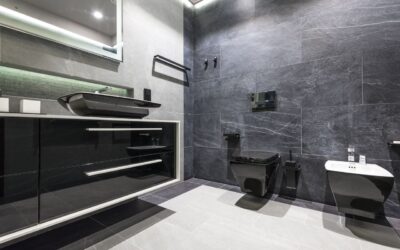
A grey bathroom strikes the perfect balance between modern sophistication and timeless neutrality. Grey — spelled “grey” in British English and “gray” in American English — has overtaken beige as the most popular neutral for bathroom design worldwide. Its appeal lies in versatility: light grey opens up small spaces, mid-tones create spa-like serenity, and dark charcoal adds drama and luxury. This guide covers every angle of grey bathroom design, from choosing the right shade to selecting fixtures that bring the palette to life.
Part of our Bathroom Remodeling & Flooring guide — explore the full guide →
Light Grey for Small Bathrooms
Light grey walls reflect 55-65% of light — nearly as much as white — making them ideal for bathrooms under 50 square feet. The subtle color adds depth and character that pure white lacks without absorbing the light a small room needs. Benjamin Moore Stonington Gray HC-170 and Sherwin-Williams Light French Gray SW 0055 are two of the most popular light grey choices for compact bathrooms.
Pair light grey walls with white trim, white fixtures, and a white or light-veined marble-look countertop for a clean, airy aesthetic. The slight contrast between grey walls and white elements creates visual definition without the starkness of an all-white scheme. Large-format grey porcelain floor tiles (12×24 inches minimum) with minimal grout lines reinforce the spacious feel.
Mid-Tone Grey for Master Bathrooms
Medium grey creates the spa-like atmosphere that master bathroom renovations increasingly target. These mid-range shades absorb enough light to feel enveloping and calming without darkening the room. Sherwin-Williams Mindful Gray SW 7016 and Benjamin Moore Revere Pewter HC-172 sit comfortably in this range and work with both warm and cool accent choices.
A grey bathroom in mid-tones benefits from layered lighting — recessed ceiling lights for ambient illumination, vanity sconces for task lighting, and accent lighting (LED strips under a floating vanity or behind a mirror) for atmospheric depth. The extra lighting prevents the grey from reading as dull or flat and creates the shadows and highlights that make a bathroom feel dimensional.
Charcoal and Dark Grey Accents
Full walls of charcoal grey work only in large master bathrooms (80+ square feet) with generous windows or excellent artificial lighting. In standard-sized bathrooms, use dark grey strategically — an accent wall behind the vanity, the shower interior, or the vanity cabinet itself. Dark grey tile on the shower floor with lighter grey or white on the walls creates depth without closing in the space.
Charcoal grey vanity cabinets ($400-$1,200 depending on size and quality) against light grey or white walls create a striking focal point. The dark base grounds the room visually while the lighter upper portion maintains brightness. This two-tone approach is one of the most effective grey bathroom strategies for any room size.
Tile Selections for Grey Bathrooms
Grey tiles come in an extraordinary range of materials, sizes, and textures. Large-format rectified porcelain ($4-$10 per square foot) creates seamless surfaces with hairline grout joints. Subway tiles in grey or with grey grout ($2-$5 per square foot) add classic texture to shower walls. Natural stone-look porcelain in grey tones captures the veining and variation of marble without the maintenance burden.
- Floor: Matte porcelain in medium grey, 12×24 or larger. Matte finish provides slip resistance and hides water spots
- Shower walls: Large-format grey porcelain or grey marble-look tile for fewer grout lines and easier cleaning
- Accent strip: Grey glass mosaic or natural stone mosaic adds texture and visual interest in a shower niche or as a border
- Wainscoting: Grey subway tile on the lower third of walls with painted grey upper walls creates depth on a budget
Fixture and Hardware Pairings
The metal finish you pair with grey determines the bathroom’s entire mood. Brushed gold and brass warm up cool greys and create a luxurious, intentional look. Chrome and polished nickel complement cool greys with a clean, contemporary edge. Matte black creates the most dramatic contrast against any grey shade and has become the defining fixture trend of the 2020s.
White porcelain fixtures (toilet, tub, sink) remain the standard choice in a grey bathroom — they provide brightness and contrast that keeps the room from feeling monochromatic. For a bolder approach, grey vessel sinks in concrete or stone ($150-$400) match the wall palette while adding textural interest. Keep the toilet white regardless — grey toilets read as institutional rather than stylish.
Warming Up a Grey Bathroom
Grey’s biggest risk is feeling cold or sterile. Counteract this with intentional warm elements:
- Wood accents: A teak shower bench ($60-$150), floating oak shelves ($30-$60 each), or a wood-framed mirror ($50-$200) add organic warmth
- Warm-toned lighting: Use 2700-3000K bulbs exclusively. Cool-toned lighting makes grey walls appear blue and unwelcoming
- Textiles: Plush white or cream towels, a soft bath mat, and a linen shower curtain introduce softness against hard grey surfaces
- Greenery: A pothos, snake plant, or ZZ plant on a shelf or window sill adds life and color that grey backgrounds showcase beautifully
The balance of warm natural materials against cool grey surfaces is what separates a thoughtfully designed grey bathroom from one that simply feels cold. Every hard, cool surface should have a corresponding warm, soft element nearby.