
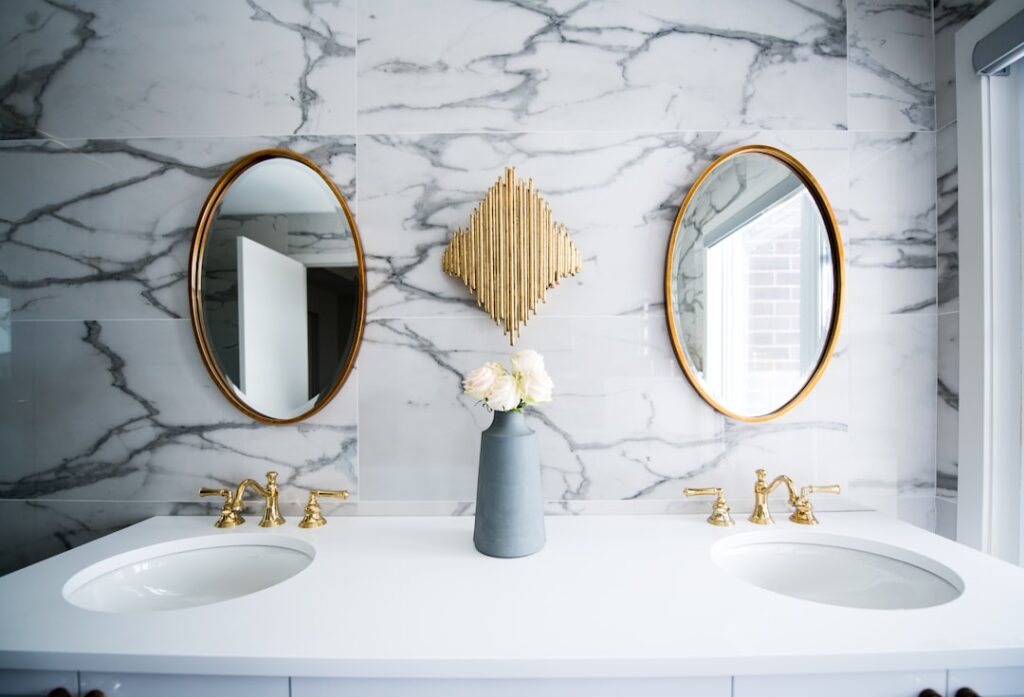
The vanity is the visual anchor of any bathroom, so its color sets the mood for the whole room. Current bathroom vanity color trends have moved decisively away from the builder-grade oak and stark all-white looks of the past decade toward richer, warmer, and more personal choices, from deep forest greens to soft earthy neutrals and moody blues. Because a vanity is a relatively affordable focal point to change, it’s the perfect place to make a statement without committing your whole bathroom to a fleeting fad. This guide walks through the colors leading the market right now and how to pair each one so the result looks intentional rather than trendy.
Part of our Bathroom Remodeling & Flooring guide — explore the full guide →
Warm Neutrals Replace Cool Grays
The cool-gray era is fading, and warm neutrals have taken over. Greige, taupe, mushroom, and soft warm whites now dominate because they feel cozy and flattering under bathroom lighting rather than cold and clinical. These tones read as calm and spa-like, and they pair effortlessly with the wood accents and natural materials that are also on the rise.
Warm neutrals are the safest of the current trends and the easiest to live with long term. A greige or warm-white vanity works with almost any countertop and floor, and it makes a small bathroom feel larger and brighter. If you want a look that’s current but low-risk, this is the category to shop.
Deep Green Leads the Bold Choices
Among saturated colors, deep green is the runaway favorite. Shades from sage to forest to olive bring a natural, grounding quality that suits both traditional and modern bathrooms, and green pairs beautifully with brass hardware, white counters, and natural stone. A dark green vanity against light walls and a marble-look top is one of the most photographed looks in bath design right now.
Sage and muted greens feel soft and organic, ideal for a serene primary bath, while deep forest and hunter greens make a dramatic, sophisticated statement in a powder room. Because green reads as a natural color, it tends to age more gracefully than trendier brights, which is part of why designers keep reaching for it.
Moody Blues and Navy
Blue remains a perennial favorite and has deepened in tone. Navy and slate-blue vanities deliver a classic, nautical-to-transitional feel that works especially well in traditional homes and coastal styles. Navy is nearly a neutral in how easily it pairs, working with white, gray, brass, chrome, and both light and dark floors.
Softer powder and dusty blues give a lighter, airier version of the trend for those who want color without drama. Pair a deep blue vanity with white or lightly veined counters and warm brass or matte black hardware for contrast. Blue’s long history in bathrooms means it rarely looks like a passing fad, making it a confident bold choice.
Natural Wood Tones Return
After years of painted finishes, natural and stained wood vanities are back, but the look is refined rather than the orange oak of the past. Walnut, white oak, and warm mid-tone woods bring texture and a organic, spa-like warmth that painted cabinets can’t replicate. A floating wood vanity in particular reads as modern and hotel-like.
Wood tones pair naturally with warm neutrals on the walls, stone counters, and both black and brass fixtures. The key is choosing a wood with a warm, controlled undertone and a durable, water-resistant finish, since bathrooms are humid. A well-sealed wood vanity adds the kind of natural material warmth that dominates current design across the home.
Two-Tone and Contrast Vanities
A newer direction pairs two colors on a single vanity or contrasts the vanity against the room. Think a green or navy base with a light stone top and brass legs, or a vanity painted a different color from the surrounding cabinetry to make it a deliberate focal point. This two-tone approach lets you introduce bold color while keeping the overall room balanced.
Contrast also shows up in mixing the vanity color with a statement countertop or a patterned floor tile. The trick is to let one element lead: a bold vanity wants a quiet counter, while a busy patterned floor pairs best with a solid, calm vanity color. Balancing one statement against neutral supporting pieces keeps the room from feeling chaotic.
Pairing Hardware and Countertops
The finish you choose for hardware and the counter can make or break a color. Brass and gold hardware warms up greens, blues, and wood tones and is having a strong moment; matte black gives a crisp, modern edge against lighter vanities; and chrome or brushed nickel keeps things classic and understated. Pick one metal and carry it through the faucet, pulls, and lighting for a cohesive look.
For counters, white and lightly veined marble-look quartz remains the most versatile partner for a colored vanity, letting the cabinet be the star. A warm-toned quartzite or a soft honed surface complements earthy neutrals and wood. Avoid pairing a bold vanity with an equally bold counter unless you want the room to feel busy.
Finish and Durability Behind the Color
A bathroom is a humid, splash-prone room, so the finish protecting your chosen color matters as much as the hue. Look for a durable, moisture-resistant paint or factory finish, since a vanity that looks stunning on day one but chips and swells around the sink within a year defeats the purpose. Painted vanities hold up best with a hard cabinet-grade enamel, while wood vanities need a well-sealed, water-resistant topcoat to survive daily splashes.
The finish sheen also shifts how a color reads. A satin or semi-gloss on a painted vanity wipes clean easily and reflects a little light, which keeps deep greens and navies from feeling too heavy in a small room. Matte finishes look sophisticated but show water spots and fingerprints more readily near a sink, so reserve them for a powder room that sees lighter use rather than a busy family bath.
Making a Bold Color Work in a Small Bathroom
Homeowners often worry a saturated vanity will overwhelm a compact bathroom, but the opposite can be true when it’s balanced correctly. In a small room, a deep green or navy vanity paired with light walls, a white counter, and a large mirror becomes a grounded focal point that actually makes the space feel curated rather than cramped. The key is keeping the surrounding surfaces light so the vanity anchors the room without closing it in.
If a full dark vanity feels risky in a tiny space, ease into color with a floating vanity, which shows more floor and keeps the room feeling open, or limit the bold hue to a single powder room where you can be daring. Because the vanity is one of the least expensive elements to change later, a small bathroom is a low-stakes place to commit to a color you love and test how it lives with you.
Choosing a Color You’ll Still Love
Trends are a starting point, not a mandate. Warm neutrals and natural wood are the lowest-risk choices for longevity, while green and navy are the bold options with the strongest staying power because both behave almost like neutrals. Test any color with a large sample under your actual bathroom lighting, since fixtures dramatically shift how a color reads, and consider the fixed elements, tile and floor, you’re keeping.
Because a vanity is easier and cheaper to repaint or replace than tile or flooring, it’s the ideal place to embrace bathroom vanity color trends and inject personality. Choose a shade that flatters your lighting, pair it with one coordinated metal and a calm counter, and your bathroom will feel current and personal for years to come.
One practical way to future-proof the room is to keep the expensive, hard-to-change surfaces neutral and let the vanity carry the color. Neutral tile, a white or lightly veined counter, and simple flooring form a backdrop that survives any trend, so when you eventually tire of a deep green or navy vanity, repainting or replacing that single cabinet is a small project rather than a full remodel. That layering, timeless fixed elements plus a colorful, easily updated vanity, gives you the freedom to follow bathroom vanity color trends now while leaving an easy exit if your taste changes down the road.


