The average bathroom vanity holds more than 100 items, yet most of them end up in one jumbled heap under the sink. The best bathroom vanity organization ideas start by respecting the awkward shapes inside: a P-trap in the middle, a shallow drawer on top, and deep dark corners at the back. Work around those obstacles with the right inserts and a few habits, and you can find your razor, cotton swabs, and spare toilet paper in seconds. Here is how to plan it zone by zone.
Part of our Bathroom Remodeling & Flooring guide — explore the full guide →
- Bathroom Vanity Organization Ideas Start with an Audit
- Drawer Organization That Works
- Making the Most of the Sink Base
- Organizing the Countertop Without Clutter
- Ideas for Small and Pedestal Vanities
- Organizing Shared and Double Vanities
- Materials That Hold Up in a Humid Room
- Organizing by Zone and Frequency
- Habits That Keep the System Working
- Bringing It All Together
Bathroom Vanity Organization Ideas Start with an Audit
Buying organizers before you know what you own is the fastest way to end up with bins that do not fit. Empty the entire vanity onto a towel on the floor. Toss expired medications, dried-out makeup, and nearly empty bottles. Most people discard 20 to 30 percent of what they pull out.
Next, sort what remains into categories: daily grooming, hair tools, skin care, first aid, cleaning supplies, and backstock such as extra toothpaste and toilet paper. Count how many items fall into each group. That inventory tells you what size and type of organizer you need, and where each category should live.
Finally, measure every space: drawer width, depth, and height, and the interior of the sink base, including the distance from the floor to the bottom of the trap and the space on each side of the drain pipe. Write the measurements down and bring them when you shop.
Drawer Organization That Works
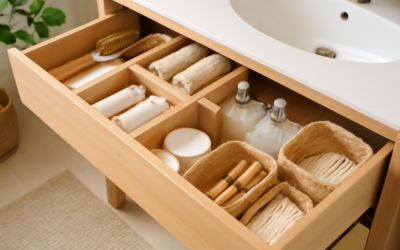
Drawers are the prime real estate, so reserve them for items you use every day. Adjustable drawer dividers or modular trays turn one open box into dedicated zones. Look for these approaches:
- Modular plastic or bamboo trays in 3-inch, 6-inch, and 9-inch widths that you arrange like puzzle pieces
- Spring-loaded dividers that press between drawer sides to separate tall items such as hairspray
- Makeup organizers with angled slots for lipsticks and brushes
- Non-slip drawer liner so bottles do not roll every time the drawer closes
In a shallow top drawer, usually 3 to 4 inches deep, lay items flat rather than standing them up. Toothbrushes, razors, tweezers, and daily skin care fit well here. Deeper lower drawers, 8 to 10 inches, can hold hair dryers, curling irons, and larger bottles standing upright.
A small but useful upgrade is an in-drawer outlet. These units install in the back of a vanity drawer and let you store a hair dryer or electric toothbrush plugged in and ready. They require an electrician and cost $250 to $500 installed, but they eliminate the tangle of cords on the counter.
Making the Most of the Sink Base
The cabinet under the sink is where organization usually breaks down. The plumbing takes up the middle, leaving odd pockets on either side. Several products are designed specifically for this space.
U-Shaped Shelves and Drawers
U-shaped organizers wrap around the drain pipe, giving you a full-width shelf or drawer with a cutout for the trap. They typically fit cabinets 30 to 36 inches wide and cost $40 to $120.
Two-Tier Sliding Baskets
Narrow two-tier pull-out baskets sit on either side of the plumbing. They let you use vertical space and pull items forward instead of reaching into the back. Choose ones with a 10- to 12-inch footprint for standard sink bases.
Door-Mounted Storage
The back of the cabinet door holds a surprising amount. Adhesive or screw-in racks for hair tools, a small caddy for cleaning spray, or hooks for a hair dryer free up floor space. Leave about 1 inch of clearance so the door still closes past the shelves inside.
Clear, Stackable Bins
Clear bins let you see backstock at a glance. Label the fronts, and use lidded bins for first aid and medications so they stay dust-free.
Always keep the area directly below the trap accessible. If a leak happens, you want to see it quickly and reach the shutoff valves without unpacking everything. A waterproof tray or silicone mat on the cabinet floor catches drips and protects the wood.
Organizing the Countertop Without Clutter
The goal for the counter is to hold only what you use every day and nothing more. A single tray gathers daily items in one place and makes wiping the counter easy: lift the tray, wipe, set it back. Marble, ceramic, and teak trays in the 8-by-12-inch range suit most vanities.
Vertical storage helps on narrow counters. A two- or three-tier organizer occupies a small footprint while holding skin care, perfume, and cotton jars. Wall-mounted soap and toothbrush holders clear the counter entirely. Decanting hand soap, cotton balls, and swabs into matching containers makes a big visual difference for a small cost, often under $40 for a set.
Keep a 2-inch buffer from the sink edge free of products. Water splashes there constantly and anything sitting in that zone will leave rings and residue.
Ideas for Small and Pedestal Vanities
Small bathrooms need storage that leaves the floor open. A few ideas stretch limited space:
- A medicine cabinet, recessed into the wall between studs, adds 3 to 4 inches of depth without projecting into the room
- A slim rolling cart, 6 to 8 inches wide, slides into the gap beside the vanity or toilet
- Floating shelves above the toilet hold towels and backstock
- A skirt or fabric curtain under a pedestal sink hides a small basket of supplies
- Magnetic strips inside the medicine cabinet door grab bobby pins, tweezers, and nail clippers
For wall-mounted vanities with an open shelf below, woven baskets make a practical and attractive way to corral towels and backstock. Choose sizes that fill the shelf width with about 1 inch to spare so the arrangement looks deliberate.
Organizing Shared and Double Vanities
Couples and siblings sharing a vanity benefit from clearly split territory. Give each person a dedicated drawer stack and side of the sink base, and use color-coded bins or labels. Shared items, such as toothpaste backstock and cleaning supplies, can live in a neutral center drawer or cabinet.
In a double vanity, mirror the setup on both sides so neither person has to hunt for the same kind of item. For kids’ bathrooms, keep daily supplies in low, easy-to-open bins and put medications in a locked box or higher cabinet out of reach.
Materials That Hold Up in a Humid Room
Bathroom organizers see steam and splashes daily, so material matters. Acrylic and polypropylene are waterproof and easy to wipe down. Bamboo looks warm and resists moisture better than most woods, but it should be sealed and kept away from standing water. Stainless steel and powder-coated wire work well under sinks because they let air circulate.
Avoid unfinished cardboard or untreated wood inside the sink base. They absorb humidity, warp, and can grow mildew. If a leak ever happens, porous organizers are ruined and can also hide the problem for days.
Organizing by Zone and Frequency
A simple rule makes every other choice easier: the more often you use something, the closer it should live to where you stand. Items used daily go in the top drawer or on the countertop tray. Items used weekly, such as a face mask, nail kit, or hair straightener, go in a second drawer or the front of the sink base. Items used monthly or less, including backstock, travel-size bottles, and seasonal sunscreen, belong at the back of the cabinet or on a high shelf.
Group items by task as well. A morning routine zone might hold toothpaste, floss, moisturizer, and deodorant in one tray. A hair zone keeps brushes, clips, dry shampoo, and heat protectant together near the outlet. When everything for one task lives in one spot, you save steps and put things away faster.
Habits That Keep the System Working
Even the best layout falls apart without a little maintenance. Put new purchases straight into their labeled zones, and when a bin is full, use or discard something before adding more. Every three months, do a quick five-minute reset: pull out expired items, wipe the trays, and check under the sink for moisture.
Store backstock in one place only, so you always know how much you have before buying more. Keep cleaning supplies in a caddy you can lift out and carry, which makes the actual cleaning faster and puts everything back in one motion.
Bringing It All Together
The most effective bathroom vanity organization ideas combine three things: a ruthless edit, organizers sized to your actual measurements, and simple habits that stop clutter from creeping back. Most homeowners can transform a vanity for $75 to $250 in inserts, with optional upgrades such as in-drawer outlets or recessed medicine cabinets adding more. Start with the drawer you open most, finish the sink base next, and you will feel the difference every morning.