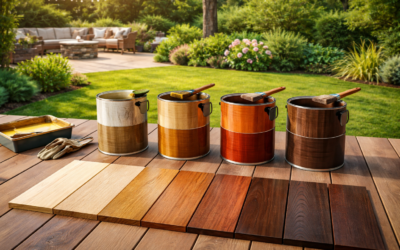
Most people searching for Behr cement stain are really asking one question: which of the Behr concrete stains gives the look I want, and will it last on my patio, porch, or garage floor? The answer depends on whether you want an even, painted-looking color or a mottled, stone-like finish. Behr’s concrete stain range covers both, and the products behave very differently once they are on the slab.
Behr sells its concrete stains under the BEHR PREMIUM name in three main forms: a Solid Color Concrete Stain for uniform color, a Semi-Transparent Concrete Stain (No. 850) that lets the slab’s natural variation show through, and a Semi-Transparent Decorative Concrete Stain (No. 855) designed to imitate the variegated look of acid staining. All three are water-based acrylic coatings, not true reactive acid stains, so they sit in and on the surface rather than chemically reacting with the concrete.
- Behr Cement Stain Types Compared
- Solid Color Concrete Stain
- Semi-Transparent Concrete Stain (No. 850)
- Semi-Transparent Decorative Concrete Stain (No. 855)
- How to Apply Behr Concrete Stain
- How Well Does It Hold Up?
- Troubleshooting Common Problems
- Safety and Ventilation
- General Cost and When to Hire a Pro
- Frequently Asked Questions
Durability for any behr cement stain project comes down to preparation more than brand. Even Behr’s own data sheets warn that poor surface prep or overly heavy application can lead to car tires lifting the coating. Get the prep right, pick the right type, and add a sealer where it makes sense, and these stains can look good for years.
Behr Cement Stain Types Compared
The comparison table summarizes the three products as described on Behr’s product pages and technical data sheets. Coverage and timing always vary with temperature, humidity, and how porous your concrete is, so treat these as planning numbers and read the label on your can.
| Product | Look | Coverage per gallon | Dry and recoat | Best for |
|---|---|---|---|---|
| Solid Color Concrete Stain | Uniform, opaque, flat finish; hides stains and patches | About 400 to 500 sq ft on rough surfaces, 500 to 600 sq ft on smooth | Dry to touch about 2 hours; recoat 2 to 4 hours | Old, patched, or stained slabs; porches, patios, walls |
| Semi-Transparent Concrete Stain (No. 850) | Translucent color with natural stone-like variation | 250 to 500 sq ft depending on method and porosity | Touch 1 hour; recoat 4 hours; full cure about 4 weeks | Clean, sound concrete you want to enhance rather than hide |
| Semi-Transparent Decorative Concrete Stain (No. 855) | Layered, variegated, acid-stain-style look | Spray base coat about 175 to 250 sq ft; accent coat 350 to 500 sq ft; rolled 250 to 500 sq ft | Touch 1 hour; recoat 4 hours; wait 24 hours before a clear topcoat | Decorative patios, interior slabs, multi-color effects |
| Clear sealer topcoat (optional) | Wet-look high gloss or low-luster | Varies by product | Apply after the stain has dried at least 24 hours | Adding stain protection and depth of color |
One naming note: Behr does not appear to sell a separate product labeled “translucent concrete stain.” Its semi-transparent formulas fill that role, letting the gray of the concrete and its natural variation show through the color. If a store employee or older article mentions a translucent Behr concrete stain, they almost always mean one of the semi-transparent products.
Solid Color Concrete Stain
The solid color version behaves much like a thin, penetrating paint. It is a 100 percent acrylic formula with a flat finish that covers the concrete’s color completely, so it is the right choice when the slab has rust marks, oil shadows, mismatched patches, or old staining that you want gone. Behr describes it for interior and exterior concrete and masonry, horizontal and vertical.
Because it is opaque, it hides flaws in color but not in texture. Cracks, spalls, and rough patches will still show. Two coats are often needed for uniform color, and Behr suggests a crisscross direction for the second coat to even out coverage on textured surfaces.
The color range for the solid stain is broad, because it can be tinted to many shades from Behr’s concrete and masonry color selection. Popular choices for patios include warm grays, slate, tan, and terra cotta shades. Dark colors look rich but absorb heat, so a dark solid stain on a sunny pool deck or patio can get uncomfortably hot underfoot.
Semi-Transparent Concrete Stain (No. 850)
This is the classic stain look: color that soaks in and lets the concrete’s natural texture show. Behr’s technical data sheet describes it as providing the color variation found in some natural stone, and it notes that surface imperfections, concrete composition, texture, and technique will all affect the result. In plain terms, no two slabs look the same, and you do not get to control the variation completely.
The formula is a siliconized 100 percent acrylic, it is water-based with low VOCs, and it cleans up with soap and water. Behr’s system recommendation for new, uncoated concrete is one coat of its Concrete and Masonry Bonding Primer (No. 880) followed by two coats of stain. For driveways and garage floors with car traffic, the primer is especially important, because tire pickup is the most common failure on these surfaces.
Choose this product only for concrete that is clean and fairly uniform. Because it is see-through, any oil stain, patch, or old coating residue will show through the color.
Semi-Transparent Decorative Concrete Stain (No. 855)
This is the product to consider if you like the marbled, mottled look of acid-stained floors but do not want to handle acid. Behr markets it as able to achieve the look of an acid stain finish and sells it in a selection of 18 decorative colors with names such as Industrial Gray, Greystone, Desert Gold, Old Adobe, Canal Blue, Sand and Cajun Rose. You can layer two or more colors with a pump sprayer to build depth, or roll a single color for a more uniform result.
The look is similar to acid staining but not identical. True acid stains react chemically with the lime in concrete, which produces unpredictable, translucent color. A pigmented acrylic stain imitates that variation on the surface, which is more predictable and easier to control, but it is a coating, so it can wear in heavy traffic lanes in a way reactive stains do not.
Behr advises working in small sections of about 4 feet by 4 feet, keeping out of direct sun, and not applying if rain or heavy dew is expected within 24 hours. It also recommends light and pastel colors on pool decks because dark colors hold heat. A concrete stain applicator sprayer (a pump sprayer with a fan tip) makes layered decorative work much easier than brushing.
How to Apply Behr Concrete Stain
Tools and Materials
- Concrete cleaner and degreaser, stiff scrub brush, and garden hose or pressure washer
- Concrete etcher (per label) or a profile check method
- Bonding primer for driveways and garage floors
- Pump sprayer, 3/8 to 1/2 inch nap roller, nylon or polyester brush
- Painter’s tape, plastic sheeting, and a roller extension pole
- Chemical-resistant gloves, eye protection, and a respirator if the label calls for one
Steps
- Check the concrete’s age. New concrete must cure at least 30 days before staining.
- Remove old coatings. Stain will not penetrate a sealed or painted surface. Strip any old sealer or paint down to sound concrete.
- Clean and degrease. Oil, grease, mildew, and dirt prevent adhesion. Scrub thoroughly and rinse well.
- Etch and test. Behr’s data sheets call for a surface profile similar to 150-grit sandpaper. Sprinkle a few drops of water on the dry slab: if it soaks in quickly, it is ready; if it beads, etch again.
- Prime where needed. Use the bonding primer on new or bare concrete, and always on areas that will carry vehicles.
- Apply the stain. Work within the label temperature range (generally about 50 to 90 degrees F), out of direct sun, and keep a wet edge. Apply two thin coats rather than one heavy one.
- Let it dry. Allow light foot traffic only after the label time (typically 24 hours) and wait longer, often around 72 hours or more, before vehicles or heavy furniture.
- Seal if appropriate. A wet-look or low-luster sealer adds protection, but Behr warns against using those topcoats on pool decks or areas with constant moisture.
How Well Does It Hold Up?
On patios, walkways, and porches with foot traffic, a properly applied behr cement stain can look good for several years before needing a refresh coat. Solid stains usually show wear first in high-traffic paths and at steps, while semi-transparent stains fade more gradually because there is less film on the surface.
Garage floors and driveways are the toughest test. Hot tires soften acrylic coatings and can pull them off if the concrete was not etched and primed properly. If your garage sees daily car traffic, many homeowners get better long-term results from a dedicated garage floor epoxy or polyurea system than from any stain.
Pool decks and areas that stay wet are another weak spot. Constant moisture can cause clouding or peeling, which is why Behr advises against a glossy topcoat there and favors lighter colors.
Troubleshooting Common Problems
Peeling or flaking. Almost always a prep issue: the surface was sealed, dirty, or too smooth. Strip loose areas, re-etch, and recoat.
Blotchy color. With semi-transparent stains, some variation is the point. Heavy blotching usually means uneven porosity or leftover sealer. A second coat or switching to a solid stain evens it out.
Tire marks and pickup. Use bonding primer, keep coats thin, and allow the full cure before parking on it. Hot tires on a fresh coating cause most failures.
Slippery surface. Stained and sealed concrete can get slick when wet. Mix an anti-slip additive into the sealer on steps, ramps, and pool decks.
Safety and Ventilation
These are water-based products, but the prep chemicals are not. Muriatic acid etchers and degreasers can burn skin and eyes and release harsh fumes. Wear chemical-resistant gloves, eye protection, and a respirator rated for the product, and work with good ventilation (open garage doors and use fans indoors). Never mix cleaning chemicals, especially acids and bleach. If you are using any solvent-based sealer, keep vapors away from pilot lights, water heaters, and other ignition sources. If you scrape or sand old paint on an older home, test for lead first.
General Cost and When to Hire a Pro
DIY staining a typical patio usually costs in the low hundreds of dollars for stain, primer, cleaner, and tools. Professional concrete staining generally runs a few dollars per square foot, higher for decorative multi-color work, crack repair, or heavy surface prep.
Consider a pro if the slab has wide cracks, heaving, or spalling, if you want a polished interior floor, or if you need a garage coating designed for vehicle traffic. A concrete contractor can also tell you whether the slab is sound enough to coat at all.
Frequently Asked Questions
Is Behr concrete stain the same as paint?
Not exactly. The solid color version behaves much like a thin, flat paint, while the semi-transparent versions soak in and let the concrete show through. All are acrylic coatings rather than reactive acid stains.
Does Behr sell a translucent concrete stain?
Behr’s see-through options are labeled semi-transparent. The standard semi-transparent stain and the decorative semi-transparent stain both let the natural concrete color show through.
How long does Behr concrete stain take to dry?
The semi-transparent products dry to the touch in about 1 hour and can be recoated in about 4 hours. Allow at least 24 hours before light foot traffic or a clear sealer, and longer before vehicles.
Do I need to seal Behr concrete stain?
It is optional but adds protection and richer color. Avoid glossy sealers on pool decks or areas that stay wet, where they can cloud or peel.
Can I use Behr concrete stain on a garage floor?
Yes, but only with proper etching and a bonding primer. Hot tires can lift poorly bonded stain, so heavy daily car traffic is better served by a dedicated garage floor coating.