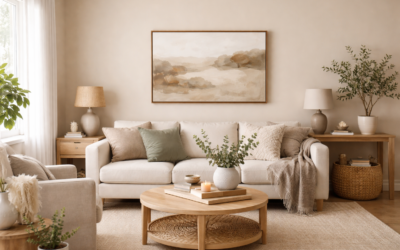
Behr Natural Gray is a light, warm gray with a soft taupe cast, sold under the code PPU18-10. Behr describes it as a taupe-gray neutral, and that is exactly how it behaves on a wall: gray enough to read as modern, warm enough that it never turns icy or blue in north light. It sits in the light range, so it brightens a room without the starkness of a white.
If you are deciding between a true greige and a crisp cool gray, this color lands closer to the greige side. It works in living rooms, bedrooms, hallways and open plans with mixed wood tones, and it is also rated for exterior use. Shoppers sometimes search for it as natural grey Behr, with the British spelling, but the official name uses “Gray.” The sections that follow cover its specs, undertones, the rooms where it shines and the trim colors that suit it.
- Behr Natural Gray at a Glance
- Is It Greige or a Cool Gray? The Undertone Check
- Best Rooms for This Warm Gray
- Trim and Accent Pairings
- How to Test Behr Natural Gray Before You Commit
- Painting Tips and General Costs
- Troubleshooting Common Problems
- When to Call a Professional Painter
- Frequently Asked Questions
Behr Natural Gray at a Glance
Before you buy a gallon, it helps to know the numbers that matter. The table collects the specs that Behr publishes and the reflectance figure that color databases calculate from Behr’s published digital value. Light reflectance value (LRV) runs from 0 (black) to 100 (pure white), and it tells you how much light a color bounces back into a room.
| Spec | Value | What it means |
|---|---|---|
| Color name and code | Natural Gray, PPU18-10 | Use the code at the paint desk to avoid mixing up similar names such as Naturalist Gray |
| Behr description | Taupe-gray neutral | A warm-leaning gray with a faint brown cast |
| Digital color value | #C4C0BB | Useful for screen mockups only; screens shift color |
| LRV | About 53 (listed by color databases) | Light-to-mid tone; reflects roughly half the light that hits it |
| Undertone | Warm taupe, very slight | Reads as greige in warm light, a softer gray in cool light |
| Use | Interior and exterior | Works on walls, cabinets and siding when mixed in the right product |
| Sheens | Depends on the product line | Flat or matte for walls, eggshell or satin for busy rooms |
The LRV of about 53 is the figure most color databases list, and it matches the calculation from Behr’s published hex value. Behr’s own color page includes an LRV field, so check the current spec sheet or the back of the color chip before you finalize a plan, especially if you are matching it against another brand.
Is It Greige or a Cool Gray? The Undertone Check
Most grays carry a hidden bias toward blue, green, purple or brown. Natural Gray leans toward brown, which is why Behr calls it taupe-gray. The bias is mild, though. Paint it next to a clean beige and it looks gray; paint it next to a blue-gray and it looks warm and earthy. That flexibility is the main reason designers reach for it.
You can run a quick undertone check at home with nothing more than a sheet of white printer paper. Tape a sample next to the paper on a wall that gets average light. If the swatch looks slightly brown or mushroom colored compared to the paper, you are seeing the taupe. If it looks flat gray, your light is cool and is neutralizing the warmth. Repeat the test at noon and again after dark with your usual lamps on.
How light direction changes it
- North-facing rooms: cool, indirect light pulls Natural Gray toward a true soft gray. It rarely goes blue, which makes it safer than many cool grays in dim rooms.
- South-facing rooms: warm daylight brings out the taupe and the color can read as a pale greige.
- East and west rooms: expect a shift through the day, warmer in the morning on east walls and warmer in the afternoon on west walls.
- Warm white bulbs (2700K): the color looks cozy and beige-leaning at night. Bulbs around 3000K to 3500K keep it closer to gray.
Best Rooms for This Warm Gray
Because it sits in the light-to-mid range, the color gives walls definition without shrinking a room. It also hides scuffs and fingerprints better than a white. Here is where it tends to perform best.
Living rooms and open plans
An open plan needs one color that can carry from the entry to the kitchen without clashing with oak floors, walnut furniture or stone counters. A taupe-gray handles all three. It pairs well with warm wood floors because the brown undertone echoes the wood rather than fighting it.
Bedrooms
The soft, muted quality makes it a calm bedroom choice. Pair it with white or cream bedding, linen curtains and natural fiber rugs. In a small bedroom with one window, test it first: an LRV in the low 50s can look a step darker on the wall than on a small chip.
Hallways and stairwells
Hallways take a beating from bags, pets and kids. A mid-light gray in an eggshell or satin finish wipes clean and keeps the space from looking dingy. It also bridges rooms painted in different colors.
Kitchens and bathrooms
In kitchens it suits walls next to white cabinets, and it can work on lower cabinets for a two-tone look. In bathrooms, use a satin or semi-gloss bath-rated product to handle humidity. The warm cast flatters skin tones in a mirror better than a cold gray.
Exteriors
Behr’s professional color notes say it tends to work best with traditional wood exteriors and white accents outside. Strong sun washes colors out, so expect it to look lighter on siding than on the chip. Test a large board on the sunniest and shadiest walls before committing.
Trim and Accent Pairings
The right trim color sharpens a warm gray, while the wrong one makes it look dirty. As a rule, pick a white that is clean but not stark blue-white, and choose accents with the same earthy depth.
- Soft, clean white trim: the safest pairing. A white with a hint of warmth keeps the look crisp without making the gray look muddy.
- Creamy off-white trim: creates a softer, more traditional look. Best in rooms with plenty of warm wood.
- Bright pure white: works for a modern look, but it exaggerates the contrast and can push the gray to look darker.
- Charcoal or near-black accents: great on interior doors, window sashes or a front door for a tailored contrast.
- Muted navy, sage or dusty blue: good accent walls, cabinetry or furniture colors that keep the palette calm.
- Same color at a deeper strength: use a darker gray from the same color strip on an accent wall for a tonal look.
Behr publishes a coordinated palette for PPU18-10 on its color page. Use that palette as a starting point, then test the trim white you already have in the house, because many homeowners keep existing trim.
How to Test Behr Natural Gray Before You Commit
Paint colors never look the same on a two-inch chip as they do across a 12-foot wall. A few minutes of testing saves a repaint that can run several hundred dollars in materials alone.
- Get a large sample. Peel and stick paint sample swatches are the easiest option. They are usually about the size of a sheet of paper and you can move them around without painting the wall.
- Place it on at least two walls. One wall that gets direct light, one that stays in shadow.
- Keep it next to your fixed elements. Hold it against the floor, the counters, the trim and any large furniture.
- Check it three times a day. Morning, early afternoon and evening under lamps.
- Compare against one alternative. Put a cooler gray beside it so your eye can judge the undertone.
- Live with it for two days. First impressions in a paint aisle are rarely reliable.
Painting Tips and General Costs
Like most light-to-mid grays, it covers well over a previously painted light wall. If you are going over a deep color, start with a tinted primer. For a standard 12 by 14 foot bedroom with 8-foot ceilings, plan on about 1.5 to 2 gallons for two coats on the walls, depending on surface texture and the number of doors and windows.
- Prep: wash walls with a mild detergent, patch nail holes, sand glossy areas and caulk gaps at trim.
- Tools: a 3/8-inch nap roller for smooth drywall, a 1/2-inch nap for light texture, an angled sash brush, painter’s tape and drop cloths.
- Sheen: flat or matte hides wall flaws, eggshell balances washability and low shine, satin suits kitchens, baths and hallways.
- Cost: a DIY room usually runs about $80 to $250 in paint and supplies. Hiring a painter for a single bedroom commonly costs around $400 to $1,000, and more for high ceilings or heavy repair.
Troubleshooting Common Problems
It looks purple or muddy. This usually happens next to cool, blue-white trim or under very cool LED bulbs. Warm the trim slightly or switch to bulbs in the 2700K to 3000K range.
It looks too beige. Strong south light and warm bulbs can push the taupe forward. Swap to slightly cooler bulbs or choose a cooler gray for that one room.
It looks darker than expected. Low-light rooms reduce the effective brightness of any color. Add lighting or consider a lighter step on the same strip.
Patchy finish. Uneven sheen or flashing usually comes from skipping primer over patches. Spot prime repairs, then roll a full second coat, keeping a wet edge.
When to Call a Professional Painter
Most homeowners can paint a room in this color without help. Call a pro if you are painting tall stairwells, vaulted ceilings or two-story exteriors that need tall ladders or scaffolding, or if walls need major drywall repair. If your home was built before 1978, test old paint for lead before sanding, and use lead-safe practices or hire a certified contractor.
Frequently Asked Questions
Is Behr Natural Gray warm or cool?
It is a warm gray. Behr calls it a taupe-gray, and the faint brown undertone keeps it from reading blue in most rooms, though cool north light can make it look like a plain soft gray.
What is the LRV of Behr Natural Gray?
Color databases list it at about 53, which matches a calculation from Behr’s published digital value. Confirm the current figure on Behr’s color page or the chip before matching it to another brand.
Is Natural Gray a greige?
It leans greige. It reads more gray than beige in most light, but the taupe cast shows up in warm daylight and under warm bulbs.
What white trim goes with Natural Gray?
A soft, clean white with a slight warm cast is the most reliable choice. Very blue-white trim can make the wall look muddy.
Can I use Behr Natural Gray on a house exterior?
Yes. Behr lists it for interior and exterior use. Expect it to look lighter in full sun, and test a large sample board on the house first.