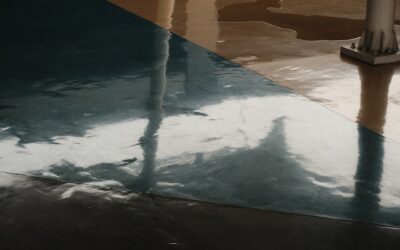
Epoxy floors have a reputation for cold, industrial gray, but that is only one option, and increasingly homeowners are choosing warmer tones instead. A beige epoxy floor delivers the same seamless durability and easy cleaning as any epoxy coating while reading softer, warmer, and more forgiving of dust than gray or white. It works as well in a finished basement or sunroom as it does in a garage, and it hides tire marks, dirt, and footprints better than pale shades. If you are weighing an epoxy floor and drawn to a neutral that feels warm rather than clinical, beige is a smart middle ground worth understanding fully.
Part of our Epoxy, Concrete & Garage Floors guide — explore the full guide →
What a Beige Epoxy Floor Is
Epoxy flooring is a resin-and-hardener coating that is applied over a prepared concrete slab, where it chemically cures into a hard, seamless, non-porous surface bonded to the concrete. Beige refers to the pigment or the color of the decorative flakes broadcast into the coating. You can achieve a beige floor as a solid tinted color, as a beige base with tan and brown flake blends, or as a metallic epoxy that swirls beige with cream and bronze for a marbled effect. The result is a continuous surface with no grout lines or seams for dirt to hide in.
The Pros
- Warm, neutral look: beige pairs with almost any wall color and hides dust and dirt better than gray or white, making footprints and light debris far less obvious.
- Extreme durability: a properly installed epoxy floor resists abrasion, impact, chemicals, and hot tires, easily lasting 10 to 20 years in a garage.
- Seamless and hygienic: the non-porous surface wipes clean, resists stains, and gives bacteria and moisture nowhere to hide.
- Low maintenance: sweeping and occasional damp mopping is all it needs; no waxing, sealing, or grout scrubbing.
- Brightens the space: beige reflects more light than dark floors, making a garage or basement feel bigger and cleaner without the glare of stark white.
- Slip options: flake and anti-slip additives improve traction, useful in garages and entryways.
The Cons
- Shows more grime than dark floors: while beige hides dust better than gray, it still shows heavy oil stains and mud more than a dark charcoal floor would; flake blends help disguise this.
- Demanding prep: epoxy is only as good as the concrete prep. The slab must be ground or acid-etched, moisture-tested, and fully cured, or the coating can peel.
- Slippery when wet: smooth epoxy gets slick with water; anti-slip additives are strongly recommended for garages.
- UV yellowing: standard epoxy can amber or discolor in direct sunlight, which is more noticeable on beige; a UV-stable topcoat or polyaspartic finish solves this.
- Installation window: the coating has a limited working time and needs 24 to 72 hours to cure before use, with temperature and humidity controlled.
- Not a fix for cracked slabs: significant cracks or moisture problems must be addressed first.
Cost Per Square Foot
Beige epoxy floors span a wide price range depending on the system and who installs it. Here are realistic 2026 figures:
- DIY roll-on epoxy kit: $2 to $5 per square foot in materials for a two-car garage.
- Professional single-color epoxy: $4 to $9 per square foot installed.
- Professional flake (broadcast) system: $5 to $12 per square foot, the most popular garage option.
- Metallic beige epoxy: $8 to $18 per square foot for the marbled decorative look.
- Polyaspartic topcoat upgrade: adds $2 to $5 per square foot but resists UV yellowing and cures faster.
A professionally installed beige flake floor in a standard two-car garage typically lands between $2,500 and $5,000. The concrete prep is where the labor cost concentrates, and it is not the place to cut corners.
Solid, Flake, or Metallic Beige?
The three main beige finishes serve different goals. A solid beige coating is the simplest and cleanest, ideal for a bright, uniform look, though it shows dirt and imperfections most readily. A flake or broadcast system blends beige, tan, and brown chips into the surface, which not only looks like natural stone but also hides dirt, adds traction, and masks minor slab flaws, making it the most practical choice for garages. A metallic beige floor swirls pigments for a dramatic, marbled, almost stone-like effect that suits showrooms, basements, and interior living spaces where looks matter most.
Where a Beige Epoxy Floor Works Best
Garages are the classic application, where beige brightens the space and the flake version hides tire dust and debris. Finished basements benefit from epoxy’s moisture resistance and warm neutral tone. Sunrooms, home gyms, workshops, laundry rooms, and mudrooms all suit beige epoxy for its durability and easy cleaning. In living spaces, metallic beige epoxy has become a stylish alternative to tile or polished concrete. The main caution is direct sunlight, where a UV-stable polyaspartic topcoat prevents the beige from yellowing over time.
Installation and Curing Basics
Whether DIY or professional, success hinges on prep. The concrete must be clean, fully cured (at least 28 days for new slabs), profiled by grinding or etching, and moisture-tested to ensure the coating will bond. Fill cracks and patch spalls first. Apply the epoxy within its working time, broadcast flakes if using them, and finish with a clear topcoat. Then respect the cure schedule: foot traffic after 24 hours, light use after 48 to 72 hours, and vehicle traffic after about a week. Rushing the cure is the fastest way to ruin an otherwise good floor.
Is a Beige Epoxy Floor Right for You?
Choose a beige epoxy floor if you want a warm, bright, durable, low-maintenance surface for a garage, basement, or interior space and you prefer a softer neutral over cold gray. Go with a flake or metallic system to hide dirt and add character, insist on proper concrete prep, and add a UV-stable polyaspartic topcoat if the floor sees sunlight. Handle those details and a beige epoxy floor will give you a decade or more of seamless, easy-clean flooring that feels warmer and more inviting than the industrial gray most people picture when they hear the word epoxy.