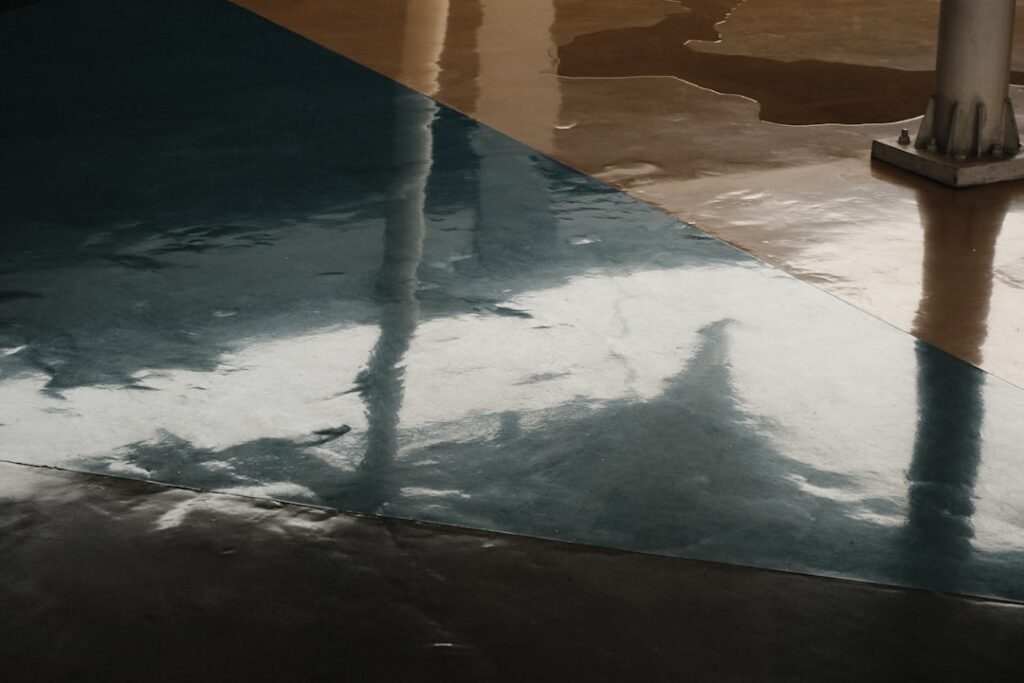
When you want a garage or workshop floor that looks clean, wears like iron, and wipes down in seconds, few options beat a smooth coat of single-tone resin. A solid color epoxy floor covers bare concrete in one uniform shade, hiding stains and imperfections while creating a hard, seamless surface that resists oil, chemicals, and years of abuse. Unlike flake or metallic systems that layer in decorative chips, a solid color finish keeps things simple and professional, which is exactly why it dominates commercial garages, mechanic shops, and increasingly residential spaces. Understanding what you gain, what you give up, and how much it costs will help you decide whether this classic finish fits your project.
Part of our Epoxy, Concrete & Garage Floors guide — explore the full guide →
- What Is a Solid Color Epoxy Floor
- Pros of a Solid Color Epoxy Floor
- Cons and Drawbacks to Weigh
- Cost of a Solid Color Epoxy Floor
- Choosing the Right Color
- How to Install a Solid Color Epoxy Floor
- Solid Color vs Flake and Metallic Systems
- Preparing Different Concrete Conditions
- Is a Solid Color Epoxy Floor Right for You
What Is a Solid Color Epoxy Floor
A solid color epoxy system is a coating made from two parts, a resin and a hardener, that chemically bond into a rigid, plastic-like layer over concrete. Pigment mixed into the resin gives the floor its uniform color, whether that is battleship gray, tan, blue, or nearly any shade you choose. The result is an opaque, glossy surface with no decorative chips or swirls, just clean, consistent color from wall to wall.
The system typically involves a primer coat for adhesion, one or two pigmented base coats to build color and thickness, and sometimes a clear topcoat for extra durability and shine. Because the color runs through the coating rather than sitting on top as a stain, the finish stays vivid and hides the mottled look of raw concrete underneath.
Pros of a Solid Color Epoxy Floor
This finish earns its popularity through a combination of toughness, low maintenance, and clean looks. The standout benefits include:
- Exceptional durability: Resists impacts, abrasion, hot tires, and heavy rolling loads from vehicles and equipment.
- Chemical resistance: Shrugs off oil, gasoline, brake fluid, and most household chemicals without staining.
- Easy to clean: A seamless, non-porous surface wipes up spills instantly and needs only a dust mop and occasional damp mop.
- Bright and professional: A light-colored floor reflects light and makes a garage or shop feel bigger and cleaner.
- Affordable: Solid color systems cost less than flake or metallic finishes while delivering the same core durability.
For a working garage where function matters more than flash, the simplicity of a single color is a feature, not a compromise. It reads as clean and intentional and never goes out of style.
Cons and Drawbacks to Weigh
Solid color epoxy is not flawless, and knowing its weaknesses prevents disappointment. The biggest is that a plain, uniform surface shows dirt, dust, and tire marks more readily than a busy flake finish, so a light gray floor needs more frequent sweeping to look its best. Every scratch and scuff is also more visible against an unbroken field of color.
Like all epoxy, it can turn slippery when wet unless an anti-slip additive is broadcast into the topcoat, and standard formulas may yellow under prolonged direct sunlight. The finish is also only as good as the prep beneath it; a solid color coat reveals every roller mark, bubble, and bit of trapped dust, so a sloppy application looks worse than it would under a flake floor that camouflages minor flaws.
Cost of a Solid Color Epoxy Floor
Price varies with whether you hire a pro and how many coats the system uses. A DIY solid color epoxy kit for a two-car garage runs $100 to $400, covering primer, pigmented coats, and sometimes a topcoat. Professional installation, which includes diamond grinding the slab, patching, and multiple coats, typically costs $3 to $7 per square foot.
That puts a professionally coated 400-square-foot garage between $1,200 and $2,800. Solid color systems sit at the lower end of the epoxy price range because they skip the extra materials and labor of broadcasting flakes or blending metallics. For the durability you get, the cost per year of service is very reasonable, since a quality floor lasts 10 to 20 years with light care.
Choosing the Right Color
Color selection is about more than taste; it affects how the floor looks day to day. Light grays and tans brighten the space and reflect overhead lighting, but they show dust and tire marks sooner. Medium and dark grays hide dirt better and lend a modern, industrial feel while still looking clean. Bold colors like blue or red suit branded commercial shops or a homeowner who wants a statement.
Consider your climate and use too. A darker floor in a sun-exposed space benefits from a UV-stable topcoat to resist fading. Whatever shade you pick, order a sample and view it under your actual lighting, since fluorescent and LED bulbs shift epoxy colors noticeably.
How to Install a Solid Color Epoxy Floor
The difference between a floor that lasts decades and one that peels in a year comes down to preparation. Follow the process carefully:
- Grind or acid-etch the concrete to open its pores, then vacuum and wipe until spotless.
- Patch cracks and pits, and confirm the slab is dry with a taped plastic-sheet moisture test.
- Apply the primer coat and let it cure per the manufacturer’s schedule.
- Roll on the pigmented base coats, keeping a wet edge and working in sections to avoid lap marks.
- Add a clear topcoat for extra wear resistance, broadcasting anti-slip aggregate into it if the floor gets wet.
- Allow a full cure, often five to seven days, before driving on the surface.
Work in temperatures between 60 and 85 degrees Fahrenheit with low humidity, and never rush the cure. Parking a car on green epoxy is the fastest way to leave permanent tire prints in an otherwise perfect solid color epoxy floor.
Solid Color vs Flake and Metallic Systems
Deciding between a solid color and a decorative system comes down to looks, maintenance, and budget. A solid color finish is the cleanest and most professional, but its uniform surface shows every speck of dust, tire mark, and scratch. A flake or chip system broadcasts colored vinyl chips into the coat, creating a speckled, terrazzo-like texture that brilliantly camouflages dirt and minor imperfections, which is why it is so popular for busy home garages.
Metallic epoxy sits at the top of both the price and drama scale, using pigments that swirl into a three-dimensional marbled effect no other floor can match. Solid color costs the least and installs the fastest, flake adds a modest premium for its dirt-hiding texture, and metallic commands the highest price for its artistic look. If your priority is low cost and a clean professional appearance and you do not mind sweeping regularly, solid color is the value champion of the three.
Preparing Different Concrete Conditions
The prep work shifts depending on the state of your slab, and matching your approach to the concrete is what makes a solid color epoxy floor last. New concrete must cure fully, usually 28 days, before any coating goes down, and it needs profiling to open its dense surface. An older slab with oil stains requires degreasing and possibly grinding away contaminated areas, since epoxy will not bond over grease.
Cracks and pits need filling with an epoxy patch or crack filler before coating, and control joints are typically either filled or honored depending on the look you want. The most important test on any slab is for moisture, since vapor pushing up through the concrete will delaminate epoxy over time. Tape a plastic sheet to the floor for 24 hours and check for condensation underneath; if the slab is damp, you will need a moisture-mitigation primer before the color coats. Skipping these condition-specific steps is the number one cause of a floor that peels within a year.
Is a Solid Color Epoxy Floor Right for You
A solid color finish is the smart pick when you want maximum durability and easy cleaning at a reasonable price, and you value a clean, professional look over decorative flair. It shines in working garages, mechanic bays, basements, and commercial spaces where the floor takes real punishment. If you dread frequent sweeping or want to disguise scuffs, a flake system may suit you better, but for cost-effective toughness and timeless simplicity, a solid color epoxy floor is hard to beat.
Prefer to explore on your own?
See how new flooring looks in your actual room in seconds — free, no signup.
Try the free Floor Studio →