A plain gray concrete patio is a blank canvas, and few finishes transform it as dramatically as epoxy. If you are gathering epoxy patio ideas to bring your outdoor space to life, you have a remarkable range of colors, textures, and effects to work with, from glassy metallic swirls to rugged stone-look flake systems that hide every flaw. The result is a durable, easy-to-clean surface that looks far more expensive than the slab underneath.
Part of our Epoxy, Concrete & Garage Floors guide — explore the full guide →
This guide walks through the most popular epoxy patio designs, the practical factors that affect how they hold up outdoors, and the safety basics of working with the material. Use it to picture what is possible before you commit to a look.
Why Choose Epoxy for a Patio
Epoxy is a two-part coating that bonds tightly to properly prepared concrete, creating a seamless, non-porous surface. That seamlessness is its superpower outdoors: there are no grout lines to scrub, no joints for weeds, and spills wipe up with little effort. A well-installed system resists stains, abrasion, and the occasional dragged patio chair.
One important note for outdoor use: standard indoor epoxy can yellow and chalk under direct sunlight. For a patio, you want a UV-stable formula or a UV-resistant topcoat designed for exterior exposure. Talk to the manufacturer or a professional installer about the right product for full-sun conditions, and always follow the label for your specific climate.
Metallic Epoxy: Liquid Art Underfoot
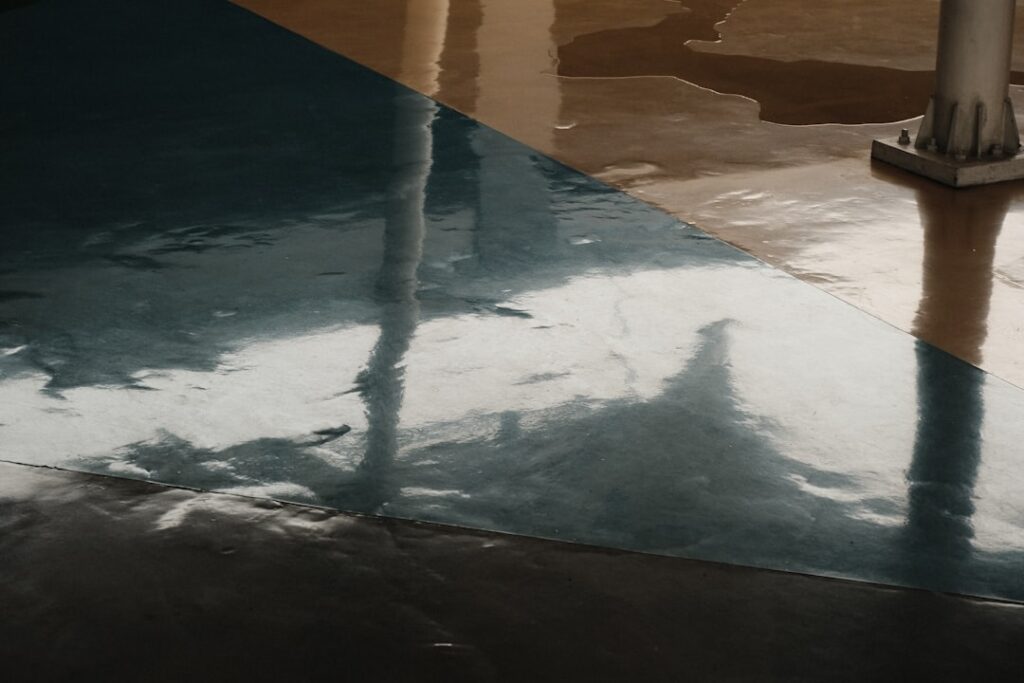
If you want a showstopper, metallic epoxy delivers. Metallic pigments are suspended in the resin and then manipulated with a torch or roller, producing flowing, three-dimensional effects that mimic marble, lava, water, or clouds. No two pours are ever identical, so your patio becomes one of a kind.
Popular palettes for outdoor metallic floors include cool blues and teals that evoke water, warm copper and bronze tones that pair well with stone and wood, and dramatic charcoal-and-silver blends for a modern look. Because the finish is glossy, it reads as upscale and reflective, brightening shaded patios. Keep in mind that high-gloss surfaces can be slick when wet, so add a slip-resistant additive to the topcoat for outdoor safety.
Flake and Chip Systems for Texture and Grip
Decorative flake systems, sometimes called chip or broadcast floors, scatter colored vinyl flakes into a base coat, then seal everything under a clear topcoat. The look is speckled and natural, similar to granite or terrazzo, and it comes in countless color blends to match your home’s exterior.
Flake floors are a favorite for patios for two practical reasons. First, the texture provides built-in slip resistance, which matters around pools and in rainy climates. Second, the busy pattern camouflages dirt, minor cracks, and wear, keeping the patio looking clean between cleanings. Consider these flake ideas:
- Earth-tone blends (tan, brown, and gray) for a natural stone appearance
- Bold accent flakes that pick up a color from your siding or trim
- Subtle neutral blends for a clean, low-key contemporary patio
Solid Colors and Stained-Concrete Looks
Not every patio needs to be flashy. A solid-color epoxy in a warm gray, sand, terracotta, or deep charcoal gives you a clean, modern surface that lets your furniture and plants take center stage. Solid coatings are also the most budget-friendly option and the easiest to refresh later.
For a more organic effect, tinted and translucent epoxy systems can mimic acid-stained concrete, with mottled, variegated color that looks weathered and natural. This works beautifully on patios that connect to a rustic or Mediterranean-style home. You can also score or tape off a grid before coating to suggest large-format tiles or flagstone sections.
Creative Patterns, Borders, and Wood-Look Designs
Epoxy is endlessly customizable, which is where the fun begins. A few ideas to elevate a basic slab:
- Borders and bands: Frame the patio with a contrasting color band to define the space, much like an area rug.
- Faux wood plank: Skilled installers can layer pigments to create a convincing wood-grain finish that pairs the warmth of wood with the durability of epoxy.
- Geometric insets: Use tape and multiple colors to create a central medallion, a compass design, or a tile-style grid.
- Stenciled accents: Add a subtle compass rose, house number, or repeating motif near the entry.
- Color zoning: Use one tone for a dining area and another for a lounge area to visually separate functions on a large patio.
Surface Prep and Durability Outdoors
The single biggest factor in how long an epoxy patio lasts is preparation. Epoxy bonds to clean, profiled concrete, not to dust, oil, or a sealed surface. Professionals typically grind or shot-blast the slab to open the pores, repair cracks and spalls, and ensure the concrete is fully dry and free of moisture issues before coating. Skipping prep is the most common reason coatings peel.
Outdoors, manage moisture and movement. Concrete that wicks groundwater can push a coating off from below, so a moisture test is wise on slabs that sit at or below grade. Plan for expansion joints to keep up with seasonal movement, and choose a UV-stable, exterior-rated system so the color stays true in the sun. Done right, an epoxy patio can give you many years of low-maintenance service.
Safety When Working With Epoxy
Epoxy is a chemical product, and the application stage demands respect. If you tackle a project yourself, follow the manufacturer’s instructions to the letter, including mix ratios and recoat windows. Work in well-ventilated conditions, wear chemical-resistant gloves, eye protection, and appropriate respiratory protection, and keep the area clear of kids and pets. Surface prep with grinders creates silica dust, so use proper dust control and a respirator.
Allow the full cure time before placing furniture or walking on the surface heavily, as a coating that feels dry can still be soft underneath. For metallic pours and large patios, hiring an experienced installer is often worth it; the prep, timing, and finishing technique are unforgiving for beginners. When in doubt, bring in a professional to get a durable, beautiful result the first time.