
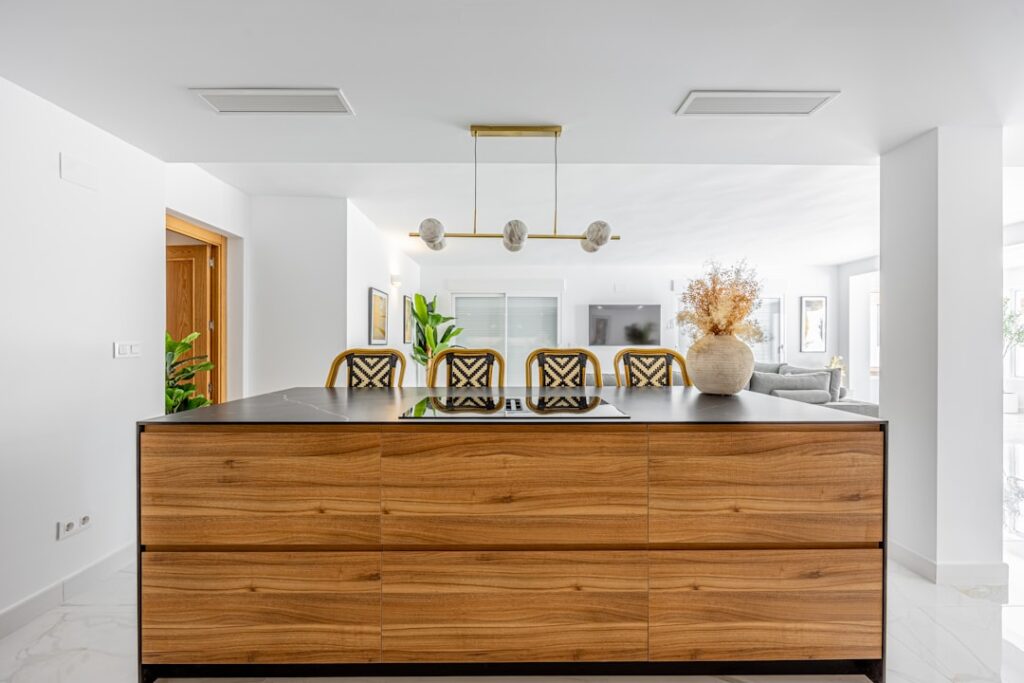
The Pantheon’s marble floor has held up for 1,900 years, and the species used most often there — a beige Italian travertine — still tops bestseller lists in modern homes. Beige marble flooring spans Crema Marfil, Botticino, Diana Royal, Spanish Emperador Light, and Turkish Bursa Beige, each with distinctive veining and a warm undertone that flatters most cabinet and wall colors. The look is timeless, the durability legendary, and the maintenance non-negotiable. Here is the complete buying guide for homeowners considering natural beige marble.
Part of our Countertops guide — explore the full guide →
- The Beige Marble Family — Knowing Your Options
- Pros That Make the Investment Worth It
- Trade-Offs Worth Knowing
- Where Beige Marble Works Best
- Tile Sizes and Their Impact on the Look
- Subfloor Prep and Install Walkthrough
- Sealing — The Non-Negotiable Step
- Cost Breakdown for a 200 Sq Ft Bathroom
- Maintenance That Hits a 75 Year Life
- FAQ
The Beige Marble Family — Knowing Your Options
Crema Marfil from Spain is the most popular beige marble worldwide. It runs uniform pale beige with subtle gold veining and minimal contrast, perfect for understated elegance. Botticino from Italy has slightly cooler beige with more visible darker veins. Diana Royal from Turkey offers warm peachy beige with distinctive flowing patterns. Spanish Emperador Light delivers warm beige with brown patches that read more dramatic.
Each comes in multiple finish options. Polished marble reflects light brilliantly but shows scratches and etch marks more readily. Honed marble sits matte and hides wear better but absorbs stains faster without proper sealing. Tumbled marble reads rustic with rounded edges, suited to traditional and Mediterranean designs.
Pros That Make the Investment Worth It
Visual depth is unmatched. Real marble has translucent crystals that catch light differently than any printed alternative — the floor changes appearance as the sun moves through a room. Resale impact is also significant; homes with natural stone flooring sell 3 to 6 percent above comparable tile listings according to NAR data, with the largest premium in luxury price tiers.
Longevity puts the price in perspective. Properly sealed and maintained beige marble flooring lasts 75 to 100+ years. Even in commercial settings, marble outlasts ceramic tile by a factor of two to three. The Greek Parthenon and the Taj Mahal still stand on the same marble laid centuries ago — that is the timeline you are working with.
Trade-Offs Worth Knowing
Etching from acidic spills is the biggest day-to-day issue. Lemon juice, wine, vinegar, tomato sauce, and many cleaners produce dull spots within seconds of contact. The fix is a poultice and re-honing, but prevention through immediate spill cleanup is the only realistic strategy.
Cost runs $12 to $25 per sq ft for material with installation adding $7 to $15 per sq ft. Premium book-matched slabs and large-format tiles push past $40 per sq ft installed. Compare to porcelain at $5 to $12 installed and you are paying a real premium for the natural material — but no porcelain print captures the depth and translucency of actual marble.
Where Beige Marble Works Best
Bathrooms, foyers, and formal dining rooms top the list. These areas see lower traffic and minimal acidic spills, letting the marble showcase without constant maintenance worry. Master bathrooms in particular benefit from the spa-like warmth that beige marble adds, and the natural slip resistance of honed finishes works for shower floors when paired with mosaic detail.
Kitchen floors require honest evaluation of your cooking habits. If you regularly cook with citrus, vinegar, or acidic sauces, expect etching no matter how well sealed. Many homeowners install marble in kitchen perimeters and switch to porcelain tile in the cooking work zone for that reason.
Tile Sizes and Their Impact on the Look
Format matters as much as color. Pick based on room scale and the formality you want.
- 12 inch x 12 inch: Traditional, dense pattern. Best for small bathrooms and historic restorations.
- 18 inch x 18 inch: Mid-scale balance. Works in 100 to 250 sq ft rooms.
- 24 inch x 24 inch: Modern standard. Best for open kitchens and great rooms.
- 24 inch x 48 inch: Large-format, contemporary. Suits 400+ sq ft spaces with clean lines.
- Slab format (5 ft x 10 ft): Premium statement floors. Requires specialized handling and pro install.
Larger tiles read more contemporary and reduce grout lines. Smaller tiles read more traditional and offer better slip resistance because the grout breaks up the polished surface.
Subfloor Prep and Install Walkthrough
Marble cracks if the substrate flexes. Plywood subfloors must be 1-1/4 inch total thickness (3/4 inch + 1/2 inch underlayment), screwed at 6 inch on center. Concrete slabs need flatness within 1/8 inch over a 10 ft straightedge — anything looser and the tiles lippage at the edges.
- Install an uncoupling membrane like Schluter Ditra or Mapei Mapeguard to isolate the marble from substrate movement.
- Mix premium thin-set rated for natural stone (Mapei Ultraflex 2 or Custom MegaLite) and apply with a 1/2 inch x 1/2 inch notched trowel.
- Back-butter each tile with a thin coat of thin-set to ensure 95 percent coverage and prevent voids.
- Set tiles with 1/8 inch grout joints, using leveling clips on tiles 18 inch and larger to prevent lippage.
- Wait 24 to 48 hours before grouting with non-sanded grout color-matched to the marble.
- Apply two coats of penetrating sealer (Miracle 511 Impregnator or Aqua Mix Pro Stone Sealer) after grout cures fully.
Sealing — The Non-Negotiable Step
Beige marble must be sealed before grouting (to prevent grout staining), again after grouting (full surface protection), and re-sealed every 12 to 24 months thereafter. Skip the sealing schedule and you will be poulticing red wine and coffee stains within months.
Penetrating impregnator sealers preserve the natural look while blocking liquid penetration. Topical sealers (waxes and acrylics) build a film that wears off in high-traffic zones unevenly — avoid them. The water-drop test is your maintenance indicator: if water no longer beads on the surface, it is time to re-seal.
Cost Breakdown for a 200 Sq Ft Bathroom
Crema Marfil 18 inch x 18 inch tiles at $14 per sq ft put material at $2,800 plus 12 percent waste ($336). Add uncoupling membrane at $1.50 per sq ft ($300), premium thin-set and grout ($180), pro install at $11 per sq ft ($2,200), and sealer ($90). Total: $5,906, or roughly $29.50 per sq ft installed. Premium book-matched slab installations push past $50 per sq ft.
Maintenance That Hits a 75 Year Life
Sweep daily with a soft brush or microfiber dust mop. Damp-mop weekly using a pH-neutral stone cleaner like StoneTech Revitalizer or Aqua Mix Concentrated Stone & Tile Cleaner diluted per the label. Never use vinegar, ammonia, bleach, citrus cleaners, or generic “all-purpose” cleaners — all etch the surface.
Treat etch marks with a marble polishing powder like Tenax Marmolux or hire a pro for re-honing if the damage is widespread. Stains require a poultice — a paste of baking soda and hydrogen peroxide for organic stains, or a manufacturer-specific product for oil and rust stains. Felt pads under furniture, walk-off mats at entries, and immediate spill cleanup are your daily protection.
FAQ
Does beige marble flooring stain easily?
Unsealed marble stains within minutes from coffee, wine, and oil. Properly sealed marble resists most stains for 12 to 24 months between sealings, with immediate cleanup of spills.
How often does beige marble flooring need to be sealed?
Re-seal every 12 to 24 months for residential floors. High-traffic and wet areas may need yearly resealing. Test with the water-drop test — if water no longer beads, it is time to seal.
Can I install beige marble flooring in a kitchen?
Yes, but expect etching from acidic spills no matter how well sealed. Many homeowners use marble in perimeter areas and porcelain in cooking work zones to balance beauty with practicality.
What is the difference between polished and honed beige marble?
Polished marble is glossy and reflects light brilliantly but shows etch marks and scratches readily. Honed marble is matte, slip-resistant, and hides wear better but absorbs stains faster without proper sealing.
How long does beige marble flooring last?
Properly maintained marble lasts 75 to 100+ years. The natural stone outlasts every other flooring material when sealed regularly and cleaned with appropriate products.
Prefer to explore on your own?
See how new flooring looks in your actual room in seconds — free, no signup.
Try the free Floor Studio →

