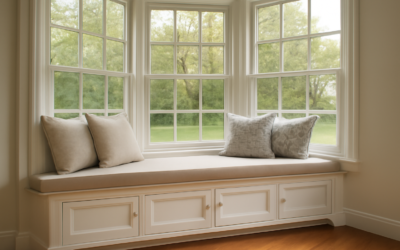
Few furniture moves transform a room as efficiently as placing a bench in front of window space you already have. It turns dead wall into a reading nook, drop spot, or extra seating, and it fills an awkward gap that art alone cannot. But getting it right takes more than shoving a bench against the glass. Sizing, height, light, and even fire safety all factor in. Here is how to choose and style one that looks intentional and functions every day.
Part of our Windows & Doors guide — explore the full guide →
Why a Bench Works Under a Window
A window draws the eye, and a bench beneath it gives that focal point a purpose. Natural light makes the spot ideal for reading or morning coffee, and a low-profile bench keeps the view open rather than crowding the glass. In entryways, bedrooms, and dining nooks, the bench also doubles as storage or a landing zone, earning its footprint in ways a chair often cannot.
Getting the Sizing Right
Proportion is everything. The bench should relate to the width of the window, not the wall. As a general rule, aim for a bench that spans roughly two-thirds to the full width of the window opening, so it looks anchored rather than lost. Leave a few inches of clearance on each side if you want the trim to breathe.
Height matters just as much. Keep the seat below the windowsill so the bench tucks neatly under it. A standard seat height of 17 to 19 inches suits most adults, but if your sill sits low, choose a shorter bench rather than blocking the lower sash. Depth of 15 to 20 inches gives comfortable seating without jutting too far into the room’s walkway.
Do Not Block Egress
This is the rule people overlook. If the window is an emergency exit, common in bedrooms and basements, the bench must not obstruct it. Building codes designate certain windows as egress openings that occupants must be able to open and climb through quickly in a fire. A heavy built-in or a tall storage bench that prevents the sash from opening, or that is hard to move, can turn a safety feature into a hazard. Keep egress windows operable, choose a bench light enough to shift, and never bolt anything across an emergency exit. When unsure whether a window is egress-rated, treat it as if it is.
Choosing the Right Bench Style
The best style depends on the room and how hard the bench will work.
- Storage bench: A hinged or basket-front base hides blankets, shoes, or toys, perfect for entryways and bedrooms.
- Upholstered bench: Soft and inviting for a reading nook, though it shows wear in high-traffic spots.
- Wood or metal bench: Durable and easy to wipe down, ideal near doors or in dining nooks.
- Built-in window seat: A custom option that maximizes a recessed bay, but commit only after confirming egress clearance.
Cushions and Comfort
A bare bench invites no one to sit. A cushion two to three inches thick adds comfort while keeping the seat below the sill. For a built-in or wood bench, a custom foam cushion wrapped in a durable, washable cover holds its shape and survives daily use. High-resilience foam around 1.8 pounds density resists flattening better than a cheap cushion that pancakes within months.
Layer in two or three throw pillows in varied sizes for depth, but stop before the cushions swallow the seat. Choose performance fabrics in sunny windows, since direct light fades textiles over time, and stick to tighter weaves that resist UV damage.
Managing Light and Window Treatments
A bench under a window has to coexist with curtains or blinds. Floor-length drapes will pool behind or beside the bench, so consider mounting the rod wide enough that panels stack clear of the seat. Roman shades, cafe curtains, or top-down bottom-up cellular shades keep the area uncluttered while still controlling glare and privacy. If the bench is a reading spot, prioritize a treatment that filters harsh afternoon sun without darkening the nook completely.
Styling Tips That Pull It Together
Treat the bench as a small vignette rather than a standalone object. A throw blanket draped over one arm, a stack of books, and a small side table or wall-mounted reading lamp signal that the spot is meant to be used. Flank the window with sconces or hang a piece of art just above the trim to give the bench visual weight. In an entryway, add hooks above for coats and a basket below for shoes to complete the function.
Keep the color story simple. Let the cushion and pillows tie back to the room’s existing palette so the bench feels built-in rather than bolted on as an afterthought.
Bench Ideas by Room
The same basic idea adapts to nearly every room, but the priorities shift. In an entryway, a bench under a window becomes a drop zone, so prioritize durable, wipeable materials, storage for shoes, and hooks above for coats. In a dining nook, a bench under a window pairs with a table to create banquette seating that fits more people in less space, and a wipe-clean cushion handles spills.
In a bedroom, comfort leads, so a softer upholstered bench or a window seat with a plush cushion invites reading and relaxing. In a living room or office, a bench under a window can hold extra seating for guests while doubling as a display surface for plants or books. Let the room’s function guide the material and cushion choice rather than copying a look that suited a different space.
DIY vs. Buying a Bench
You can buy a freestanding bench off the shelf or build a custom one, and each path has merits. A purchased bench is fast, requires no tools, and can move with you, which makes it ideal for renters or for testing whether you will actually use the spot. A built-in bench, by contrast, fits the window exactly, maximizes storage, and looks original to the house, but it commits you to a permanent feature and demands some carpentry.
A practical middle ground is topping stock cabinets or cube storage units with a custom cushion, which delivers a built-in look and real storage for a weekend’s effort. Whichever route you take, measure carefully and confirm the bench clears any egress window before committing.
Final Considerations Before You Buy
Measure the window width, sill height, and the floor space you can spare, then shop to those numbers rather than to a photo you liked online. Confirm whether the window is egress, choose a comfortable cushion you will actually maintain, and plan the window treatment around the bench from the start. Get those details right and a simple bench under a window becomes one of the most-used, best-looking spots in the house.