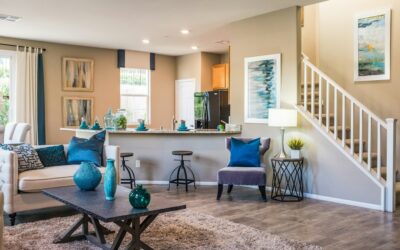
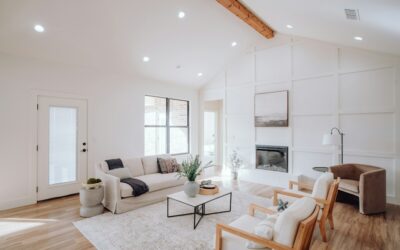
Plenty of grays look great on a chip and then go flat or cold on a whole house. Benjamin Moore Rockport Gray has stayed popular because it rarely does that. Listed as HC-105 in the maker’s Historical Colors collection, it is described as a rich medium gray that brings contrast and depth to any color palette, and its warm, slightly earthy character keeps it from feeling sterile.
The manufacturer lists its light reflectance value (LRV) at 36.61. That is a true middle value: deep enough to stand out against white trim on siding or to anchor a living room, but not so dark that it swallows light. Rockport Gray is a common pick for exteriors, kitchen islands, cabinetry and accent walls, and it can work as a whole-room wall color where there is good daylight.
- Benjamin Moore Rockport Gray Specs
- What Undertones Does Rockport Gray Have?
- Where Rockport Gray Works Best
- Coordinating Trim and Accent Colors
- Rockport Gray vs Edgecomb Gray vs Revere Pewter
- Cost and Coverage
- Troubleshooting Rockport Gray
- When to Hire a Professional Painter
- Frequently Asked Questions
The sections that follow give the core specs, explain how its undertones shift, list rooms and exterior uses it suits, pair it with trim and accent colors, and compare it with two famous lighter neighbors: Edgecomb Gray and Revere Pewter.
Benjamin Moore Rockport Gray Specs
All numbers in this table come from the manufacturer’s color pages. Undertone notes reflect the maker’s description plus how designers commonly describe the color in real rooms.
| Spec | Value | What it means |
|---|---|---|
| Color name | Rockport Gray | Confirm name and number at the counter |
| Color number | HC-105 | The HC prefix marks the Historical Colors collection |
| LRV | 36.61 | Medium value; reflects a bit over a third of incoming light |
| Maker’s description | Rich medium gray | Built to add contrast and depth |
| Undertone | Warm, earthy; can flash green or soft violet | Reads as a warm gray or gray-greige depending on light |
| Coordinating colors listed | Chantilly Lace, Sheraton Beige, Kitty Gray, Beach Glass | Suggested trim, accent and adjacent-room partners |
| Sheen options | Depends on product line | Flat to high gloss for interiors; flat to semi-gloss common outdoors |
Rockport Gray is a long-standing member of the collection and appears on the manufacturer’s current site. As with any color, availability in a specific product line (especially exterior lines) should be confirmed at the paint counter.
What Undertones Does Rockport Gray Have?
The maker calls it a rich medium gray without naming a single undertone, and designers do not fully agree. That disagreement is actually useful information: it tells you the color is balanced and shifts with its surroundings.
- Warm, slightly brown base. Many reviewers describe a soft brown or greige influence that keeps it from looking cold. On a north-facing exterior or in a dim room, this warmth helps it avoid the bluish chill of steel grays.
- Green flashes. In some light, especially next to foliage or under cooler bulbs, it can pick up a hint of green.
- Soft violet hints. Next to warm wood or beige stone, a faint purple-gray cast can appear.
In plain terms, Rockport Gray is a warm medium gray that leans greige. Treat it as a chameleon and test it beside your fixed finishes: brick, roofing, stone, countertops and flooring will pull its undertone one way or another.
Testing it the right way
- Use a large sample, at least 12 by 12 inches for interiors and a much bigger board or swatch on siding for exteriors.
- Place it next to your trim color and against any brick, stone or roofing.
- Check it in morning, midday and evening light over two or three days.
- Compare it side by side with Revere Pewter or Edgecomb Gray if you are unsure about the depth.
Where Rockport Gray Works Best
Exterior siding and shutters
Outdoors, sunlight washes colors out, so a medium gray usually reads lighter on siding than on the chip. That is why Rockport Gray is a common exterior choice: in full sun it looks like a solid, warm mid-gray rather than a dark charcoal. It pairs well with crisp white trim, black or deep charcoal shutters and doors, and natural wood or stone accents. On a shaded lot it will look deeper; sample it on the shadiest wall too.
Kitchen islands and cabinetry
On a kitchen island against white perimeter cabinets, Rockport Gray adds contrast without the stark look of black. It works with white or warm-veined counters, brass or nickel hardware, and oak or walnut floors. Use a durable cabinet enamel in satin or semi-gloss.
Living rooms, dens and dining rooms
In rooms with good natural light, it creates a grounded, cozy backdrop. It flatters leather, linen, warm wood and brass. In a dining room it pairs well with a lighter ceiling and white wainscoting.
Bedrooms and bathrooms
A bedroom in Rockport Gray feels calm and slightly moody. In a bathroom, it pairs well with white tile, marble-look surfaces and warm metal fixtures. Use a moisture-resistant eggshell, satin or semi-gloss.
Rooms to approach with care
Small, dark rooms with little daylight can push it toward a heavier gray. If you love the color but the room is dim, consider it for lower cabinets, a vanity or a door instead of all four walls.
Coordinating Trim and Accent Colors
The manufacturer’s coordinating list gives you a ready-made palette.
- Chantilly Lace (OC-65): a clean, bright white for trim, doors and ceilings. The contrast makes Rockport Gray look crisp and tailored, inside or out.
- Sheraton Beige (HC-57): a soft, delicate orange-cream (LRV 66.52) that suits an adjoining room or a lighter body color with Rockport Gray as the accent.
- Kitty Gray (1589): a much darker gray (LRV 15.52) with a barely-there green undertone. Good for a front door, shutters or a deeper island.
- Beach Glass (1564): a calming blue softened by gray (LRV 49.7) that adds a cool, coastal accent in a bathroom or bedroom.
Outside the maker’s list, Rockport Gray looks natural with red or brown brick, charcoal or black roofing, bronze fixtures, and warm wood front doors. Very yellow creams on trim can look dated beside it; a clean or slightly soft white is safer.
Rockport Gray vs Edgecomb Gray vs Revere Pewter
These three Historical Colors grays come up together constantly, especially for exteriors. They are related in spirit (warm, balanced grays) but sit at very different depths.
| Color | Number | LRV | Character | Best role |
|---|---|---|---|---|
| Rockport Gray | HC-105 | 36.61 | Rich medium gray, warm-leaning | Body color with contrast, islands, accents |
| Revere Pewter | HC-172 | 55.05 | Greige that bridges warm and cool | Whole-house walls, lighter siding |
| Edgecomb Gray | HC-173 | 63.09 | Light warm neutral, welcoming | Bright walls, light siding, open plans |
The gaps in LRV are big. Edgecomb Gray is far lighter and reads almost as a soft greige-white in bright rooms. Revere Pewter sits in between and is the go-to whole-house neutral for many homeowners. Rockport Gray is the deepest of the three, so it is the one to choose when you want the house or room to have weight and visible contrast with white trim.
A common approach is to layer them: Edgecomb Gray or Revere Pewter on main walls, with Rockport Gray on an island, a mudroom or the exterior shutters and front door. Because they share a warm, balanced character, the palette looks intentional rather than mismatched.
Cost and Coverage
The color does not set the price; the product line does. A gallon of premium paint generally covers about 350 to 400 sq ft per coat on smooth walls, and less on rough siding. A typical bedroom needs about 2 gallons for two coats.
For a DIY interior room, total supplies often fall between about $100 and $250. Painting a home exterior is a bigger project: depending on size, siding condition, height and region, professional exterior painting commonly runs from several thousand dollars up into five figures. Get at least three written quotes and confirm the exact color and product line on each one.
Tools that make the job easier
- A quality roller and tray kit with a 3/8-inch nap for smooth walls, thicker for textured surfaces
- An angled sash brush for cutting in
- Painter’s tape, drop cloths and patching compound
- A tinted primer for big color changes
Troubleshooting Rockport Gray
It looks too dark indoors
Add more light, paint the ceiling a bright white such as Chantilly Lace, or switch the walls to Revere Pewter and keep Rockport Gray for cabinetry or trim accents.
It looks green or purple
Check nearby colors. Green foliage outside a window and cool LEDs push green; warm wood and beige stone can bring out violet. Swap bulbs to a consistent 2700K to 3000K and retest.
Exterior looks lighter than expected
Strong sun washes out color. This is normal. If you want more depth outside, test Kitty Gray or a deeper step alongside Rockport Gray before committing.
Uneven sheen or lap marks
Medium grays show roller marks. Keep a wet edge, avoid painting in direct hot sun outdoors, and apply two full coats.
When to Hire a Professional Painter
Interior walls are a reasonable DIY project. Call a pro for exteriors above one story, where ladder work gets risky, for cabinet refinishing that needs spraying, and for houses built before 1978, where existing paint should be tested for lead before any sanding or scraping. A pro can also handle siding repairs and caulking that must be done before the new color goes on.
Frequently Asked Questions
What is the LRV of Benjamin Moore Rockport Gray?
The manufacturer lists Rockport Gray (HC-105) at an LRV of 36.61, which places it in the medium range, deep enough for clear contrast against white trim.
Is Rockport Gray warm or cool?
It leans warm. Most designers describe a soft brown or greige influence, with occasional green or faint violet flashes depending on light and nearby materials.
Is Rockport Gray good for exteriors?
It is a popular exterior body and shutter color. Sunlight makes it look lighter on siding than on the chip, so it often reads as a solid warm mid-gray outside. Confirm availability in your chosen exterior product line.
What white trim goes with Rockport Gray?
Chantilly Lace (OC-65) is one of the coordinating colors the manufacturer lists, and its clean white gives crisp contrast on trim, doors and ceilings.
How does Rockport Gray compare to Revere Pewter?
Revere Pewter (HC-172) has an LRV of 55.05, so it is much lighter. Rockport Gray, at 36.61, is the deeper choice for contrast and accents, while Revere Pewter suits whole-house walls.
Is Rockport Gray darker than Edgecomb Gray?
Yes, by a wide margin. Edgecomb Gray (HC-173) has an LRV of 63.09, making it a light neutral, while Rockport Gray is a medium gray.