
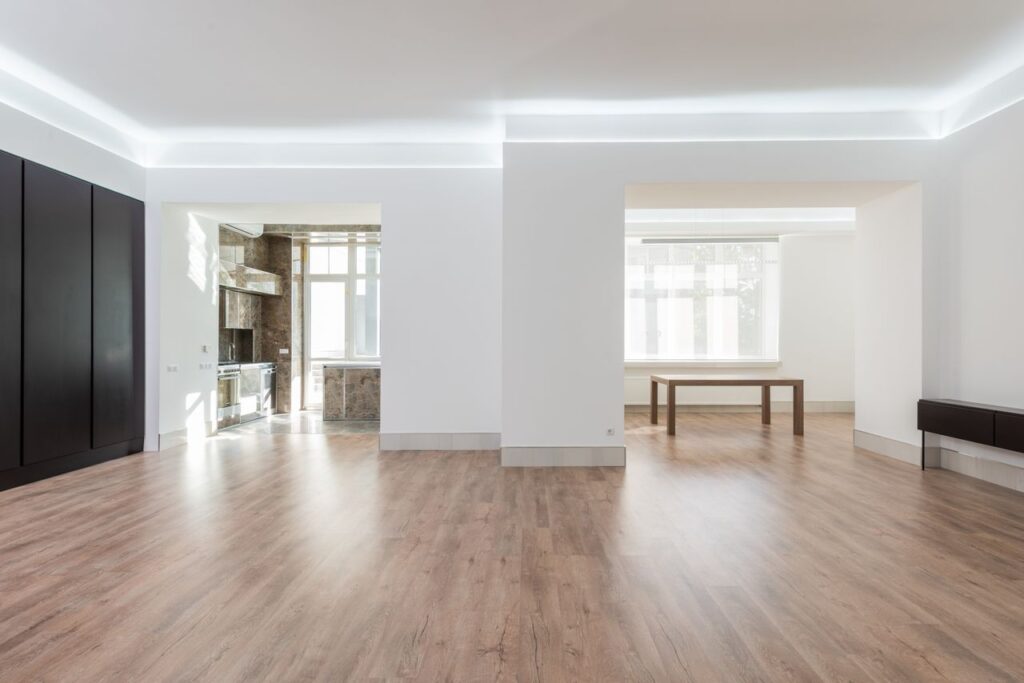
Sticker prices on flooring have not been this volatile in twenty years, and the average homeowner is paying more for the same material than they did pre-2020. Finding the best buy flooring in 2026 is less about chasing the cheapest box on a pallet and more about matching durability ratings, wear layer thickness, and warranty terms to the rooms where the floor actually has to perform. The right pick can cost less than $3 per square foot installed and still last fifteen years; the wrong one fails inside two.
- What “Best Buy” Really Means in Flooring
- Top Pick for Whole-House Value: 20 mil LVP
- Best Budget Hardwood Substitute: Laminate AC5
- Best Real Hardwood for the Money: Engineered Oak
- Where to Shop
- What to Skip in 2026
- Installed Cost Reality Check
- Buying Smart
- Negotiating the Final Price
- Pad and Underlayment Choices
What “Best Buy” Really Means in Flooring
Three numbers separate genuine value from a price trap. The first is wear layer — for vinyl, anything under 12 mil belongs in a closet, not a kitchen. The second is AC rating for laminate; AC4 or higher is the threshold for real residential traffic. The third is the manufacturer warranty, which tells you how confident the brand is in its own product. A 25-year residential wear warranty with no fine-print exclusions for moisture is a stronger signal than a flashy brand name.
Top Pick for Whole-House Value: 20 mil LVP
Luxury vinyl plank with a 20 mil wear layer at $2.79 to $3.89 per square foot is the value benchmark of 2026. It is fully waterproof, click-locking, installs over most existing hard surfaces, and the wear layer holds up against dog claws and dragged dining chairs. Look at Mohawk RevWood Plus, Shaw Floorte Pro, and CoreLuxe XD when comparing. Skip anything labeled simply “vinyl plank” without a wear layer spec — that omission is intentional.
Best Budget Hardwood Substitute: Laminate AC5
If you want the look of oak without paying $7 per square foot, AC5-rated laminate at 12 mm thickness is your friend. Pergo Outlast+ and Mohawk RevWood routinely sell for $2.49 to $3.29 in 8 mm and slightly more in 12 mm. Both have moisture seals on the click joints — a feature that did not exist on budget laminate even five years ago. The visual realism on current registered-emboss patterns is good enough that most guests cannot tell from standing height.
Best Real Hardwood for the Money: Engineered Oak
Solid hardwood is rarely the smart buy in 2026. Engineered oak with a 3 mm wear layer can be sanded twice, costs 30% less than solid, and tolerates basement-level humidity that would warp solid material. Bruce, Bellawood, and Heritage Mill all offer 3/8 inch x 5 inch engineered oak around $3.89 to $4.99 per square foot. Buy the prefinished version with an aluminum oxide topcoat and the floor is move-in ready the day it goes down.
Where to Shop
- Lumber Liquidators / LL Flooring: Best for engineered hardwood and bamboo closeouts. Watch the Bellawood Select tier.
- Floor & Decor: Tile and LVP win here. They publish actual pallet pricing online and stock contractor quantities.
- Home Depot: Strongest on Pergo, LifeProof, and TrafficMaster. The 20% off LifeProof events in spring are real value.
- Lowe’s: SmartCore and Style Selections. Look for end-of-quarter clearance markdowns.
- Costco: Surprisingly competitive Mohawk SolidTech runs in 28 sq ft cartons two or three times a year.
- Local independents: Negotiate. They will match the box stores on identical SKUs and beat them on installation.
What to Skip in 2026
Some categories are no longer the best buy flooring decision they once were. Solid 3/4 inch hardwood priced under $4 per square foot is almost always a low-grade #2 Common with knots, splits, and short pieces. Cork floating planks have a moisture problem that the marketing avoids. Sub-8 mm laminate at $0.99 per square foot exists, but the joints fail within two seasons of normal traffic.
Sheet vinyl makes sense only in a small bathroom or laundry where you genuinely want zero seams. For larger rooms, a click-lock LVP at the same price gives a better-looking, more durable result and you can replace one plank instead of the entire field.
Installed Cost Reality Check
Material is roughly 60% of the total project. Plan for these labor numbers in most US metros:
- Click-lock LVP or laminate: $1.50 to $2.50 per sq ft installed labor only
- Glue-down LVP: $2.50 to $3.75 per sq ft
- Engineered hardwood (nail or staple): $3.00 to $4.50 per sq ft
- Tile: $5.00 to $9.00 per sq ft including thinset and grout
- Carpet with pad: $1.25 to $2.25 per sq ft
Buying Smart
Buy 10% more than your measured square footage for waste, 15% if you are running planks on a diagonal. Always pull from multiple boxes during install to blend any color variation. Acclimate planks 48 to 72 hours in the room where they will live — skipping that step is the single biggest cause of warranty denials. Get the best buy flooring decision right and the floor disappears into the background of your home for a decade or more, which is exactly what a great floor is supposed to do.
Negotiating the Final Price
Flooring is one of the few home improvement categories where retail price is genuinely negotiable. Three tactics that work in 2026:
- Bring three written quotes when visiting independents — most will match or beat the lowest by 5-10%
- Ask for the “contractor price” even as a homeowner. Many stores offer it without a license check.
- Buy at end of quarter (March, June, September, December). Sales staff have monthly targets that translate to better discounts in the closing days.
Pad and Underlayment Choices
Skipping the underlayment upgrade is the most common false economy in flooring. A standard 2 mm foam pad is fine for budget installs, but $0.40 per sq ft buys you a cork-rubber composite that dramatically improves sound transmission, foot feel, and warmth. For LVP over concrete, the upgrade also adds vapor protection. Spend the extra $400 on a 1,000 sq ft job — you will notice the difference every day for the next decade.
Prefer to explore on your own?
See how new flooring looks in your actual room in seconds — free, no signup.
Try the free Floor Studio →

