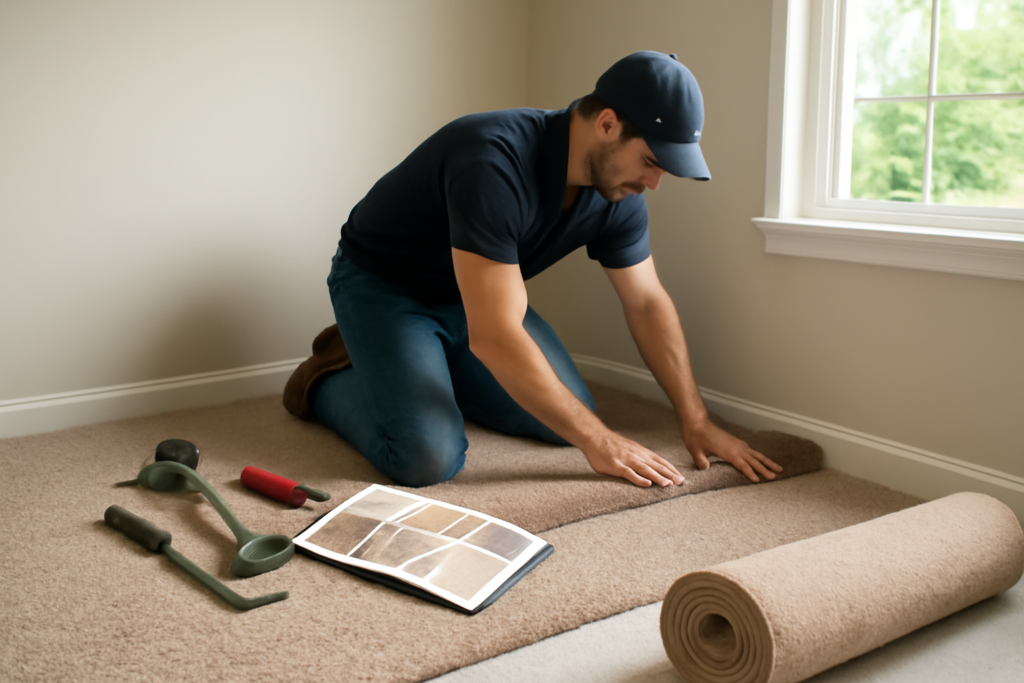
Choosing among the best carpet installation companies is less about finding one famous name and more about knowing how to separate skilled, accountable installers from the cut-rate crews that leave you with seams that show and ripples within a year. Carpet is one of the few floors where installation quality matters as much as the carpet itself, because a poor stretch or sloppy seam will fail no matter how good the fiber is. This guide skips the fabricated rankings and gives you a practical framework: how to vet companies, what good work costs, and the red flags that should send you elsewhere.
Why Installer Quality Matters So Much
Unlike a click-lock plank that mostly forgives a mediocre installer, carpet relies on proper stretching, seaming, and padding to perform. A pro using a power stretcher (not just a knee kicker) tensions the carpet so it stays flat for its full life. Skip that step and you get buckles and wrinkles, sometimes within months.
Seam placement and quality separate craftsmen from amateurs too. A skilled installer hides seams away from doorways and high-traffic lines, uses heat-bond seam tape correctly, and matches pile direction. These details are invisible when done right and glaring when done wrong.
Types of Companies to Consider
You generally have three kinds of providers, each with trade-offs.
- Big-box retailers with installation: Convenient one-stop shopping and financing, but the actual installers are usually subcontractors whose skill varies. Confirm who shows up.
- Local flooring specialty stores: Often use their own trained crews, offer in-person samples, and stand behind both product and labor. Frequently the sweet spot for quality.
- Independent carpet installers: Can offer the best labor rates and deep experience if you supply the carpet, but you take on more coordination and vetting yourself.
How to Vet Carpet Installation Companies
A consistent checklist protects you regardless of which type you choose.
- Confirm licensing and insurance: Ask for proof of liability and workers’ compensation coverage.
- Request recent local references: Call them and, if possible, see a job a year or more old to judge durability.
- Read reviews critically: Look for patterns about cleanup, punctuality, and seam quality, not just star averages.
- Ask about tools and crew: A power stretcher and trained, in-house installers signal quality.
- Get a detailed written estimate: It should itemize carpet, pad, labor, old-carpet removal, furniture moving, and disposal.
What a Quality Installation Includes
The best companies treat the work as a system, not just laying carpet over whatever is there. Quality work starts with assessing and prepping the subfloor, then installing fresh tack strips and quality padding rated for your traffic. Good crews move and replace furniture, remove and haul away old carpet, and clean up thoroughly.
Insist on a new, appropriate pad rather than reusing the old one; padding does the heavy lifting for comfort and longevity, and a cheap pad undermines an expensive carpet. Confirm the company power-stretches the carpet and uses proper seam sealing, and ask about a written workmanship warranty on top of the carpet’s manufacturer warranty.
Red Flags to Avoid
Some warning signs reliably predict trouble. Be wary of any company that quotes a price sight-unseen without measuring the rooms, refuses to provide proof of insurance, or pressures you with a today-only discount. Vague estimates that lump everything into one number make it impossible to compare and often hide surprise charges.
Reusing old padding, relying solely on a knee kicker for stretching, and a lack of verifiable references are all reasons to keep looking. A reputable installer welcomes your questions and puts the answers in writing.
What It Costs
Installation labor for carpet typically runs $1 to $3 per square foot, on top of the carpet itself, which ranges from about $1 to $7 per square foot for most residential options. Padding adds roughly $0.30 to $1 per square foot. Extras like old-carpet removal, furniture moving, and stair work usually carry separate charges.
For a 400-square-foot living area with mid-grade carpet and quality pad, a complete job often lands between $1,500 and $3,500 installed. Get at least three itemized quotes; the lowest is rarely the best value once you account for pad quality and workmanship guarantees.
Questions to Ask Before You Sign
Pin down the details that separate the best companies from the rest. Ask whether the installers are employees or subcontractors, whether they power-stretch, what pad they include, where seams will fall, and exactly what the price covers. Confirm the timeline, the workmanship warranty, and who to call if a problem appears later. Clear, documented answers are the surest sign you have found a company worth hiring.
Preparing for Installation Day
A little prep on your end helps even the best crew do their best work. Clear small items, breakables, and electronics from the rooms ahead of time, and confirm whether the company moves large furniture or expects it cleared. Make sure the installers have a clear path and access to power and water.
Walk the space with the lead installer before they start. Point out where you want seams to fall, confirm the pile direction, and note any squeaky subfloor spots they should screw down first. A five-minute conversation up front prevents the most common after-the-fact complaints, and a quality company will welcome it rather than rush past it.
After the Installation
The job is not finished when the last seam is set. Inspect the floor in good light before the crew leaves: run your hand along seams, check that the carpet is tight at the edges with no ripples, and confirm corners and transitions are clean. Walk every room.
Expect some shedding from new cut-pile carpet, which is normal and fades with regular vacuuming. Ask about a workmanship guarantee in writing and how to reach the company if a seam opens or a ripple appears in the first year. Keep all paperwork and any leftover carpet for future repairs.
Final Takeaway
The best carpet installation companies are the ones that combine skilled, insured, in-house crews with transparent itemized pricing and a written workmanship warranty, not simply the cheapest or most advertised. Vet for licensing, references, proper tools, and quality padding, watch for the red flags, and gather several detailed quotes. Do that homework, and your carpet will lie flat, hide its seams, and last as long as the fiber allows.